



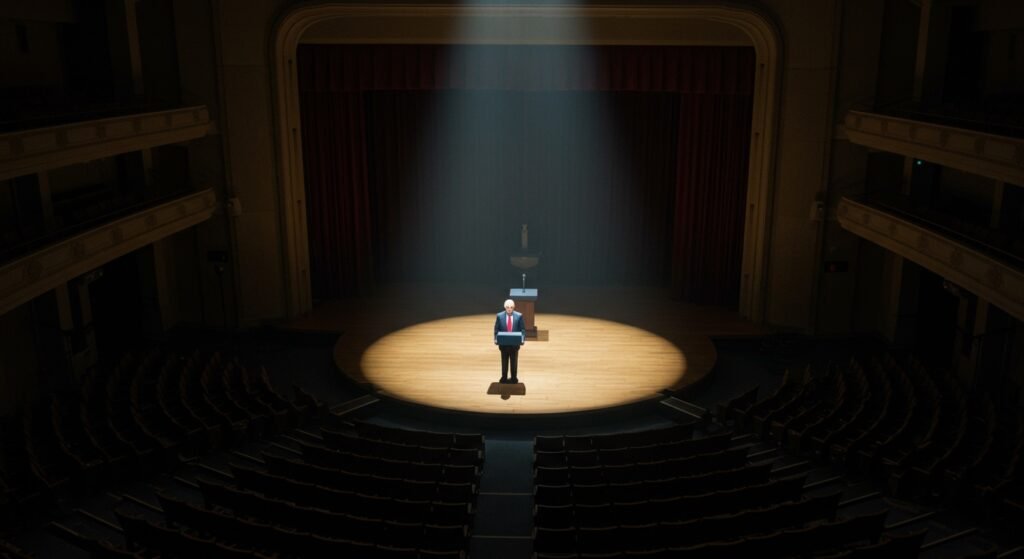
The John F. Kennedy Center for the Performing Arts in Washington, D.C., a prominent landmark for American culture, has become the nexus of a significant dispute following directives issued by U.S. President Donald Trump. The changes, announced on his Truth Social platform in early February, have prompted sharp criticism from a broad spectrum of artists and human rights advocates across both Canada and the United States, raising concerns about the intersection of political control and artistic expression.
The President’s Directive
At the heart of the controversy is President Trump’s decision to assert direct control over the Kennedy Center. He declared his intention to “immediately terminate multiple individuals from the Board of Trustees, including the Chairman” whom he deemed did not align with his “Vision for a Golden Age in Arts and Culture.” In a move described as unusual, though within his statutory power, President Trump stated he would place himself in charge, vowing specifically to eliminate what he termed “‘woke’ performances.” He explicitly linked these changes to his political slogan, writing that they would “make the Kennedy Center GREAT AGAIN.”
Voices of Concern
The president’s actions have ignited a fierce backlash. Human rights lawyers have issued stark warnings, characterizing attempts by political leaders to “capture culture” as symptomatic of authoritarian governments. This perspective is echoed by Canadian and American artists and human rights advocates who view the changes not merely as administrative adjustments, but as a direct challenge to artistic freedom and institutional independence.
Artistic Response and Impact
The practical impact of the changes has been swift and visible, leading to cancellations by several notable figures. Individuals such as Hamilton, Issa Rae, and Louise Penny have reportedly withdrawn scheduled events in protest against the new direction and leadership imposed on the institution.
Among the most striking examples is that of a church congregation that had for the past five years presented an elaborate Christmas concert at the venue. This annual performance was a significant undertaking, costing approximately $250,000 and requiring nine months of preparation. The congregation decided to cancel their upcoming event. Their decision was driven by explicit fears of being cancelled themselves, specifically citing concerns related to their identity as a “pro diversity, pro inclusionary church” under the new leadership’s stated goal of eliminating “woke” content.
Procedural Nuance and Official Stance
While President Trump’s ability to place himself as chairman is legally permissible, observers have noted the departure from traditional norms regarding the governance of such cultural institutions. Despite the wave of artist pullouts and public criticism, an interim director at the Kennedy Center is reportedly defending the president’s changes.
Broader Implications
The dispute at the Kennedy Center highlights a growing national and international debate over the role of arts institutions, government influence, and the definition of acceptable cultural expression. Critics argue that targeting “woke” performances constitutes censorship and an attempt to politicize a venue intended to represent the breadth of American artistic achievement. Proponents of the changes, aligning with President Trump’s stated vision, suggest a need to realign the center’s programming with different cultural values.
The episode underscores the precarious balance between government funding/oversight and the necessary independence required for vibrant artistic creation and presentation. The warnings from human rights advocates lend a graver dimension to the debate, suggesting that such interventions can parallel tactics used in political systems less tolerant of dissent or diverse viewpoints.
Conclusion
As the situation at the John F. Kennedy Center for the Performing Arts continues to unfold, the clash between the presidential directive and the cultural community’s response remains a focal point. The controversy extends beyond the immediate administrative changes, probing fundamental questions about artistic freedom, institutional autonomy, and the potential implications for cultural expression in a democratic society. The ongoing artist protests and the warnings from human rights observers signal that the stakes in Washington, D.C., at this celebrated venue, are seen as significantly high for the future trajectory of American arts and culture.
More Stories
Taiwan Makes Historic Debut at World Children’s Festival in D.C.
Choctaw Heritage Ignites at World Series of Stickball
Concrete Renaissance: Inside Fort Worth’s Cultural District Building Boom