











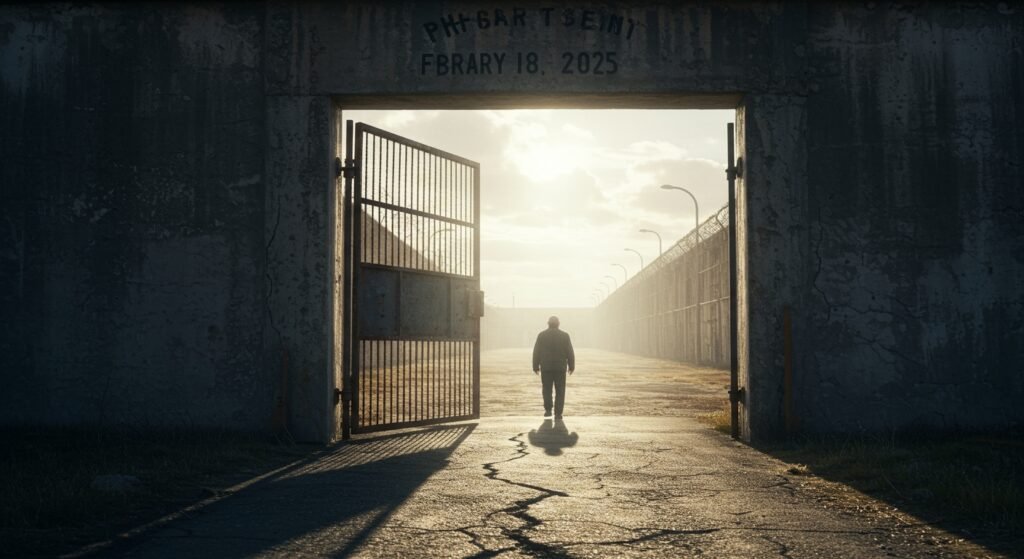
February 18, 2025 marked a pivotal moment for Indigenous rights advocates and legal reformers worldwide, as Indigenous Leader Leonard Peltier was released from prison after an imprisonment spanning nearly 50 years. The release, occurring on this specific date, concludes one of the longest and most contentious incarcerations in recent American history.
Mr. Peltier, now in his late 70s, was convicted of aiding and abetting the murders of two FBI agents during a 1975 shootout on the Pine Ridge Indian Reservation in South Dakota. His case has long been a rallying point for activists and human rights organizations who have questioned the fairness of his trial and the evidence presented against him, consistently advocating for clemency or a new hearing.
A Decades-Long Struggle for Freedom
The calls for Mr. Peltier’s release intensified over the decades, drawing support from figures across the political spectrum, international bodies, and numerous celebrities. Supporters argued that crucial evidence was withheld from the defense and that his conviction was tainted by procedural errors and a climate of intense political pressure surrounding Native American activism in the 1970s.
The original incident, which occurred on June 26, 1975, led to a chaotic exchange of gunfire between FBI agents and members of the American Indian Movement (AIM). Agents Jack Coler and Ronald Williams were killed, as was AIM member Joe Stuntz Killsright. While other individuals involved were acquitted, Mr. Peltier was convicted in 1977 and sentenced to two consecutive life terms. His nearly 50 years of imprisonment, which began shortly after that conviction, underscore the extraordinary length of his time behind bars.
The Legal Battle and Advocacy
Over his decades of incarceration, Mr. Peltier and his legal team pursued numerous appeals and petitions for clemency. These efforts highlighted allegations of prosecutorial misconduct, including claims that an affidavit from a key witness implicating Peltier was coerced and that ballistic evidence was mishandled. Despite these persistent challenges, his appeals were repeatedly denied by federal courts.
Advocacy campaigns for Mr. Peltier’s freedom have been relentless. Supporters organized protests, awareness campaigns, and lobbied successive U.S. presidential administrations for clemency. They framed his case not just as a legal matter but as a symbol of the historical injustices faced by Indigenous peoples and the tensions between the U.S. government and Native American activists during a turbulent era.
Reactions and the Path Forward
The release of Leonard Peltier on February 18, 2025, is expected to evoke strong reactions. For his supporters, it represents a long-awaited victory and vindication of their persistent efforts, although some maintain that true justice would be an exoneration. For others, particularly the families of the slain FBI agents, his release may rekindle pain and resentment over the loss of their loved ones.
The specifics surrounding the terms of his release, such as whether it is a form of parole, clemency, or compassionate release, will be closely scrutinized. His transition back into society after nearly five decades will also present significant challenges.
Mr. Peltier’s case remains a complex and deeply divisive issue in American history, highlighting enduring debates about justice, Indigenous rights, and the legacy of government actions during a period of heightened activism. His release on February 18, 2025, closes a lengthy chapter of incarceration but is unlikely to end the discussions and differing perspectives surrounding his conviction and decades-long imprisonment.
More Stories
AAM Defends Smithsonian: Integrity Under Political Siege
Taiwan Makes Historic Debut at World Children’s Festival in D.C.
Choctaw Heritage Ignites at World Series of Stickball