











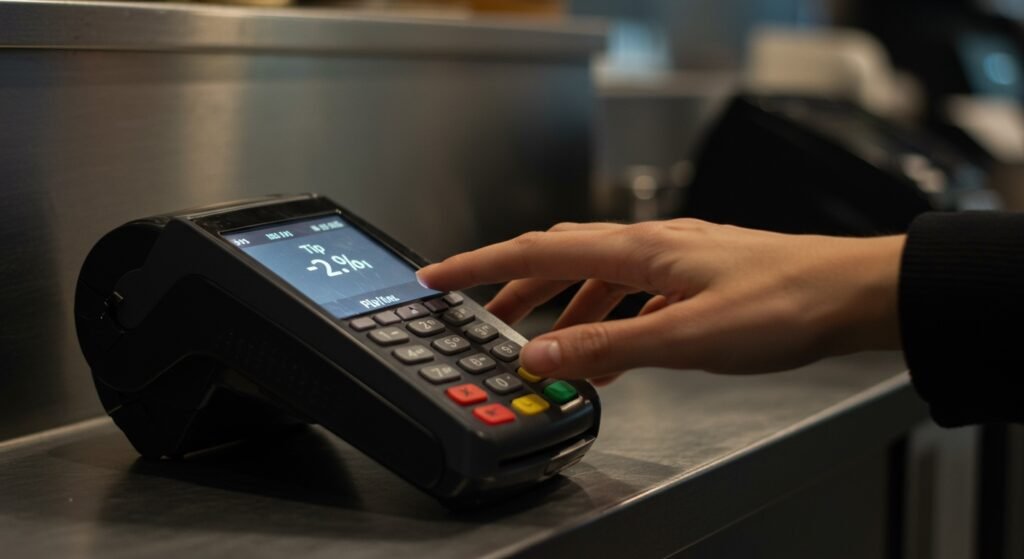
A significant majority of consumers in the United States now believe that the nation’s prevalent tipping culture has become excessive, according to a new report. The study indicates that 90% of Americans feel the practice has gotten “out of control,” a sharp increase from the 75% who held this view just one year prior.
This growing sentiment reflects a broader frustration with the increasing pressure to tip across a widening array of transactions. Speaking about the findings, Chip Lupo, a writer and analyst for WalletHub, highlighted how consumers are encountering requests for tips in settings where they were previously uncommon or non-existent.
The Rising Tide of Tipping
The phenomenon of tipping, traditionally associated with services like restaurant dining or hairstyling, has expanded significantly in recent years. The WalletHub report underscores consumer discomfort with this expansion, citing instances like tipping requests at kiosks, car washes, and in fast-casual dining establishments where customers place orders at a counter rather than receiving full table service. This expansion is a key driver behind the jump from 75% to 90% in just one year.
Beyond Traditional Norms
While the report acknowledges traditional tipping norms, such as the customary 15-25% for hairstylists or 15-20% for restaurant service, it emphasizes the consumer perception of feeling pressured to tip for nearly every service encountered. This pervasive expectation contrasts sharply with the selective nature of tipping in the past, leading to consumer fatigue and resentment.
Factors Driving the Shift
The shift in tipping expectations is partly attributed to changes that occurred during the pandemic. The public was widely encouraged to support service workers during economic uncertainty, which may have contributed to a broader acceptance, or perhaps now, an over-extension, of tipping practices in new areas. This has seemingly solidified into a more permanent and widespread expectation across various service sectors.
Potential Solutions and Alternatives
Amidst the rising frustration, discussions around potential changes are emerging. The report touches upon suggestions for reform, including the outright banning of tipping at kiosks, where automated service negates the traditional basis for gratuity. Another proposed alternative is the implementation of an employee rating system as a replacement for tipping, allowing customers to provide feedback on service quality without the financial pressure of a tip. Notably, the report indicates that 40% of people reportedly favor such a rating system as a viable option.
A Global Perspective
Contextualizing the American experience, the report draws a contrast with international norms. In Japan, for example, the culture surrounding service differs significantly. Tipping is generally considered rude rather than customary, as excellent service is viewed as an inherent part of the service provider’s job and the price charged is considered inclusive.
Conclusion
The findings from the WalletHub report, discussed by analyst Chip Lupo, paint a clear picture of escalating consumer discontent with the current state of tipping culture in the U.S. The significant increase in the percentage of people who feel it is out of control, from 75% to 90% in a single year, highlights a tipping point in public opinion. As consumers face increasing pressure to provide gratuities for a wider range of services, including those with minimal human interaction like kiosks or counter service, the call for re-evaluating and potentially reforming tipping practices is likely to grow louder.
More Stories
Lowriding’s Rise: SF Celebrates Cruising Culture
U.S. Repatriates 64 Cultural Relics and Fossils to China
Betting on Viral Fame: Novig’s Strategic Use of Sydney Sweeney