











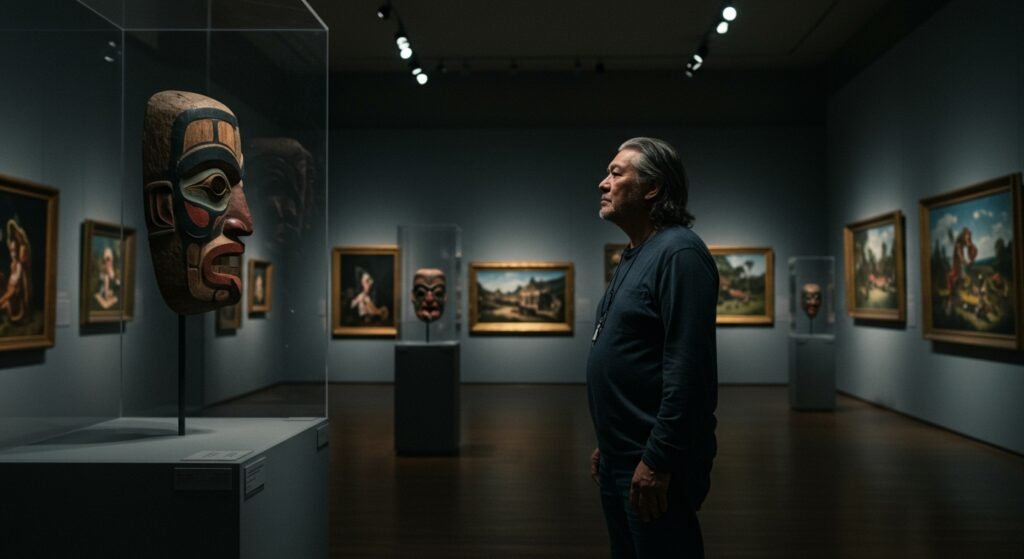
A 2025 article from RNZ delves into the complex, pervasive global fascination with Indigenous culture, exploring both its widespread influence and instances of appropriation. Central to this discussion are two recent documentary films by Cree filmmaker Neil Diamond: the 2024 Canadian production “Red Fever” and his newest collaboration, “So Surreal: Behind the Masks.”
The RNZ piece highlights how Diamond, through his cinematic work, prompts a critical examination of why elements of Native American culture resonate so strongly across the world, often appearing divorced from their original context and significance.
Unpacking “Red Fever”
The 2024 documentary “Red Fever,” co-directed by Catherine Bainbridge, sees Neil Diamond embark on a compelling journey across America and into Europe. The film is explicitly designed to explore the multifaceted impact of Native American culture on various global spheres.
Through his travels, Diamond investigates how Indigenous influences manifest in seemingly disparate areas such as fashion, sports, politics, and environmentalism. The inspiration for this ambitious project stemmed from Diamond’s own observations of appropriated cultural elements in unexpected locations worldwide.
For instance, the film’s genesis is partly traced back to encountering phenomena like wooden Indian figures displayed in Seoul or fictional Apache chiefs populating narratives in former Yugoslavia. These observations underscored the global reach of Indigenous imagery and concepts, prompting the deeper dive undertaken in “Red Fever” to understand the dynamics behind this global adoption and adaptation.
Delving into “So Surreal”
In parallel to “Red Fever,” Neil Diamond’s newest film, “So Surreal: Behind the Masks,” co-directed with Joanne Robertson, zeroes in on a specific, poignant instance of cultural appropriation and collection. This documentary focuses on the fate of ceremonial masks belonging to the Yup’ik and Kwakwaka’wakw nations.
The film examines how these deeply significant cultural artifacts were collected and subsequently appropriated, particularly by European surrealist artists. “So Surreal” seeks to shed light on the historical context and ongoing implications of such actions, raising questions about ownership, representation, and the ethical dimensions of collecting Indigenous art and artifacts.
The Filmmaker’s Perspective
Neil Diamond’s perspective is informed by his background and extensive experience. Hailing from Waskaganish on the coast of James Bay in Northern Quebec, Diamond is a respected Cree filmmaker, photographer, and a co-founder of the Cree news magazine The Nation. His work consistently engages with themes of Indigenous identity, history, and representation.
“Red Fever” and “So Surreal” follow in the footsteps of his previous critically acclaimed work, notably the 2009 film “Reel Injun,” which he also co-directed with Catherine Bainbridge. “Reel Injun” explored the portrayal of Native Americans in Hollywood films, setting a precedent for Diamond’s ongoing examination of how Indigenous peoples and cultures are perceived and depicted in wider society.
Festival Showcase and Dialogue
The significance of both “Red Fever” and “So Surreal: Behind the Masks” was underscored by their scheduled screenings at the Māoriland Film Festival. This prominent festival, held in Ōtaki on the Kāpiti Coast, provided a platform for these films to reach audiences and stimulate discussion within a context celebrating Indigenous cinema.
The films were slated to play at the festival between March 26 and 30. The RNZ article highlights that Neil Diamond discussed the themes and insights from these documentaries and his broader work with Mark Amery on RNZ’s program “Culture 101.” This interview further amplified the conversation around the global influence and the complexities of how Indigenous culture is interpreted and utilized worldwide.
Together, “Red Fever” and “So Surreal” offer powerful cinematic explorations that move beyond simple admiration of Indigenous aesthetics to probe the deeper issues of cultural exchange, respect, and the critical need for authentic representation in a world that often selectively embraces aspects of Indigenous identity.
More Stories
Lowriding’s Rise: SF Celebrates Cruising Culture
U.S. Repatriates 64 Cultural Relics and Fossils to China
Betting on Viral Fame: Novig’s Strategic Use of Sydney Sweeney