











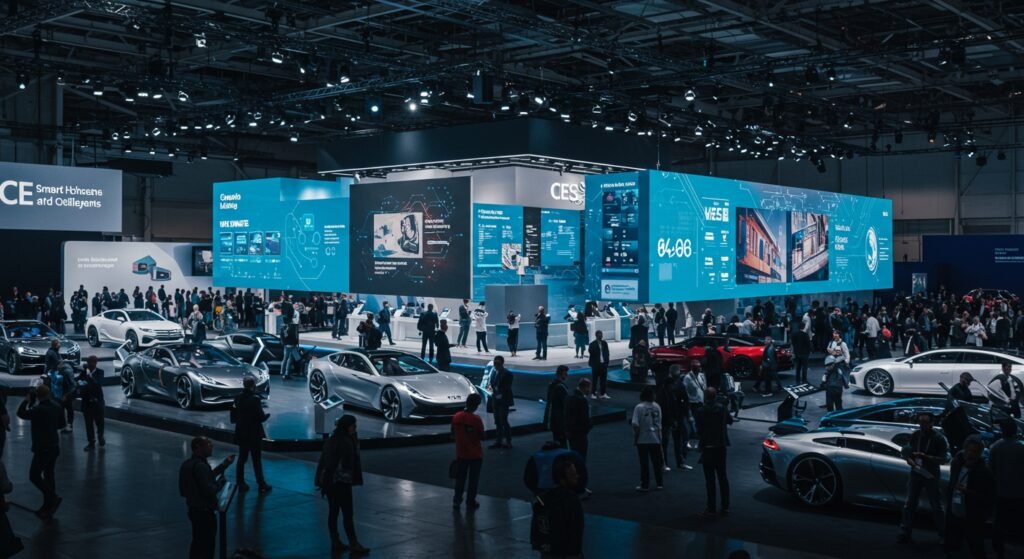
LAS VEGAS – The global consumer electronics industry converged in Las Vegas this week for the annual CES trade show, offering a glimpse into the technological innovations poised to shape the coming year and beyond. Opening its doors on Tuesday, the event drew thousands of companies, including global giants like Samsung, LG, and Sony, showcasing their latest products and conceptual ideas to an estimated approximately 100,000 attendees.
Three dominant themes emerged prominently across the expansive exhibit halls: the pervasive integration of Artificial Intelligence (AI), the rapid evolution of car technology, and the continuous advancement in home entertainment gadgets.
The Pervasive Influence of AI
AI was widely anticipated to be a central focus, underscoring its transformative potential across virtually every sector of consumer technology. Industry expert Leo Gebbie from CCS Insight noted the continued intense focus on AI but also voiced a cautionary perspective regarding potential “AI fatigue” among consumers and businesses alike. While AI is expected to be a pervasive theme, delivering a “genuinely compelling story” around its practical benefits is becoming increasingly challenging.
Despite this challenge, experts see significant potential for AI to revitalize certain market segments. Smart home technology, for instance, is an area where AI could play a crucial role, promising more intuitive, integrated, and useful domestic environments.
The Rise of Automotive Technology
Increasingly, CES has broadened its scope beyond traditional consumer gadgets to embrace the automotive sector. This year solidified that trend, with vehicles and related technologies occupying significant floor space. Paolo Pescatore, founder of PP Foresight, observed the growing prominence of automotive technology at the event, remarking that CES at times feels more akin to a “car electronics show.”
This shift reflects the blurring lines between the automotive and consumer tech industries. Tech companies are making substantial investments in automotive software, encompassing areas such as infotainment systems, enhancing smarter transportation solutions, deepening AI integration within vehicles, improving safety features, and advancing EV charging technologies. These developments are all viewed as stepping stones towards the future of autonomous driving, particularly with the integration of generative AI promising more sophisticated decision-making and user interaction capabilities within cars.
Home Entertainment and Beyond
While AI and automotive tech captured significant attention, the core focus on home entertainment and personal electronics remained strong. New televisions, audio systems, and smart appliances continued to draw crowds. Beyond the major categories, specific vertical markets are also leveraging advancements in AI and faster chips to drive innovation.
Notable among these developing areas are segments related to fitness, wellbeing, and sports technology. These often fall under the umbrella of wearable tech, where miniaturization, increased processing power, and smarter AI algorithms are enabling more sophisticated health tracking, performance analysis, and personalized user experiences.
Global Showcases and Expert Outlook
The event also serves as a vital platform for countries to highlight their technological prowess and leadership. Nations like France typically present a strong presence at CES, often showcasing novel and cutting-edge products from their burgeoning tech scenes.
As the show progresses, the challenge for exhibitors, particularly those focused on AI, will be to move beyond abstract concepts and demonstrate concrete, tangible benefits that resonate with consumers and industry partners. While Leo Gebbie’s caution regarding “AI fatigue” highlights a potential hurdle, the sheer volume of innovation on display across AI, automotive, and home technology underscores the dynamic and rapidly evolving landscape of the consumer electronics world showcased annually in Las Vegas.
More Stories
Sweet Magnolias Creator Bids Emotional Farewell After Cancellation
Lady Gaga Welcomes Daughter Rose Bean Polansky
Ranbir & Alia Launch Major 20-School Mumbai Makeover