











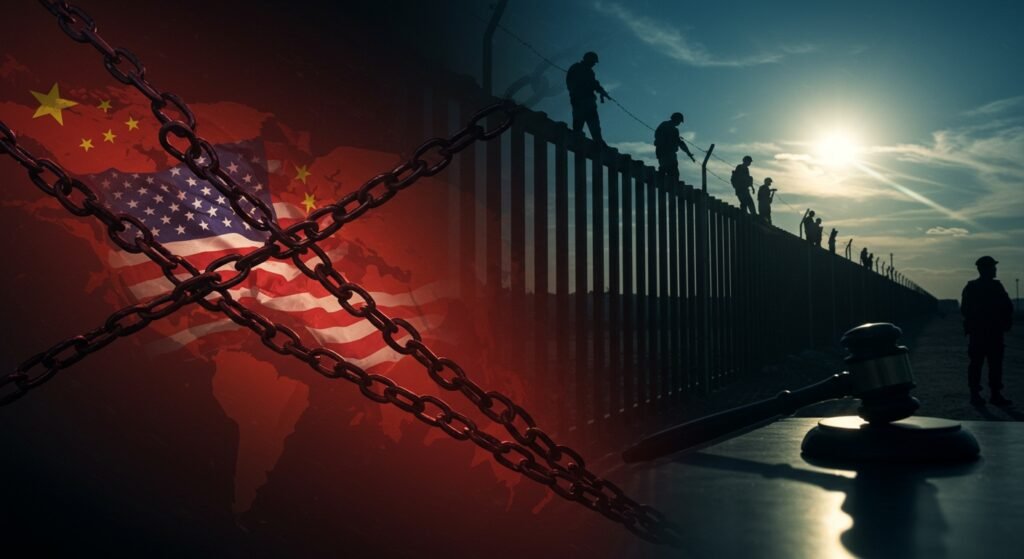
February 4, 2025, marked a day of significant and rapid shifts in U.S. domestic and international policy, characterized by simultaneous moves to escalate trade tensions with China while de-escalating them with North American neighbors. These developments unfolded alongside legal challenges to presidential authority over federal spending and abrupt changes within key government agencies, painting a complex picture of the administration’s priorities and actions.
Global Trade Front: Tariffs Shift East
The most prominent development on the international stage was President Trump’s announcement of new tariffs targeting China. This move immediately triggered a sharp, retaliatory response from Beijing, signaling a significant escalation in the ongoing trade conflict between the world’s two largest economies.
President Trump imposed an additional 10% tariff on all Chinese products, broadening the scope of existing trade barriers. China’s Finance Ministry quickly countered, detailing specific retaliatory tariffs designed to impact key American export sectors. These include a 15% tariff on U.S. coal and liquefied natural gas (LNG), and a 10% tariff on crude oil, farm equipment, and some U.S.-made vehicles. Furthermore, China declared new export controls on critical minerals, including rare earth elements, a strategic move with potential implications for global supply chains and industries reliant on these materials.
North American Détente and Border Agreements
In stark contrast to the intensified pressure on China, President Trump simultaneously announced a suspension of the trade war with Canada and Mexico. This decision involved delaying previously imposed 25% tariffs on goods from these nations. The administration cited specific agreements reached with both countries as the basis for this pause in trade hostilities.
The suspension followed promises from Canadian Prime Minister Justin Trudeau to address the issue of fentanyl smuggling, a critical concern for U.S. authorities. Concurrently, Mexican President Claudia Sheinbaum agreed to deploy 10,000 troops to the border with the United States, aiming to enhance border security and manage migration flows. These agreements appear to have served as preconditions for relieving the tariff pressure on the two North American Free Trade Agreement (NAFTA) partners, highlighting the administration’s linkage of trade policy with border security and counter-narcotics efforts.
Domestic Governance: Agencies Under Scrutiny
Domestically, the administration undertook significant actions impacting government agencies. The work of the Consumer Protection Agency was effectively frozen, with operations curtailed. Simultaneously, staff at the U.S. Agency for International Development (USAID) were placed on leave. This action was accompanied by the immediate deactivation of USAID’s public-facing platforms, taking the agency’s website and social media presence offline. The moves raised questions about the future direction and operational capacity of these vital government bodies.
Adding to the changes at USAID, Secretary of State Marco Rubio announced the appointment of Pete Marocco, a known Trump ally, as the agency’s acting deputy administrator. This signals a potential shift in leadership and priorities within the organization responsible for administering civilian foreign aid and development assistance.
Judicial Oversight: Injunction Against Spending Freeze Extended
Adding another layer of complexity to the day’s events, a federal court in Washington, D.C., delivered a significant legal check on presidential power. U.S. District Judge Loren AliKhan presided over the ruling that extended a temporary injunction against President Trump’s expansive effort to freeze trillions of dollars of federal spending.
The court’s decision cited a potential violation of the Constitution’s fundamental principle of the separation of powers, arguing that the President’s actions encroached upon Congress’s authority over federal appropriations. Judge AliKhan’s ruling also underscored the potential consequences of such a spending freeze, describing its impact as “catastrophic”. The injunction’s extension aims to prevent severe disruption to the lives of millions of Americans who rely on essential government services, including programs providing aid for food, home heating, and medical assistance.
February 4, 2025, thus encapsulated a series of high-stakes actions across multiple fronts – a recalibration of international trade alliances, direct intervention in the functioning of domestic and foreign aid agencies, and a judicial branch asserting its role in checks and balances against executive authority over federal funds.
More Stories
Costco Goes Nationwide on Uber Eats: A New Era for Bulk Delivery
Elena Rybakina Wins US Open, Ascends to World No. 1
Rubio Seals Security Pacts; Vance Drives Policy Agenda