











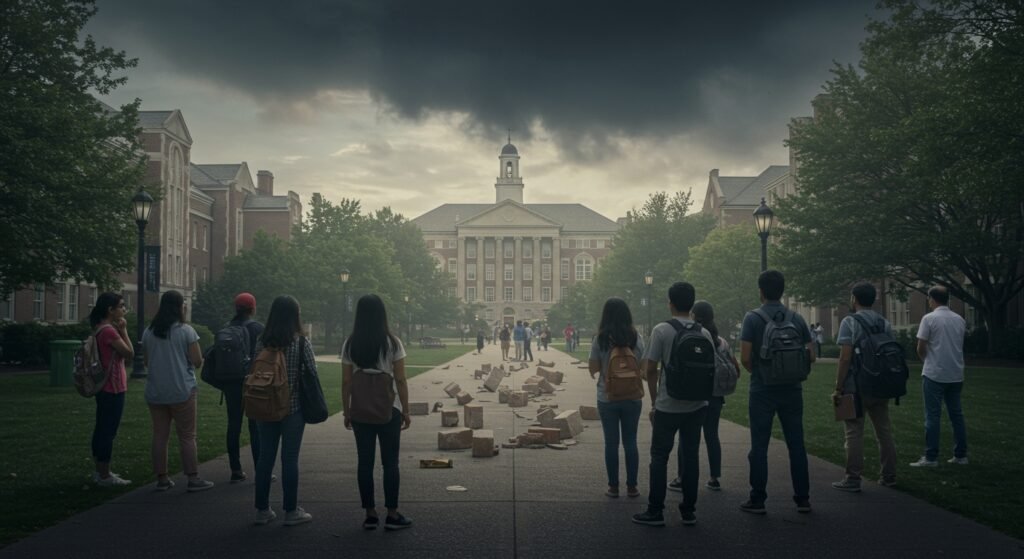
WASHINGTON D.C. — A significant policy shift initiated during the administration of former President Donald Trump is creating uncertainty for international students pursuing higher education in the United States, particularly those from India. An executive order aimed at dismantling Diversity, Equity, and Inclusion (DEI) programs across U.S. institutions is having a tangible impact on Indian students who have historically benefited from the support structures offered by such initiatives.
Previously, many Indian students relied on DEI programs for mentorship, cultural integration support, scholarships, and career development resources tailored to their unique needs and backgrounds. As universities comply with mandates reducing or eliminating these programs, students are encountering a less welcoming academic atmosphere and face a potential reduction in the resources that facilitated their transition and success in a foreign country.
Understanding the Policy Shift
The executive order in question signaled a rapid effort to dismantle DEI initiatives across federal agencies and institutions receiving federal funding, including universities. Proponents of the order argued that DEI programs led to reverse discrimination or were unnecessary bureaucratic layers. However, critics contended that these programs were essential for creating inclusive environments and supporting underrepresented groups, including international students navigating complex social and academic landscapes.
The implementation of this order necessitates compliance requirements from universities. Anticipated consequences of these requirements include institutions potentially reducing the number of scholarships available to foreign students. This financial strain is a major concern for prospective students, many of whom rely heavily on aid to fund their education abroad.
Impact on Support Systems and Career Paths
The effects of the DEI purge extend beyond financial aid. Career services, which often incorporated DEI principles to host culturally sensitive job fairs or build connections with global employers, are now jeopardized. These services were crucial for international students seeking post-graduation employment opportunities in the U.S. or looking to leverage their U.S. education in the international job market. The removal or scaling back of these initiatives is viewed by many as a concrete impediment not only to academic achievement but also to economic mobility and the prospect of enduring professional stability for Indian students in the United States.
Shifting Sands: Student Sentiment and Alternatives
The U.S. has long been a premier destination for Indian students seeking higher education. Data from the Institute of International Education (IIE) highlights the scale of this trend, showing that over 200,000 Indian students pursued higher education in the U.S. in 2023 alone, making them one of the largest international student populations.
However, the changing landscape is prompting a re-evaluation among prospective students. A recent survey conducted by the Indian education research firm Global Ed Insights underscores this shift. The survey indicates that 62% of students who had initially preferred the U.S. are now actively considering other study-abroad locations. Their primary concerns stem from worries regarding inclusivity on U.S. campuses, constraints on financial aid availability due to policy changes, and uncertainties surrounding prospects for post-graduation employment.
Looking Beyond the United States
Facing these challenges, Indian students are increasingly exploring alternatives to the United States. Countries such as Canada and the United Kingdom, which continue to promote inclusive policies and offer clear pathways for international students, are emerging as preferred destinations. This potential diversion of talent represents a significant consequence of the U.S. culture war impacting international education.
In conclusion, the dismantling of DEI programs under policies initiated during the Trump administration is having a profound and potentially lasting effect on the decisions of Indian students. As universities adapt to the new requirements, the resulting reduction in support systems, financial aid, and career resources is leading a significant portion of prospective students to look elsewhere, raising questions about the future trajectory of international student enrollment in the U.S. amidst this evolving landscape.
More Stories
Lowriding’s Rise: SF Celebrates Cruising Culture
U.S. Repatriates 64 Cultural Relics and Fossils to China
Betting on Viral Fame: Novig’s Strategic Use of Sydney Sweeney