











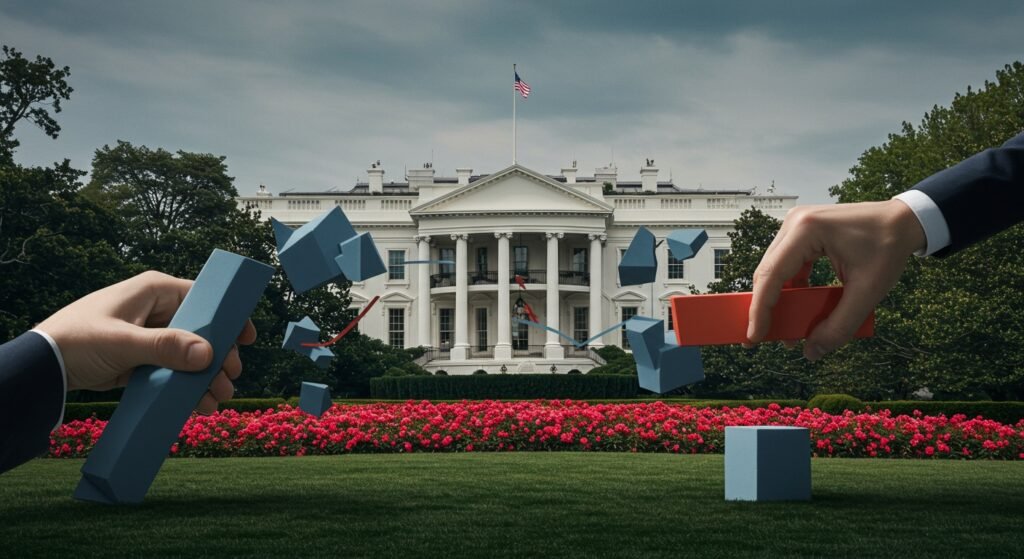
Washington, D.C. – President Donald Trump on Wednesday, April 2, 2025, announced the imposition of extensive new tariffs affecting imports from nearly all U.S. trading partners. The significant policy shift was unveiled during a “Liberation Day” event held in the Rose Garden of the White House, marking a dramatic escalation in the administration’s approach to international trade.
The announced measures introduce a tiered system of taxation on goods entering the United States. At the forefront are substantial increases targeting two major economic blocs: a 34 percent tax on imports from China and a 20 percent tax on goods originating from the European Union.
Beyond these specific targets, the new policy establishes a baseline 10 percent tax on imports from all countries. This broad tariff is set to take effect swiftly, with collection scheduled to begin on Saturday, April 5th. The higher rates, specifically the 34 percent on China and 20 percent on the European Union, are slated to be implemented shortly thereafter, taking effect on April 9th.
Rationale Behind the Policy Shift
Addressing attendees at the Rose Garden event, President Trump articulated the rationale underpinning the new tariff regime. He stated unequivocally that these tariffs are primarily intended to boost domestic manufacturing within the United States. The President has long been a vocal critic of the existing global trade system, which he argues has disadvantaged American industries and workers. His remarks on Wednesday reiterated this position, framing the new tariffs as a necessary corrective action designed to level the international playing field and incentivize the production of goods domestically rather than relying on imports.
The administration posits that increasing the cost of imported goods will make American-made products more competitive in the domestic market, thereby encouraging businesses to invest in U.S.-based production facilities and create jobs. This protectionist stance represents a core tenet of President Trump’s economic philosophy, aimed at reshaping global supply chains and reducing trade deficits.
Specific Measures and Future Plans
In addition to the broad tariff rates, the announcement included specific administrative changes designed to tighten import regulations. Notably, President Trump confirmed the immediate removal of tariff exemptions for imports from China valued at $800 or less. Previously, low-value shipments could often enter the country without incurring duties, a practice the administration has now ended for Chinese goods.
Looking ahead, the President indicated that this removal of de minimis thresholds for low-value imports is not limited to China. He announced plans to eliminate similar tariff exemptions for other nations once the necessary government resources and administrative mechanisms are in place to handle the increased volume of taxable shipments.
Economic and Geopolitical Implications
The decision to impose tariffs on imports from nearly all trading partners, including major allies and economic rivals alike, signals a potentially significant recalibration of U.S. trade relations. The move is expected to prompt reactions from affected countries and could trigger retaliatory measures, further complicating international commerce and potentially impacting global supply chains. The sheer scale of the tariffs – affecting everything from consumer goods to industrial components – suggests a broad impact on American businesses that rely on imports and consumers who purchase them.
While the President’s stated goal is to revitalize domestic manufacturing, the tariffs could also lead to increased costs for businesses and consumers, potentially fueling inflation. The policy represents a departure from decades of U.S. foreign policy that largely championed reduced trade barriers and globalization.
Conclusion
President Trump’s announcement in the Rose Garden on April 2, 2025, marks a pivotal moment in his administration’s trade policy, enacting widespread tariffs targeting a vast array of goods and trading partners. With the 10 percent baseline tariff set to begin on April 5th and higher rates for China and the European Union following on April 9th, the immediate future of U.S. international trade appears set for significant disruption as businesses and governments around the world react to the new economic landscape.
More Stories
AI Smuggling Ring Busted: 3 Charged in $2.5B Tech Heist
Middle East Tensions Explode: Iran Launches Missile Barrage After US-Israel Strikes
Russia Shares Intel with Iran to Target US Forces Amid Escalating War