











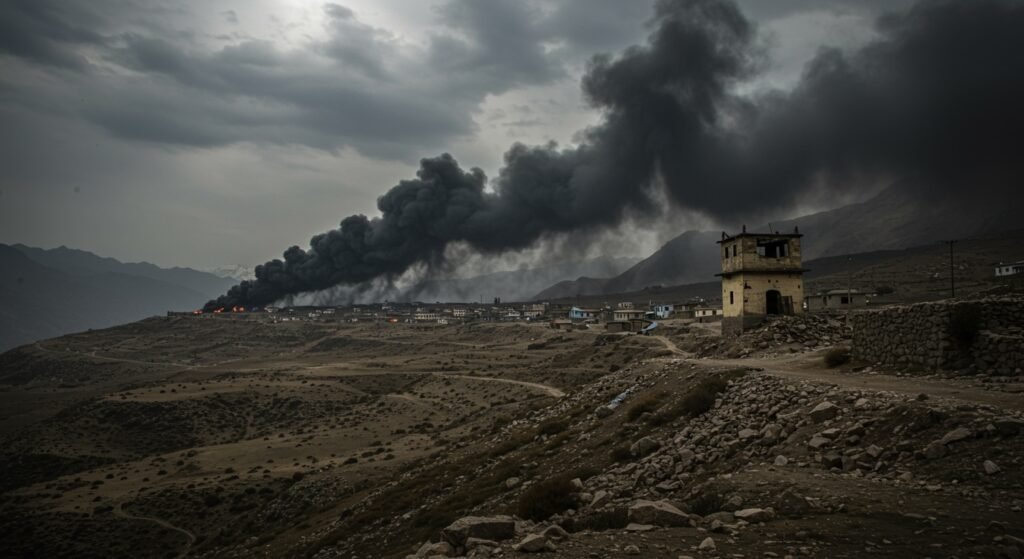
Tensions between nuclear-armed neighbors India and Pakistan escalated sharply on May 7th, 2025, following a series of Indian airstrikes deep inside Pakistani territory and Pakistan-administered Kashmir. The strikes, described by New Delhi as a significant military operation code-named ‘Operation Sindoor,’ targeted nine sites.
India asserted the operation was a necessary response to a deadly terror attack that occurred on April 22nd in Pahalgam, south Kashmir, which claimed the lives of 26 civilians. Indian authorities attributed this attack to Pakistan-based terror groups, framing ‘Operation Sindoor’ as counter-terrorism measure targeting infrastructure used by these organizations.
Islamabad swiftly condemned the Indian action, with Pakistani officials, including Prime Minister Shehbaz Sharif, labeling the strikes an “act of war” and vowing a robust retaliation. This pledge materialized as Pakistan launched its own retaliatory strikes into India and Indian-administered Kashmir. Amidst these counter-strikes, Pakistan’s military claimed a significant success, asserting that their forces had shot down five Indian fighter jets.
Escalating Hostilities
The trajectory of the recent escalation began with the Indian preemptive strikes on May 7th, 2025. ‘Operation Sindoor,’ as designated by the Indian government, involved coordinated attacks on a total of nine locations. These sites included targets situated not only within Pakistan but also in the strategically sensitive region of Pakistan-administered Kashmir. India’s justification for this extensive operation was rooted in the April 22nd terror attack in Pahalgam, south Kashmir, where 26 civilians were killed. New Delhi publicly blamed “Pakistan-based terror groups” for the atrocity and stated the strikes were aimed at dismantling their capabilities.
Pakistan’s Response and Conflicting Claims
Pakistan’s reaction was immediate and forceful. Prime Minister Shehbaz Sharif and other senior officials characterized India’s actions as an undeniable act of aggression and explicitly stated Pakistan’s right and intention to retaliate. Following this declaration, Pakistan launched its own strikes into Indian territory and Indian-administered Kashmir. A Pakistani military spokesperson provided details regarding the impact of the initial Indian strikes, stating they resulted in at least 26 fatalities and left dozens wounded, including civilians. The spokesperson specifically noted that a mosque in Pakistan’s Punjab province was among the sites hit during ‘Operation Sindoor.’ Furthermore, Pakistan claimed to have successfully intercepted and shot down five Indian fighter jets during the ensuing exchange of fire.
Casualty figures remained a point of contention and difficulty to verify independently amidst the hostilities. Indian officials reported that the retaliatory Pakistani attacks had killed at least 10 people and wounded several others within Indian territory and Indian-administered Kashmir.
Adding to the complexity, Pakistan officially insisted that its forces did not deploy missiles or drones in their retaliatory actions. However, Pakistani sources did acknowledge that Indian drone attacks were observed in major Pakistani cities, including Lahore, Rawalpindi, and Karachi, though the extent of damage or casualties from these reported drone activities remained unclear.
Civilian Impact and Diplomatic Fallout
The violence had a direct and tragic impact on civilian populations residing along the de facto border, known as the Line of Control (LoC). Authorities in Pakistan-controlled Kashmir reported suffering at least a dozen deaths as a result of shelling across the frontier. Similarly, villagers on the Indian side, in Indian-administered Kashmir, claimed a higher toll, stating that at least 15 individuals had been killed in their areas from the cross-border shelling.
The international community watched the unfolding crisis with concern. On May 8th, India sought to manage the diplomatic fallout by briefing envoys from 13 member states of the United Nations Security Council. During this briefing, Indian representatives reiterated their position that the strikes were a proportionate response targeting terrorist infrastructure, not an act of escalation. The Indian government also took domestic steps in light of the security situation, calling an all-party meeting specifically focused on ‘Operation Sindoor’ for May 8th.
Further underscoring the severity of the situation, Indian Prime Minister Narendra Modi’s previously scheduled three-nation visit to Europe, planned for May 13th to 17th, was canceled. This decision highlighted the Indian government’s focus on the volatile border situation and the need to address the immediate security challenges.
The exchange of fire and the conflicting claims from both sides underscored the precarious state of relations between India and Pakistan, raising fears of a wider conflict following the most significant military action between the two nations in recent memory.
More Stories
Costco Goes Nationwide on Uber Eats: A New Era for Bulk Delivery
Elena Rybakina Wins US Open, Ascends to World No. 1
Rubio Seals Security Pacts; Vance Drives Policy Agenda