











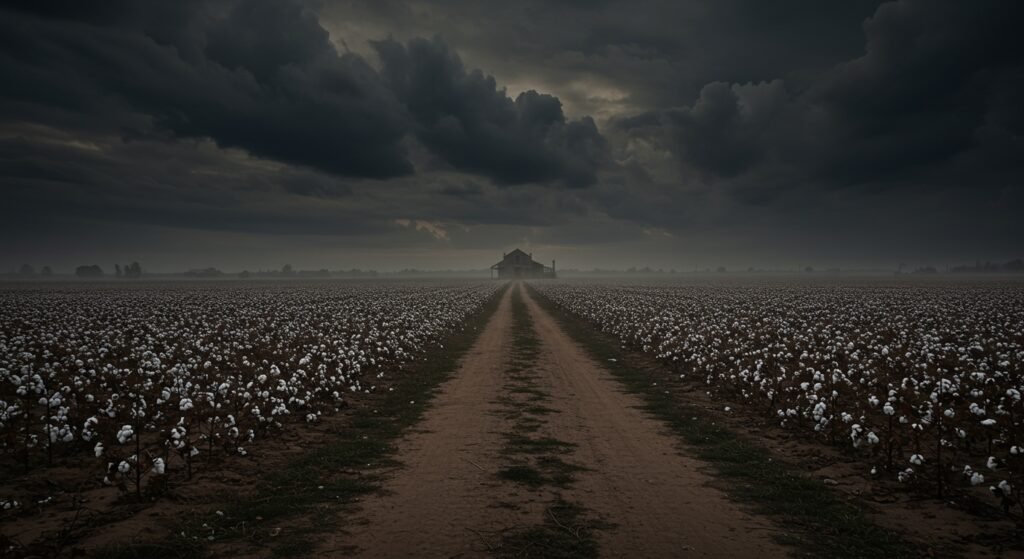
In a significant cinematic release, director Ryan Coogler, known for his impactful storytelling, transports audiences to the rural South of 1932 with his latest film, “Sinners.” Set specifically in the historic landscape of Clarksdale, Mississippi, this ambitious project delves into the atmospheric depths of Southern Gothic horror, attempting to weave together complex themes and genre elements against a backdrop of deep cultural resonance.
Setting and Atmosphere
The film immediately establishes a profound reverence for the Black South, utilizing striking imagery that defines the region. Cinematography captures the vastness of cotton fields stretching to the horizon, the endless skies overhead, and the dusty roads that connect isolated communities. This visual tapestry underscores the film’s historical setting and its commitment to portraying the distinct environment and era of Clarksdale, Mississippi, in 1932.
Narrative Core
At the heart of the story are twin brothers, Smoke, portrayed by the acclaimed Michael B. Jordan, and his sibling, Stack. The narrative centers on their return to their hometown and their subsequent decision to purchase a local sawmill. Their plan is to transform this industrial space into a vibrant juke joint, a cultural hub crucial to the social life of the era. However, their homecoming is far from peaceful, as they quickly find themselves confronting deeply entrenched evils. The plot thickens considerably with the introduction of a man who is a member of the Ku Klux Klan, representing the overt racial terror of the period, and a group of Native American vampire hunters, introducing a supernatural threat rooted in folklore.
Integrating Genre Elements
“Sinners” boldly incorporates classic elements of vampire legends into its Southern setting. The film engages with traditional vampire lore, featuring familiar tropes such as the use of garlic as a repellent, the vulnerability of vampires to silver and wooden stakes, and the critical necessity for a vampire to receive an explicit invitation before entering a home. These genre conventions are integrated into the narrative, clashing with the historical and cultural specificities of the Mississippi Delta.
Critical Perspectives
Based on early critical reception, “Sinners” is lauded for its intriguing ideas and compelling characters [9]. The ambitious premise, blending historical drama with supernatural horror and social commentary, is noted as a strength. Michael B. Jordan’s performance as Smoke is highlighted, contributing to the film’s character-driven aspects.
However, the review also points to significant challenges within the film’s execution. Despite its promising foundation, the story is described as feeling misshapen, suggesting structural issues that impede its flow and impact [9]. Moments of profound tragedy and violence are noted as not being fully explored, potentially diminishing their emotional weight within the narrative [9]. Furthermore, critical assessment indicates that key emotional beats throughout the film lack the necessary heft to resonate fully with the audience [9]. The review suggests that the film attempts to contain more thematic depth, narrative threads, and genre elements than it can effectively manage within its over-two-hour runtime, leading to a sense that it “just misses greatness” despite its bold ambition [9].
Conclusion
Ryan Coogler’s “Sinners” stands as a testament to the director’s willingness to tackle challenging subjects and blend genres in unexpected ways. Its powerful setting in 1932 Clarksdale, Mississippi, and its specific focus on the Black South provide a rich, resonant backdrop. While praised for its ambitious scope and intriguing core concepts, the film, according to critical analysis [9], faces hurdles in its narrative structure and emotional execution, ultimately positioning it as a compelling but perhaps overwrought cinematic endeavor that doesn’t fully capitalize on its considerable potential.
More Stories
Mike Flanagan’s ‘Carrie’ Stuns Fantastic Fest
J Mascis: How Black Sabbath Turned Him Into a Rock Outlier
Sound Strokes: A Sonic Bridge Between China and Scotland