











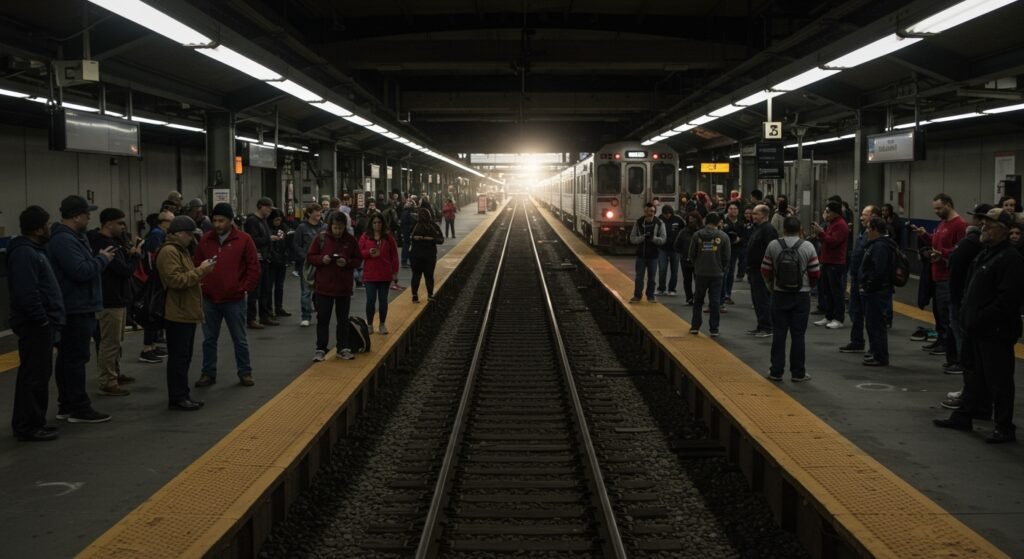
TRENTON, New Jersey – Train engineers represented by the Brotherhood of Locomotive Engineers and Trainmen (BLET) initiated a full statewide strike against New Jersey Transit (NJ Transit) overnight on Friday, May 16, 2025. The industrial action follows the breakdown of prolonged contract negotiations, with wages cited as the central unresolved issue.
This significant development marks the first time the state has experienced a statewide transit strike in over 40 years, immediately halting all NJ Transit train service across the network. The abrupt cessation of rail operations is poised to inflict substantial disruption upon an estimated 350,000 daily commuters who depend on NJ Transit train lines for essential travel.
Understanding the Core Dispute
The strike commenced after intensive negotiations between the BLET and NJ Transit failed to yield a new labor agreement. While specific details of the final offers and demands have not been fully disclosed, sources close to the talks indicated that disagreements over wage increases were the primary impasse that led to the union issuing a strike order. Union officials argue that their members’ compensation has not kept pace with inflation or industry standards, particularly considering the critical role they play in operating the state’s vital rail infrastructure. NJ Transit, conversely, has likely faced budgetary constraints and sought terms it deems fiscally responsible while ensuring operational stability.
Scale of the Commuter Chaos
The impact of the statewide strike extends far beyond the immediate inconvenience. The 350,000 daily commuters affected rely on NJ Transit’s extensive rail network to access major economic hubs and destinations throughout the region. Travel to and from major cities like New York City and Philadelphia via NJ Transit trains has been completely suspended. This includes crucial access points such as Penn Station in New York City and 30th Street Station in Philadelphia, which serve as lifelines for thousands of daily cross-state travelers.
Furthermore, access to critical infrastructure like airports and major concert venues served by NJ Transit rail is severely hampered. Travelers heading to Newark Liberty International Airport (EWR) or Trenton-Mercer Airport (TTN), both of which have direct or connecting rail service, must now seek alternative modes of transport. Similarly, patrons attending events at major venues that rely on train access will need to make last-minute adjustments to their travel plans.
Commuters Scramble for Alternatives
The absence of train service forces hundreds of thousands of commuters to urgently find alternative ways to reach their destinations. Experts predict a massive shift towards other forms of transportation, including NJ Transit’s bus network, private bus operators, and personal vehicles. This sudden surge in demand is expected to overwhelm existing road infrastructure, leading to significant traffic congestion on major highways and local roads throughout the state, particularly during peak commuting hours.
The reliance on buses may also prove insufficient, as the bus network may not have the capacity to absorb the sheer volume of displaced rail passengers, especially for longer-distance commutes. Driving offers more flexibility but presents challenges related to parking availability and cost in urban centers like New York City and Philadelphia. Carpooling is another potential solution but requires coordination among individuals facing already stressful circumstances. The disruption could also strain regional ferry services and PATH trains for those commuting towards Manhattan, as these alternative modes see increased ridership.
Historical Context and Path Forward
The decision by BLET engineers to strike marks a historic moment, representing the first statewide shutdown of NJ Transit’s rail operations due to a labor dispute in over four decades. The last comparable widespread transit disruption of this magnitude occurred in the early 1980s. The current strike underscores the critical nature of the engineers’ role and the high stakes involved in resolving the contract dispute for both the union and the transit agency.
Amidst the widespread disruption, there is a glimmer of hope for a resolution. Negotiations between the BLET and NJ Transit are reportedly expected to resume on the morning of Sunday, May 18. The outcome of these renewed talks will determine the duration of the strike and the potential for service restoration. Until an agreement is reached, the approximately 350,000 daily commuters across New Jersey face the reality of a significantly altered and challenging travel landscape.
The statewide NJ Transit train strike over wages serves as a stark reminder of the delicate balance in labor relations and the profound impact disruptions can have on the daily lives and economy of a densely populated region.
More Stories
Costco Goes Nationwide on Uber Eats: A New Era for Bulk Delivery
Elena Rybakina Wins US Open, Ascends to World No. 1
Rubio Seals Security Pacts; Vance Drives Policy Agenda