











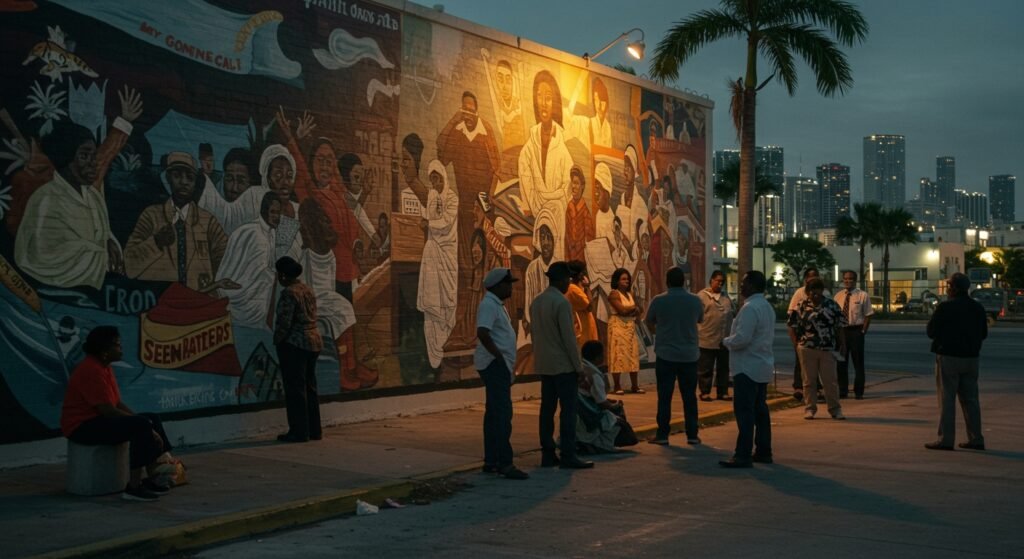
Miami, USA – Across the vibrant neighborhoods of Miami, residents gathered this week to commemorate Juneteenth, marking the 160th anniversary of a pivotal moment in American history. Observed annually on June 19th, the federal holiday holds particular resonance in 2025, set against a backdrop of intensifying political backlash, perceived cultural erasure, and acts of vandalism that local leaders and residents say threaten the visibility of Black history and identity.
Understanding Juneteenth
Juneteenth commemorates June 19, 1865, the date when Union troops arrived in Galveston, Texas, and delivered the news of freedom to more than 250,000 enslaved people. This landmark event occurred more than two years after President Abraham Lincoln issued the Emancipation Proclamation. Now in its fourth year as a federal holiday, Juneteenth serves as a potent reminder of the long and often arduous path toward full liberation and equality in the United States.
For many, the holiday is a celebration of perseverance and a day to reflect on the complex legacy of slavery and emancipation. Local muralist Addonis Parker, whose work often highlights Black experiences, described Juneteenth not merely as a historical date but as “liberation long deferred.” He emphasized its profound significance, stating it is “actually our Fourth of July” for Black Americans.
Contemporary Challenges Amplify Significance
The observance of Juneteenth in 2025 comes at a critical juncture. The holiday’s importance is amplified by widespread rollbacks of diversity, equity, and inclusion (DEI) policies across various sectors, coupled with restrictions on the teaching of certain aspects of cultural history in educational institutions. These actions are seen by many as part of renewed efforts to diminish or erase Black identity and its contributions to the nation’s narrative.
The challenging climate is palpable on the ground in Miami. Recent acts of vandalism, including the defacing of a significant mural at Dorsey Park in the historic Overtown neighborhood, underscore the concerns about threats to cultural expression and historical memory.
Voices from the Community
Terrance Cribbs-Lorrant, executive director of the City of Miami Black Police Precinct & Courthouse Museum, shared deeply personal reflections on his history with the holiday and its evolving meaning across generations. His perspective highlights the intergenerational connection to the struggles and triumphs that Juneteenth represents.
Jasmine Williams, an Overtown youth and current HBCU student, views Juneteenth through the lens of resilience. For her and many young people, the holiday is a crucial reminder of the enduring strength and spirit of the Black community in the face of historical and contemporary adversity.
Historical Perspective and Critical Views
Miami historian Dr. Marvin Dunn offered a stark assessment of the current climate. He characterized the restrictions and backlash against cultural history as a dangerous “minimizing of the suffering, minimizing the violence” that is tantamount to a “denial of reality.” Dr. Dunn’s analysis points to a broader societal discomfort with confronting the full truth of America’s past.
However, Dr. Dunn also presented a critical historical perspective on Juneteenth itself, suggesting that while symbolic, the arrival of the news of freedom in Galveston on June 19, 1865, changed relatively little in the immediate material conditions for many formerly enslaved people, whose struggles for true autonomy and safety continued long after that date.
Marking the Milestone
Despite the complexities and contemporary challenges, Miami’s Juneteenth celebrations featured various events, reflections, and community gatherings. These commemorations serve not only to honor the historical moment of freedom in Texas but also to reaffirm the commitment to preserving Black history and advocating for equity and recognition in the present day.
As the city marked the 160th year of this emancipation date, the sentiments expressed by Addonis Parker – that Black identity and history cannot be erased – resonated widely, underscoring the determination within the community to ensure their story remains a central part of the American narrative, particularly in challenging times like those faced in 2025.
More Stories
Lowriding’s Rise: SF Celebrates Cruising Culture
U.S. Repatriates 64 Cultural Relics and Fossils to China
Betting on Viral Fame: Novig’s Strategic Use of Sydney Sweeney