










Mass Protests Grip Tehran Amidst Heightened Regional Tensions
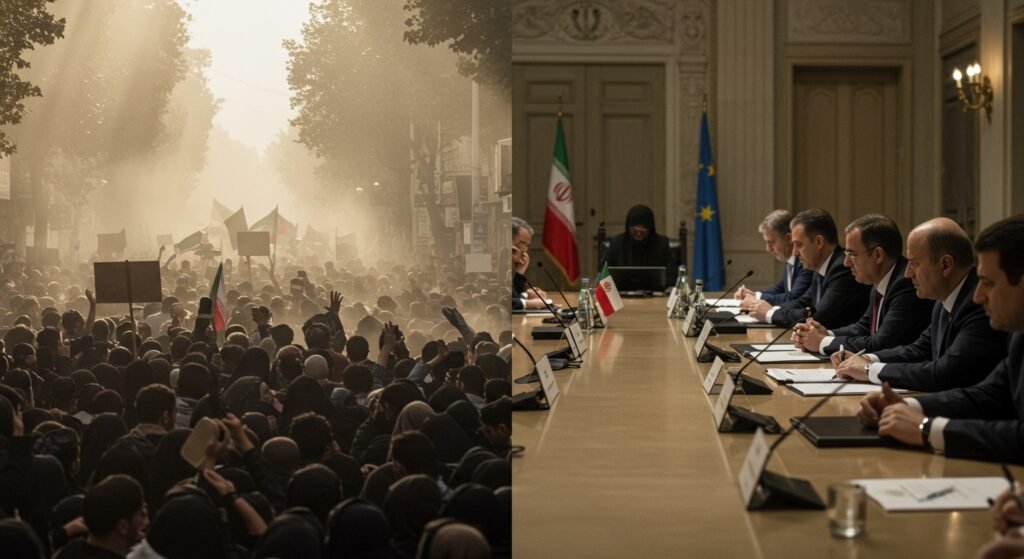
Hundreds of thousands of Iranians converged on the streets of Tehran on June 20, 2025, in widespread protests against escalating Israeli attacks and the looming prospect of direct military intervention by the United States. The demonstrations underscored the deep public anger and anxiety gripping the nation as the conflict across the region intensifies.
Simultaneously, in Geneva, Switzerland, Iran’s Foreign Minister engaged in critical diplomatic discussions with counterparts from France, Germany, the United Kingdom, and the European Union. These high-level meetings focused on navigating the complexities of the ongoing conflict, highlighting international efforts to de-escalate tensions through dialogue even as military actions continue.
White House Deliberation on Potential U.S. Action
Adding another layer of uncertainty to the volatile situation, White House Press Secretary Karoline Leavitt announced on June 20, 2025, that President Trump is expected to make a decision within the next two weeks regarding whether the United States will launch a strike against Iran. Leavitt acknowledged the possibility of potential negotiations, suggesting that diplomatic avenues may still be explored alongside military considerations.
The statement from the White House comes at a time of significant cross-border hostilities between Iran and Israel, contributing to the regional instability that has prompted the mass protests in Tehran and the urgent diplomatic consultations in Geneva.
Human Toll and Infrastructure Damage
The human cost of the conflict continues to mount. According to the rights group HRANA, Israeli strikes have resulted in the deaths of at least 639 people in Iran. Conversely, Iranian attacks have claimed the lives of at least 24 people in Israel, with over 200 individuals injured at Soroka Hospital in Beersheba following a recent Iranian strike.
Reports from Iran indicate that Israeli strikes have reportedly targeted and hit three hospitals in Tehran, raising concerns about the impact on civilian infrastructure and healthcare access. Meanwhile, Iran has confirmed targeting Israeli military facilities, including the Nevatim and Hatzerim bases, with missile strikes.
Broader Regional Context and International Condemnation
The current flare-up occurs within a broader regional context marked by severe criticism of Israel’s actions elsewhere. A panel of U.N. experts has stated that Israel is committing war crimes and the crime against humanity of extermination in Gaza. The United Nations has also taken the significant step of blacklisting Israel for grave violations against children.
The devastation in Gaza’s healthcare sector further highlights the widespread impact of military actions on civilian life. Over the past 20 months, Israel’s military operations have damaged or destroyed 38 hospitals and other health facilities in the territory.
A Region on Edge
The confluence of mass public demonstrations in Iran, intensive diplomatic engagement in Europe, the explicit consideration of U.S. military intervention, and the ongoing exchange of strikes underscores the precarious state of affairs in the Middle East. As President Trump’s deadline for a decision approaches and regional casualties rise, the potential for further escalation remains a significant international concern. The events of June 20, 2025, serve as a stark reminder of the complex and interconnected challenges driving the conflict.
More Stories
AI Smuggling Ring Busted: 3 Charged in $2.5B Tech Heist
Middle East Tensions Explode: Iran Launches Missile Barrage After US-Israel Strikes
Russia Shares Intel with Iran to Target US Forces Amid Escalating War