











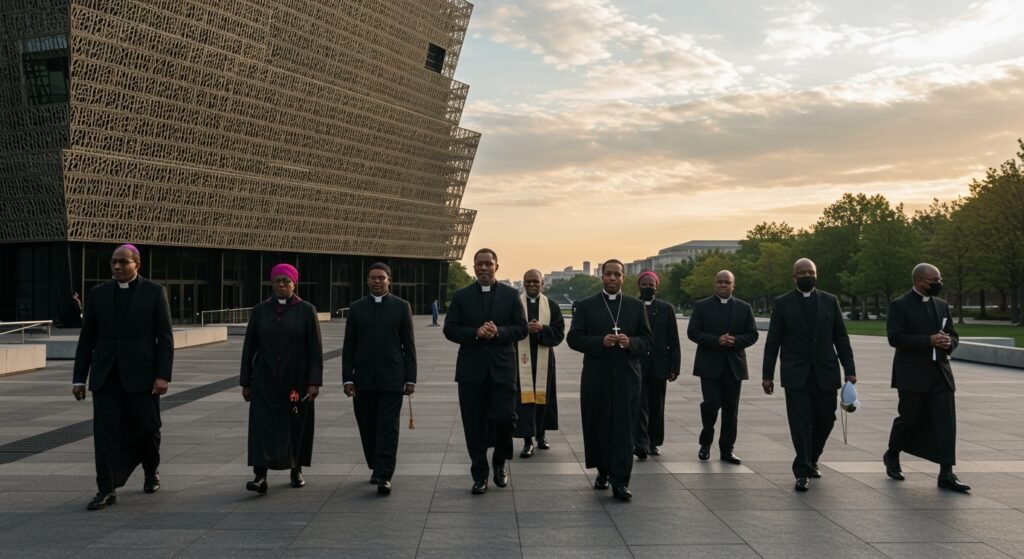
Washington, D.C. – Prominent Black churches across the United States have pledged their steadfast support for the Smithsonian’s National Museum of African American History and Culture following a controversial executive order issued by President Donald Trump on March 27. The order ignited widespread debate by alleging that exhibits at the Smithsonian and other federal institutions displayed a “divisive, race-centered ideology,” a characterization strongly disputed by the museum’s proponents and historical experts.
The unprecedented show of solidarity from faith leaders underscores the deep cultural and historical significance of the museum within the African American community and signals a firm rejection of attempts to politically influence or reinterpret its narrative.
Context of the Museum and the Executive Order
The National Museum of African American History and Culture (NMAAHC), which opened its doors in 2016, has quickly become a landmark institution on the National Mall. It serves as a vital repository for the history, culture, and life of African Americans. Welcoming its 10 millionth visitor in 2023, the museum offers a comprehensive journey through key periods of the Black experience in America, from the brutal era of chattel slavery and the oppressive realities of Jim Crow segregation to celebrating the profound contributions of Black Americans across every field.
President Trump’s executive order, delivered on March 27, specifically targeted institutions receiving federal funds, including entities within the Smithsonian, accusing them of promoting ideologies he deemed divisive. This move was widely seen as a direct challenge to institutions that interpret American history through the lens of racial injustice and systemic inequality.
Faith Leaders and Community Response
The response from Black churches has been swift and unequivocal. Leaders from various denominations and congregations have voiced their commitment to supporting the NMAAHC, emphasizing its crucial role in telling an unvarnished history that is essential for understanding the nation’s past and present. This support is seen not merely as a defense of a museum but as a defense of historical truth and the legacy of African Americans.
The churches, long pillars of the Black community and vital centers of activism and cultural preservation, view the museum as an extension of their own efforts to educate and empower.
Individual acts of protest have also highlighted the depth of feeling surrounding the issue. In a powerful demonstration of advocacy, Reverend Robert Turner undertook a 43-mile walk from Baltimore to Washington, arriving on April 16. Reverend Turner carried a sign emblazoned with the words “Reparations Now,” linking the defense of historical memory to ongoing demands for justice and equity.
Political Reaction and Museum Leadership
The executive order also drew sharp criticism from Democratic lawmakers. Members of the House Administration Committee, including Representatives Joseph Morelle, Terri Sewell, and Norma Torres, penned a joint letter condemning the order. They described it as a “flagrant attempt to erase Black history” and characterized the action as “cowardly and unpatriotic.”
Their letter underscored concerns that the administration was seeking to dictate historical interpretation for political purposes, potentially undermining the scholarly integrity of national museums.
Compounding the situation, the museum has recently undergone a leadership transition. Shanita Beckett is reportedly serving as interim director following the departure of Kevin Young in early April. While leadership changes are not uncommon, the timing amidst external political pressure adds another layer to the challenges facing the institution.
The Stakes of Historical Interpretation
The controversy surrounding the executive order and the subsequent defense by Black churches and political figures highlight the ongoing national debate over how American history, particularly the history of race and racism, should be taught and understood. The NMAAHC’s mission is to present a comprehensive and often challenging history, acknowledging the pain of the past while celebrating resilience and achievement.
The pledge of support from Black churches and the forceful response from lawmakers indicate a strong resolve to protect the museum’s ability to tell this history truthfully and without political interference. The institution remains a critical space for dialogue, reflection, and education on the complex narrative of the African American experience and its centrality to the American story.
More Stories
Lowriding’s Rise: SF Celebrates Cruising Culture
U.S. Repatriates 64 Cultural Relics and Fossils to China
Betting on Viral Fame: Novig’s Strategic Use of Sydney Sweeney