










WASHINGTON – Leading Black churches and faith leaders across the United States are voicing strong support for the National Museum of African American History and Culture following a directive from the Trump administration that critics argue challenges the institution’s narrative on race.
The show of solidarity comes in response to an executive order issued by President Donald Trump on March 27. The order alleged that exhibits at the Smithsonian Institution, including the African American museum, expressed a “divisive, race-centered ideology” and is part of the administration’s broader effort to remove “improper ideology” from such federal institutions. The order specifically tasked Vice President JD Vance with leading a review of the Smithsonian’s programming and exhibits.
Executive Order Sparks Controversy
Critics of the executive order contend it represents an attempt to shape the national narrative in a way that downplays or overlooks historical injustices central to the American experience, such as slavery and systemic discrimination. They argue that portraying historical accounts of racial injustice as “divisive” risks creating a distorted understanding of the past.
“This order is a flagrant attempt to erase Black history and silence uncomfortable truths about our nation’s past,” stated a letter sent to Vice President Vance by Democratic members of the House Administration Committee, including Representatives Joseph Morelle, Terri Sewell, and Norma Torres. The lawmakers described the directive as “cowardly and unpatriotic,” emphasizing the importance of confronting historical realities to foster a more just future.
Faith Leaders Mobilize Support
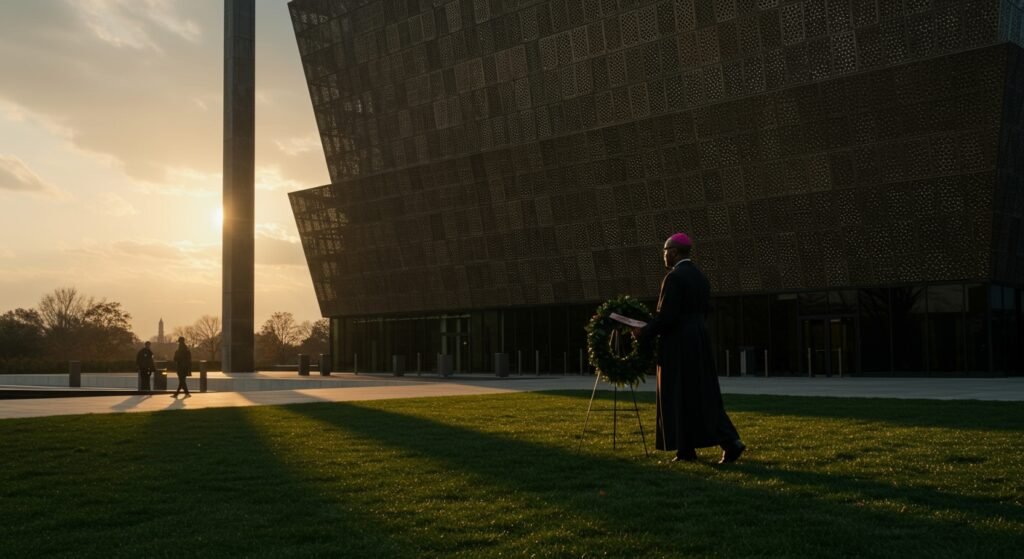
In a powerful display of commitment to preserving the museum’s mission, Reverend Robert Turner, pastor of Empowerment Temple African Methodist Episcopal Church in Baltimore, undertook a personal pilgrimage. On April 16, 2025, Rev. Turner completed a 43-mile walk to Washington, D.C., specifically including a stop at the museum. At the museum, he participated in a prayer and laid a wreath as a symbol of solidarity and support for the institution.
Rev. Turner has also taken practical steps to bolster the museum’s resources and community connection. Following a suggestion from Reverend Otis Moss III of Trinity United Church of Christ in Chicago, Rev. Turner is actively encouraging members of his congregation to become members of the museum. Memberships, which start at $25 per year, provide financial support and demonstrate broad community backing.
Other prominent faith leaders have also expressed their support. Reverend Jacqui J. Lewis, Senior Minister of Middle Church in New York City, confirmed that her congregation had made a donation of $1,000 to the museum. Bishop Timothy Clarke of the First Church of God in Columbus, Ohio, is another key religious figure who has publicly supported the museum amidst the controversy.
Museum’s History and Current Status
The National Museum of African American History and Culture opened its doors in 2016 and has quickly become a landmark institution on the National Mall. By 2023, it had welcomed 10 million visitors, a testament to its impact and importance to the public.
The museum’s exhibits cover the breadth of the Black American experience, from the brutal history of slavery and the long struggle against segregation and discrimination to celebrating the myriad achievements and contributions of Black Americans across all fields of endeavor. Its mission is to provide a national platform for the exploration and understanding of this vital part of the American story.
The institution recently underwent a leadership change. Shanita Beckett is currently serving as the interim director, following the departure of former director Kevin Young in early April.
Amidst the public debate spurred by the executive order and the vocal support from faith communities, the museum itself has remained publicly silent. It did not respond to requests for comment from The Associated Press regarding the executive order or the expressions of solidarity.
The actions by Black churches and political figures underscore the deep cultural and historical significance of the museum, framing the debate over its content as a crucial battle for the narrative of American history and identity.
More Stories
Lowriding’s Rise: SF Celebrates Cruising Culture
U.S. Repatriates 64 Cultural Relics and Fossils to China
Betting on Viral Fame: Novig’s Strategic Use of Sydney Sweeney