











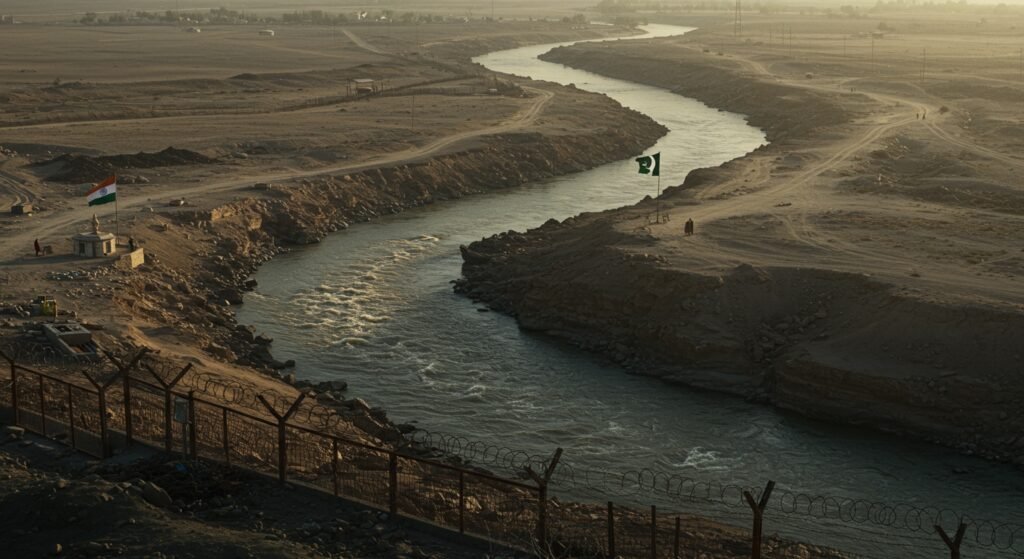
New Delhi has formally notified Islamabad of its decision to suspend the 1960 Indus Waters Treaty, citing ongoing concerns over cross-border terrorism and alleged violations by Pakistan. The move, effective immediately, marks a significant escalation in tensions between the nuclear-armed neighbours, coming just days after a deadly terrorist attack in Jammu and Kashmir.
Diplomatic Notification and India’s Rationale
The notification was conveyed via a letter dispatched on Thursday, April 24, 2025. Debashree Mukherjee, India’s Secretary of Water Resources, sent the communication to her Pakistani counterpart, Syed Ali Murtaza. In the letter, India asserted that repeated violations of the treaty by Pakistan and sustained cross-border terrorism created “security uncertainties,” which New Delhi claims have hindered its ability to exercise its treaty rights.
The Indus Waters Treaty, brokered by the World Bank, is a landmark agreement signed in 1960 that governs the use of the six rivers of the Indus system. It divides the rights to the rivers, granting India control over the three eastern rivers (Ravi, Beas, and Sutlej) and Pakistan control over the three western rivers (Indus, Jhelum, and Chenab). The treaty includes provisions for dispute resolution and mechanisms for cooperation on matters like river usage and hydrological data exchange.
Escalation Following Deadly Attack
This drastic step follows a horrific terrorist attack that occurred on April 22, 2025, in Pahalgam, a popular tourist destination in Jammu and Kashmir. The assault resulted in the deaths of 26 people, most of whom were tourists. India swiftly attributed responsibility for the attack to Pakistan, accusing Islamabad of supporting and facilitating “cross-border terrorism.”
Prime Minister Narendra Modi issued a stern vow to pursue those responsible for the Pahalgam attack, signaling a robust response from New Delhi. Responsibility for the attack was claimed by The Resistance Front (TRF), which Indian authorities have identified as a proxy group for the banned Pakistan-based terrorist organization Lashkar-e-Taiba (LeT).
India’s Retaliatory Measures and Pakistan’s Response
In the immediate aftermath of the Pahalgam tragedy and prior to the treaty suspension notification, India implemented several punitive measures against Pakistan. These included the closure of the Attari-Wagah border crossing, a crucial land link between the two countries. Furthermore, India revoked 14 categories of visas for Pakistani nationals and issued a 48-hour deadline for certain Pakistani visa holders already in India to depart the country.
Pakistan quickly retaliated with a series of counter-measures. Islamabad announced the cancellation of visas previously granted to Indian nationals. It also closed its airspace to Indian aircraft, effectively disrupting air travel between the nations and impacting international routes that traverse Pakistani territory. Additionally, Pakistan suspended all trade activities with India and proceeded to expel Indian diplomats and military advisers stationed in the country.
Pakistan’s Denial and Internal Actions
Islamabad has vehemently denied any involvement in the Pahalgam attack. The Pakistani Senate passed a resolution specifically rejecting India’s attempts to link the Pakistani state to the incident. While denying state complicity, reports emerged from India regarding actions taken against suspected terrorists internally.
Residential houses allegedly belonging to two LeT terrorists suspected of involvement in the Pahalgam attack were reportedly demolished in separate incidents in Pulwama and Anantnag, both districts within Jammu and Kashmir. These actions underscore the complex and multi-layered nature of the conflict and the measures being taken within the disputed region.
Implications for Water Sharing and Future Relations
The suspension of the Indus Waters Treaty has profound implications for water sharing arrangements that have largely endured through decades of animosity and conflicts between India and Pakistan. While India has the right under the treaty to use the eastern rivers, the suspension signals New Delhi’s intent to potentially alter the status quo, which could significantly impact Pakistan, heavily reliant on the western rivers for its agriculture and water needs.
The treaty has often been cited as one of the few enduring examples of cooperation between the two nations since their independence. Its suspension, linked directly to terrorism allegations, elevates the bilateral dispute from political and security realms into the critical area of shared natural resources.
Conclusion
The formal notification by India of the suspension of the 1960 Indus Waters Treaty represents a critical juncture in India-Pakistan relations, already fraught with historical grievances and current tensions. Coming on the heels of a deadly terrorist attack and a rapid exchange of punitive measures, the decision casts a long shadow over the future of diplomatic ties and the vital issue of water security in the region. The international community will be closely watching how this unprecedented development unfolds and its potential impact on regional stability.
More Stories
Costco Goes Nationwide on Uber Eats: A New Era for Bulk Delivery
Elena Rybakina Wins US Open, Ascends to World No. 1
Rubio Seals Security Pacts; Vance Drives Policy Agenda