











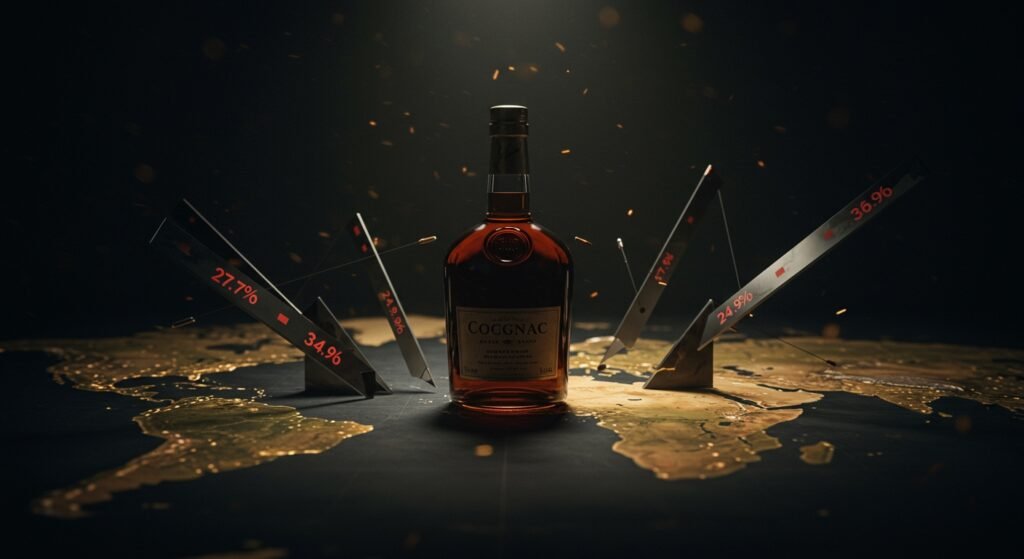
Beijing has formally implemented significant anti-dumping tariffs on European brandy, a move set to impact major producers, particularly those in France specializing in cognac. The decision, announced by China’s Commerce Ministry on Friday, July 4, 2025, signals a further intensification of trade friction between the world’s second-largest economy and key allies of the United States.
Effective Saturday, July 5, 2025, the duties will apply to imported European brandy at rates ranging from 27.7% to 34.9%. The ministry specified that these tariffs are a direct result of an anti-dumping investigation and are intended to be in place for a period of five years.
Context of Rising Trade Tensions
The imposition of these duties comes against a backdrop of increasingly strained trade relations between China and Western nations. Beijing’s Commerce Ministry explicitly linked the action to the “escalation of trade tensions” with allies of the United States. This suggests the move may be seen, at least in part, as a retaliatory or leverage-building measure in broader economic disputes.
The European Union, along with other US allies, has recently taken steps to address concerns regarding what they perceive as unfair trade practices by China, including probes into subsidies and potential market distortions in various sectors.
While the Chinese investigation into European brandy was initiated independently based on alleged dumping – the practice of selling goods in a foreign market at below their fair value or cost – the timing and the ministry’s statement place it firmly within the context of the wider geopolitical and economic competition underway.
Details of the Commerce Ministry’s Announcement
According to the official announcement from China’s Commerce Ministry, the anti-dumping investigation concluded that European brandy producers had indeed been dumping products onto the Chinese market, causing “substantial damage” to the domestic industry. The specific tariff rates, varying between 27.7% and 34.9%, are determined based on the findings related to specific companies or groups of companies involved in the export of brandy to China.
The Ministry stated clearly that the duties are not being applied retroactively, meaning imports cleared through customs before the effective date of Saturday, July 5, 2025, will not be subject to the new tariffs.
The five-year duration is standard for anti-dumping measures under international trade rules, though they can be reviewed and potentially extended or terminated based on subsequent investigations into market conditions and dumping practices.
Impact on the European Brandy Market
The Chinese market is a significant destination for high-value European spirits, particularly cognac from France. The punitive tariffs are expected to substantially increase the cost of European brandy for Chinese importers and consumers, potentially leading to a decrease in demand and market share for European producers.
French cognac houses, many of which rely heavily on exports to Asia, are likely to be the most affected by this measure. The tariffs could necessitate price increases in China, making their products less competitive compared to domestic alternatives or other imported spirits not subject to the duties. This could have a tangible economic impact on revenue and production levels in key brandy-producing regions.
The European spirits industry has previously voiced concerns about the potential for trade disputes to harm their export markets. This move by Beijing validates those concerns and creates significant uncertainty for businesses operating in the sector.
Broader Trade Implications and Outlook
The imposition of brandy duties is seen by analysts as a calculated move by China. It targets a specific, high-profile European export, potentially applying pressure on key EU member states like France, while also signaling Beijing’s readiness to use trade measures in response to perceived pressure or actions from Western powers.
This action raises questions about potential countermeasures from the European Union. While the EU has mechanisms to respond to what it views as unfair trade practices, any retaliatory measures could further escalate the trade dispute, harming businesses and consumers on both sides.
Trade tensions between major global economies have become a persistent feature of the international landscape. Actions like the brandy tariffs underscore the fragility of trade relationships and the increasing tendency for countries to employ economic tools to pursue strategic objectives. The coming months will reveal how European producers adapt to the new tariff regime and whether this particular dispute can be resolved, or if it merely foreshadows further friction in the complex trade relationship between China and the EU.
More Stories
Merz Defiant: Chancellor Stays Course After Historic CDU Losses
Costco Goes Nationwide on Uber Eats: A New Era for Bulk Delivery
Elena Rybakina Wins US Open, Ascends to World No. 1