











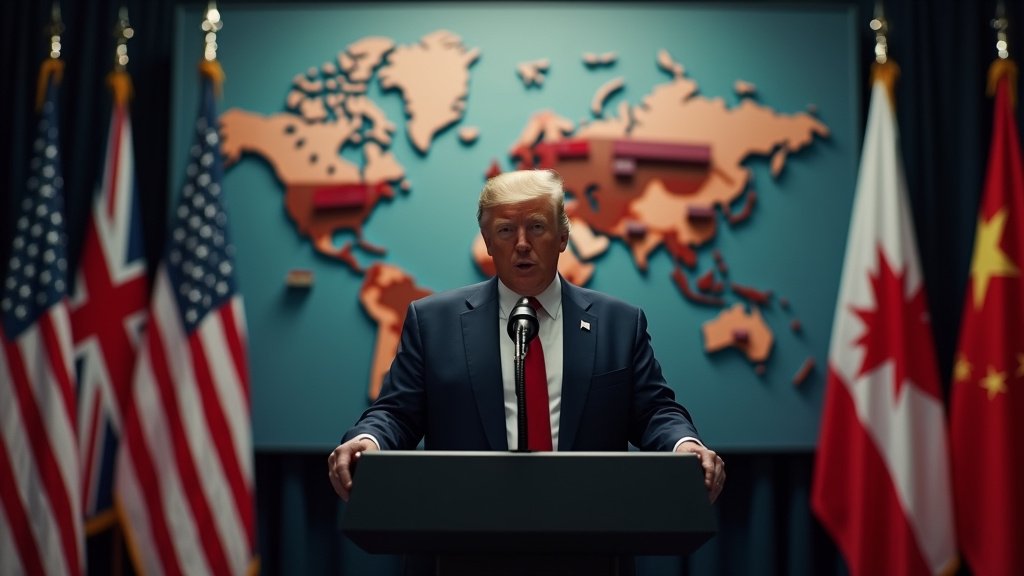
President Donald Trump has dramatically escalated trade tensions, imposing substantial tariffs on a wide array of nations. In a move that signals a significant shift in U.S. trade policy, dozens of countries will now face steeper import duties, with Canada bearing a particularly heavy burden of a 35% tariff on its goods.
Global Trade Landscape Redrawn
The executive order, which outlines the new import duties, impacts a staggering 69 trading partners. The tariffs range from a lower threshold of 10% to a significant high of 41%, demonstrating a broad application of this protectionist strategy. This sweeping measure comes into effect within a tight seven-day timeframe, giving businesses little time to adapt to the altered economic landscape. The actions appear to be the culmination of a self-imposed deadline for securing new trade deals, suggesting a frustration with the pace and outcomes of ongoing negotiations.
Specific Trade Partners Targeted
Several key U.S. allies and trading partners are specifically named in the tariff announcements. Brazil is set to experience one of the highest tariffs, with a 50% duty imposed on its goods entering the United States. India will face a 25% tariff, while Taiwan’s exports will be subject to a 20% duty. Switzerland, a nation known for its robust trade relations, will see its goods face a substantial 39% tariff. This targeted approach indicates a strategic recalibration of America’s global economic relationships, prioritizing perceived national economic interests.
Economic Implications and Reactions
The broad imposition of tariffs is expected to send ripples throughout the global economy, affecting supply chains, consumer prices, and international business relations. While the administration frames these actions as necessary steps to rebalance trade and protect American industries, critics warn of potential retaliatory measures and a slowdown in global economic growth. Businesses that rely on imports from these targeted nations will need to quickly assess the impact on their operations and potentially absorb increased costs or pass them on to consumers.
Humanitarian Crisis in Gaza Casts Shadow
In parallel developments, the intensifying conflict in Gaza has led to a dire humanitarian situation, casting a somber shadow over international affairs. Reports indicate that two more Palestinians have tragically died of starvation amidst ongoing Israeli attacks on individuals seeking humanitarian aid. This grim news has prompted protests from Palestinian citizens within Israel, highlighting the severe human cost of the conflict and the urgent need for increased aid and de-escalation. The stark contrast between the economic maneuvers in global trade and the unfolding humanitarian catastrophe underscores the complex and often challenging geopolitical environment in which these decisions are being made.
This collection of news paints a picture of a world grappling with significant economic policy shifts and a deepening humanitarian crisis, demanding careful attention and nuanced responses from leaders on the global stage. The immediate future of international trade and the well-being of populations in conflict zones remain subjects of intense focus for news organizations worldwide.
More Stories
Costco Goes Nationwide on Uber Eats: A New Era for Bulk Delivery
Elena Rybakina Wins US Open, Ascends to World No. 1
Rubio Seals Security Pacts; Vance Drives Policy Agenda