











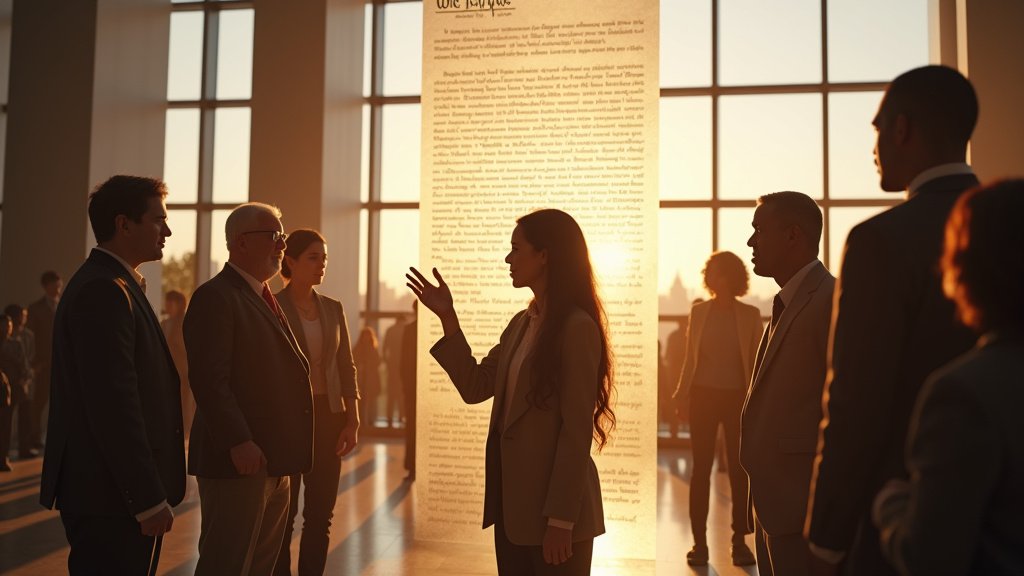
A recent column argues a profound truth about the American experiment: its continued improvement hinges on the genuine care and engaged participation of its citizens, even when that engagement takes the form of sharp critique. This perspective challenges the notion that patriotism equates to blind allegiance, instead positing that true national devotion necessitates confronting shortcomings and actively working towards a better future. It’s a call to move beyond apathy and partisan division, suggesting that a revitalized sense of shared responsibility is the bedrock for meaningful change in American society.
The Nuance of Patriotism: Critique as a Catalyst
The traditional understanding of patriotism often conjures images of uncritical support, yet a growing discourse suggests a more dynamic definition: ‘constructive patriotism.’ This concept posits that genuine love for one’s country manifests in a willingness to question and criticize its current policies and practices, precisely to inspire positive change. Protests featuring American symbols, such as the national anthem or hoisted flags, are cited not as acts of defiance against the nation, but as potent demonstrations that critique can be a form of celebration and hope for what America could be. Studies indicate that this productive form of patriotism correlates with increased political involvement and civic participation, contrasting sharply with ‘blind patriotism,’ which often leads to political disengagement and an unwavering defense of the status quo.
The Peril of Apathy: When Hatred Hinders Progress
Conversely, the column warns against the pervasive sentiment of hatred or cynicism towards the United States. This negativity, it argues, can breed apathy, stifling the motivation to work for a better society. If citizens believe their society is beyond hope, they lose the drive to improve it. This ‘us versus them’ mentality, amplified by political polarization, erodes trust in institutions and hinders constructive dialogue, leading to political gridlock and paralysis. The normalization of anti-American sentiment, particularly in elite spaces, can lead to a reflexive cynicism that dismisses any pride in the country as naive, neglecting the nation’s virtues in favor of a sole focus on its perceived sins.
Youth and the Future of American Civic Culture
The future trajectory of the American republic is intrinsically linked to the engagement of its younger generations. The opinion piece underscores the vital role of students as future decision-makers, whose power should be motivated by care and a belief in the potential for change. This requires fostering an understanding of diverse experiences within the nation. While surveys reveal a significant dissatisfaction with American democracy among young adults and a decline in their civic knowledge, there is also a demonstrated potential and motivation among this demographic to strengthen democracy if engaged meaningfully. Their participation is seen as crucial for shaping policies on issues ranging from education and healthcare to climate action and racial justice.
Declining Pride and the Erosion of Shared Identity
A notable trend identified is the decline in traditional Fourth of July celebrations among some segments of the American population, particularly liberals, often attributed to disillusionment with current administrations and a growing ‘I hate America’ perspective. This decline in national pride is not merely a recent phenomenon but a gradual erosion, particularly sharp among younger generations and Democrats, driven by factors such as institutional failures, political polarization, and economic precarity. However, this sentiment ironically undermines the nation’s capacity for evolution, as effective democracies and progressive policies are built on broad representation and a shared commitment to collective improvement. For positive change to occur, citizens must find a way to care for their neighbors and participate meaningfully in the national discourse.
The Living Constitution and Democratic Evolution
The column also touches upon the concept of the U.S. Constitution as a ‘living document,’ one that requires continuous interpretation and argument. This perspective, known as ‘living constitutionalism,’ asserts that the Constitution’s meaning should evolve with society’s changing needs and values, providing a more malleable framework for governance. This dynamic view contrasts with ‘originalism,’ which argues for strict adherence to the Constitution’s original meaning. The ongoing debate over constitutional interpretation highlights the inherent need for active civic engagement and robust public discourse to ensure that the nation’s foundational principles remain relevant and responsive to contemporary challenges.
Ultimately, the column serves as a powerful piece of cultural commentary, urging Americans to recognize that caring for the nation does not imply uncritical acceptance, but rather a profound commitment to its ongoing betterment. It suggests that participating in American culture and civic life, even through dissent, is an opportunity to expand its ideals and ensure that its promise of democracy and justice is upheld for all its people. The news, therefore, isn’t just about what’s broken, but about the enduring potential for a unified populace, motivated by genuine care, to mend and advance the nation.
More Stories
Lowriding’s Rise: SF Celebrates Cruising Culture
U.S. Repatriates 64 Cultural Relics and Fossils to China
Betting on Viral Fame: Novig’s Strategic Use of Sydney Sweeney