











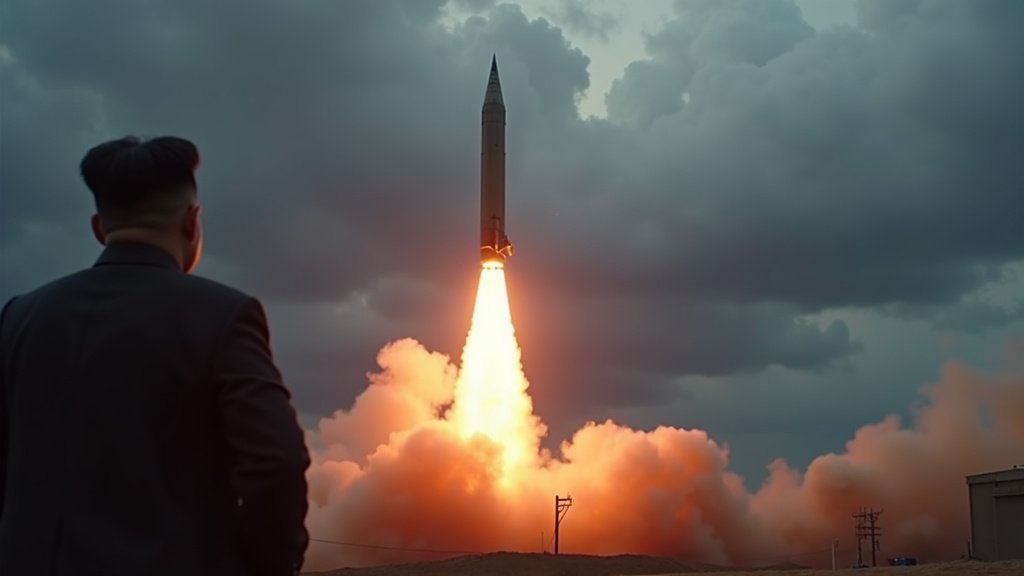
North Korea has conducted test-firings of two “new” air defense missiles, overseen by leader Kim Jong Un, state media reported on Sunday, August 24, 2025. The Korean Central News Agency (KCNA) stated that the missiles, tested the previous day, demonstrated “superior combat capability” and a “fast response” to aerial targets. This latest military development comes amid escalating tensions on the Korean Peninsula, marked by border incidents and ongoing joint military exercises between South Korea and the United States. This news underscores the persistent strategic maneuvering by Pyongyang.
Advanced Air Defense Capabilities on Display
According to KCNA, the two newly developed missile weapon systems showcased “superior combat capability” and operate with “unique and special technology.” While specific technical details, including the exact types of missiles or their launch locations, were not disclosed, state media emphasized their effectiveness against aerial threats such as attack drones and cruise missiles. Analysts suggest these tests reflect North Korea’s ongoing efforts to modernize its air defense systems, potentially incorporating lessons learned from recent global conflicts where drone warfare has played a significant role. This focus on enhancing air defense capabilities is part of a broader military modernization strategy that has seen advancements in various missile programs.
Border Incidents Fuel Tensions
The missile test follows a period of heightened cross-border friction. Earlier in the week, on Tuesday, August 19, 2025, South Korea’s military announced it had fired warning shots after several North Korean soldiers briefly crossed the heavily fortified border, known as the Demilitarized Zone (DMZ). Seoul stated the soldiers were reinforcing border defenses, but the incursion prompted the warning shots. North Korea, however, characterized the incident as a “premeditated and deliberate provocation.” Army Lieutenant General Ko Jong Chol, quoted by KCNA, warned that such actions risked pushing the border situation into an “uncontrollable phase.” South Korea’s new President Lee Jae-myung has advocated for improved inter-Korean relations and military trust, but Pyongyang has expressed little interest in dialogue, instead using such incidents to amplify its grievances.
Regional Drills and Geopolitical Signaling
The timing of the missile tests also coincides with large-scale joint military exercises, “Ulchi Freedom Shield 25,” conducted by South Korea and the United States. These annual drills, which began on August 18, 2025, are described by the allies as defensive in nature. However, North Korea views them as rehearsals for an invasion and a direct threat to its security. Leader Kim Jong Un has previously condemned these exercises, vowing to accelerate the country’s nuclear weapons program in response to what he termed “hostile and confrontational” U.S.-South Korea policies. This military demonstration serves as a stark reminder of North Korea’s strategic calculus and its consistent opposition to combined military readiness between its adversaries.
Strategic Outlook and Diplomatic Maneuvers
The developments also precede a significant diplomatic event: a summit in Washington, D.C., between U.S. President Donald Trump and South Korean President Lee Jae-myung. The missile tests, coupled with the escalating rhetoric and border incidents, serve as a clear signal of North Korea’s defiance on the international stage. Kim Jong Un has been actively overseeing various military activities, reinforcing his commitment to bolstering the nation’s defense capabilities and nuclear posture. The North’s strategy appears to prioritize military strength and strategic posturing over diplomatic engagement, particularly in the context of perceived external threats.
In conclusion, the successful test of new air defense missiles by North Korea adds another layer to the already complex geopolitical landscape of the Korean Peninsula. As tensions remain high due to border skirmishes and the ongoing joint military drills, Pyongyang’s continued advancement and demonstration of its military technology highlight its unwavering focus on enhancing its defense capabilities. This latest News serves as a potent reminder of the volatile security environment in the region.
More Stories
Costco Goes Nationwide on Uber Eats: A New Era for Bulk Delivery
Elena Rybakina Wins US Open, Ascends to World No. 1
Rubio Seals Security Pacts; Vance Drives Policy Agenda