











August 29, 2025, marks a significant day across Southeast Asia, with major news unfolding in Indonesia, the Philippines, and Thailand. In Indonesia, the government has moved to address widespread labor discontent following protests, while the Constitutional Court has issued a pivotal ruling concerning government officials. The Philippines is witnessing a renewed emphasis on journalistic integrity, alongside President Marcos Jr.’s declaration of enhanced cooperation with the United States. Meanwhile, Thailand is preparing to implement significant changes to its import duty regulations concerning US goods, signaling shifts in regional trade dynamics.
Indonesia: Labor Demands Met Amidst Protests and Landmark Court Ruling
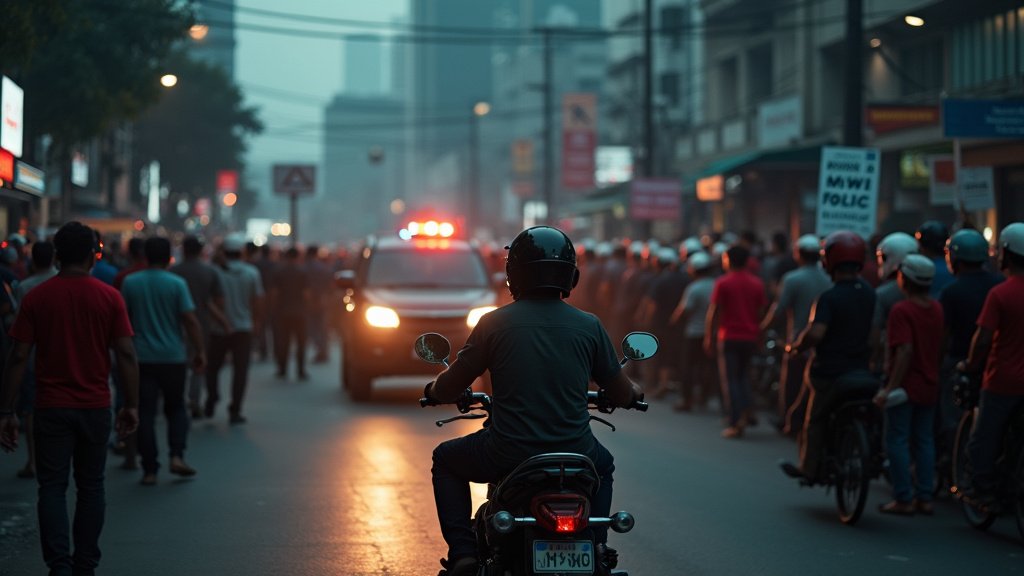
Indonesia experienced a wave of significant labor activism and policy shifts on August 29, 2025. Thousands of workers and drivers took to the streets in Jakarta and other major cities, protesting against issues ranging from wages and outsourcing to mass layoffs and perceived government inequities. The demonstrations, some of which turned violent and saw clashes with police, highlighted growing public discontent. President Prabowo Subianto responded by ordering a thorough investigation into an incident where a motorcycle taxi driver was reportedly run over by a police vehicle during protests, promising accountability for any misconduct.
In response to these widespread demands, the Indonesian government announced it would establish a Task Force on Employment Terminations and a Labour Welfare Council. These bodies are intended to study worker conditions, advise on labor laws, and address concerns related to job security and welfare. The government’s concessions aim to de-escalate tensions and demonstrate a commitment to improving labor rights amidst economic challenges.
Adding to the day’s significant news, Indonesia’s Constitutional Court delivered a landmark ruling that bans deputy ministers from holding concurrent positions, particularly at state-owned enterprises (SOEs). The court found that deputy ministers must focus solely on their ministerial duties, extending a prohibition previously applied only to full ministers. This decision impacts a substantial number of the nation’s deputy ministers, many of whom held commissioner roles in SOEs, and is seen as a move towards better governance and preventing conflicts of interest. The government has stated it respects the ruling and will study its legal implications and follow-up actions.
Philippines: Press Freedom and US Partnership Take Center Stage
In the Philippines, official discourse on August 29, 2025, focused on the critical role of media and international relations. Malacañan Palace, through Press Officer Claire Castro, reiterated the importance of responsible and ethical journalism, especially in the digital age. Speaking at a National Press Freedom Day conference, officials underscored the media’s crucial function in safeguarding democracy by providing accurate and transparent information. The emphasis was placed on combating misinformation and ensuring that freedom of the press is exercised with professionalism and fairness.
On the diplomatic front, President Ferdinand R. Marcos Jr. signaled an intent to deepen ties with the United States. During a courtesy call from a US Senate Armed Services Committee Congressional Delegation, Marcos expressed the Philippines’ openness to working with the US “to an even greater extent.” This sentiment was voiced amidst ongoing regional security challenges, with the President highlighting the US’s continued support for the modernization of the Philippine armed forces. The exchange underscored the strengthening bilateral defense and security relationship between the two nations.
Thailand: Trade Regulations to See US Import Duty Adjustments
Thailand’s economic landscape is set to experience shifts with the ongoing adjustments to its trade regulations, particularly concerning imports from the United States. The Customs Department is in the process of amending regulations to reduce import duties on over 10,000 US items, a move anticipated to be implemented as part of broader trade policy frameworks in 2025. This initiative is linked to reciprocal tariff agreements aimed at rebalancing trade and facilitating market access, though it is also projected to result in a significant revenue reduction for the Thai government.
Separately, but part of the broader US trade policy environment impacting the region, the US has seen the elimination of its de minimis tax exemption for low-value imports, effective August 29, 2025. This change means that all shipments, regardless of value, are now subject to applicable duties and taxes. This has led to disruptions in international logistics, with some postal services, including Thailand Post, temporarily suspending parcel deliveries to the US due to confusion over processing and payment requirements.
Conclusion
The news headlines of August 29, 2025, reveal a dynamic regional landscape across Indonesia, the Philippines, and Thailand. From addressing domestic labor issues and judicial reforms in Indonesia, to shaping public discourse on media integrity and strengthening international alliances in the Philippines, and navigating evolving trade policies in Thailand, the region continues to adapt to both internal and external pressures. These developments underscore the interconnectedness of political, economic, and social agendas shaping Southeast Asia’s future.
More Stories
Costco Goes Nationwide on Uber Eats: A New Era for Bulk Delivery
Elena Rybakina Wins US Open, Ascends to World No. 1
Rubio Seals Security Pacts; Vance Drives Policy Agenda