











Jakarta, Manila, Bangkok – August 30, 2025 – A day of significant developments unfolded across Southeast Asia, marked by escalating unrest in Indonesia, the conclusion of major joint military exercises in the Philippines, and profound political upheaval in Thailand.
Indonesia Gripped by Deadly Protests and Unrest
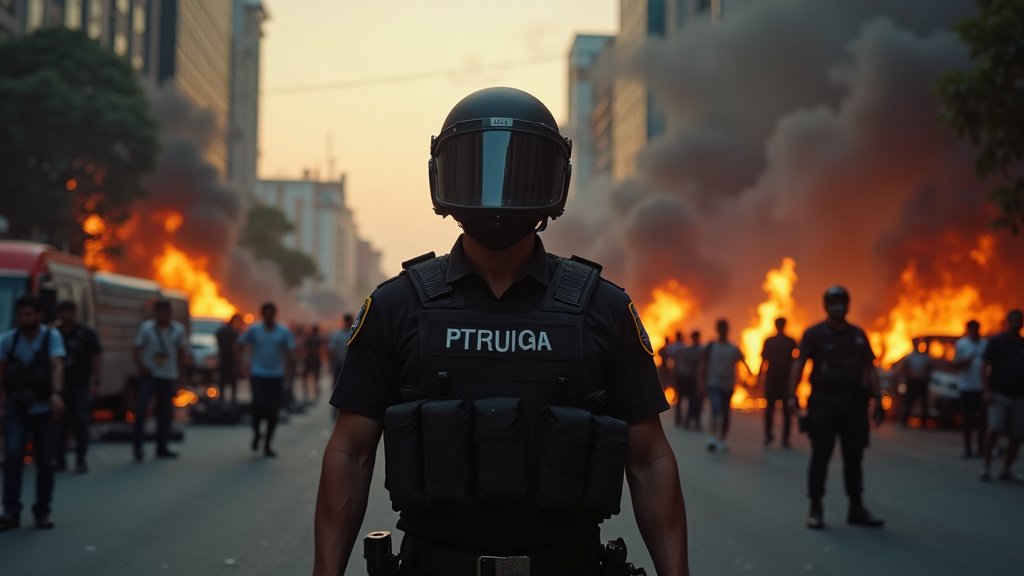
Indonesia is grappling with widespread protests and violent unrest, a situation that has claimed at least three lives following the death of a ride-hailing driver, Affan Kurniawan, who was reportedly run over by a police tactical vehicle during a demonstration. What began as protests over low wages and perceived parliamentary perks has morphed into a national outcry against police brutality and perceived governmental insensitivity.
The capital, Jakarta, saw hundreds massing outside the elite Mobile Brigade Corp (Brimob) headquarters, with demonstrators clashing with police who responded with tear gas. In Makassar, the situation deteriorated dramatically as protesters set fire to the provincial and city council buildings, leading to the deaths of three individuals trapped inside. Vehicles were also torched in the chaos, with reports of property damage and looting emerging from several cities across the archipelago, including Bandung, Yogyakarta, and Medan.
President Prabowo Subianto has urged calm, condemned the police conduct, and ordered an investigation, vowing strict legal action. However, analysts suggest his initial responses have been met with skepticism, with some warning that the burgeoning unrest could pose a significant challenge to his administration’s stability if not addressed with decisive action. The incident has tapped into deeper public frustrations regarding economic hardships and the perceived disconnect between the ruling elite and ordinary citizens, echoing sentiments that have previously fueled major public demonstrations.
Philippines Concludes Major Defense Exercises Amid Regional Tensions
In the Philippines, the annual Amphibious and Land Operations (ALON) exercises, a key bilateral training event with Australia, officially concluded today. This year’s iteration, described as the largest overseas deployment for the Australian Defence Force in the region since 1999, involved approximately 3,600 personnel from the Philippines, Australia, Canada, and the United States.
The extensive drills, conducted across Palawan and Luzon, focused on enhancing interoperability, joint force projection, and regional security cooperation. Participants engaged in amphibious landings, live-fire exercises, and combined joint forcible entry operations, underlining the growing defense ties between Manila and Canberra amidst rising geopolitical tensions in the South China Sea. While China voiced objections to the exercises, labeling them as provocative, both the Philippines and Australia defended the drills as crucial for maintaining regional stability and upholding a rules-based international order.
Separately, the Overseas Employment Administration (POEA) issued a reminder to Filipinos, cautioning them against accepting suspicious job offers in Myanmar due to an existing deployment ban, highlighting ongoing concerns for overseas workers.
Thailand Plunged into Political Uncertainty Following PM’s Dismissal
Thailand faces a period of profound political uncertainty following the Constitutional Court’s decision on August 29 to remove Prime Minister Paetongtarn Shinawatra from office. The court ruled that she had committed ethical misconduct related to a leaked phone conversation concerning a border dispute with Cambodia. This marks the fifth instance of a prime minister being ousted by the Constitutional Court in just 17 years, casting a shadow over the nation’s political landscape.
The ruling has destabilized the current coalition government, with the Bhumjaithai Party having previously withdrawn its support. The People’s Party, a significant political force, has offered conditional support for the formation of a new government, stipulating a snap general election within six months and a national referendum for a new constitution. The political vacuum has amplified concerns about economic stability, with business leaders expressing apprehension over the potential impact on investor confidence and economic growth, which is already facing challenges.
Amidst this political flux, reports indicate that tourist destinations like Doi Inthanon in Chiang Mai are experiencing cool temperatures, attracting visitors, offering a small respite of normalcy for the country’s tourism sector.
More Stories
Merz Defiant: Chancellor Stays Course After Historic CDU Losses
Costco Goes Nationwide on Uber Eats: A New Era for Bulk Delivery
Elena Rybakina Wins US Open, Ascends to World No. 1