











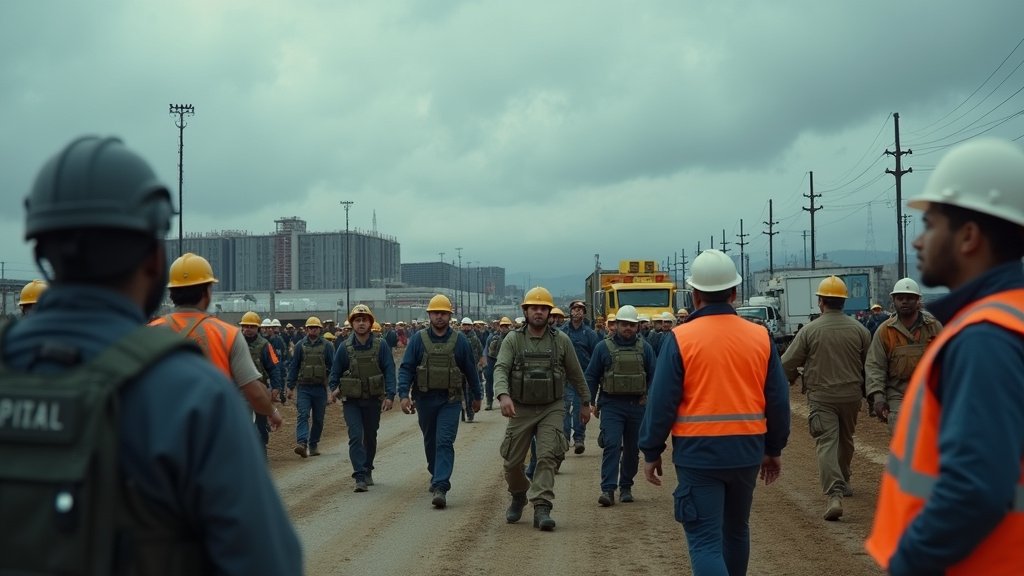
In a dramatic turn of events that has sent shockwaves through Seoul and raised concerns among international investors, U.S. immigration authorities conducted a large-scale raid on the construction site of a major electric vehicle battery plant in Georgia, detaining nearly 500 workers, the majority of whom were South Korean nationals. The September 4, 2025, operation, led by U.S. Immigration and Customs Enforcement (ICE) and involving multiple federal agencies, targeted alleged unlawful employment practices at the joint venture between Hyundai Motor Group and LG Energy Solution.
Massive Enforcement Operation Unfolds in Georgia
The raid, described by U.S. officials as the largest single-site enforcement action in the history of Homeland Security Investigations (HSI), saw hundreds of agents descend upon the Ellabell, Georgia, construction site. Footage released by ICE depicted workers in handcuffs and shackles being escorted onto buses, a scene that quickly became front-page news across South Korea. Authorities stated that many of the detained individuals were allegedly present in the U.S. without proper work authorization, having entered on visitor or ESTA (Electronic System for Travel Authorization) visas, which do not permit employment. U.S. officials emphasized that the operation was the culmination of a months-long investigation into labor practices and aimed to uphold American immigration laws.
Diplomatic Firestorm and Investor Jitters
The detention of over 300 South Korean citizens, many of whom are skilled workers essential to the multibillion-dollar project, has ignited diplomatic tensions between Washington and Seoul. South Korea’s Ministry of Foreign Affairs swiftly expressed deep concern, demanding that the rights of its citizens and the interests of its investing companies be respected. The incident occurred mere weeks after South Korean companies, including Hyundai, pledged substantial investments totaling hundreds of billions of dollars in the United States, a move intended to bolster economic ties and create American jobs. This jarring enforcement action has led to significant investor anxiety in South Korea, with fears that such crackdowns could jeopardize future investments and strain the strategic alliance.
South Korea’s Response and International Scrutiny
Seoul responded with urgency, mobilizing an emergency task force and dispatching consular officials to the site. South Korean President Lee Jae Myung directed his administration to make the swift release and safe return of the detained nationals a top priority. Following intense negotiations, an agreement was reached with U.S. officials to repatriate the detained South Korean workers via a chartered flight, pending final administrative procedures. Meanwhile, LG Energy Solution confirmed the detention of its employees and subcontractors, suspending business travel to the U.S. and ordering staff currently in the country to return or remain in their accommodations. This incident has shone a spotlight on the complexities of U.S. visa policies and the challenges faced by foreign companies in securing the necessary personnel for large-scale manufacturing projects, especially amidst a broader American push to hire domestic workers.
Underlying Issues: Visas, Labor, and Investment
The raid has brought into sharp focus the ongoing debate surrounding U.S. work visa programs and the perceived shortage of skilled American labor for specialized construction and manufacturing roles. Korean companies have long argued that strict visa quotas and lengthy processing times for specialized visas like the H-1B force them to rely on their own national workforce to meet project deadlines. This reliance, coupled with allegations of visa abuse by some workers, has evidently led to increased scrutiny from U.S. immigration authorities. The situation is further complicated by the fact that South Korea is a crucial economic partner, with its companies making significant commitments to boost the American economy. The juxtaposition of welcoming foreign investment while enforcing strict immigration measures has led to criticism regarding a perceived policy mismatch.
Looking Ahead: Navigating Diplomatic and Economic Currents
As the detained South Korean workers prepare to return home, the incident leaves a lingering shadow over the robust economic relationship between the United States and South Korea. While both governments have expressed a desire to maintain strong ties, the raid serves as a stark reminder of the potential friction points. Korean firms are now undertaking urgent reviews of their employees’ visa statuses and travel protocols for the U.S., with some considering reconsidering future investment plans if such visa and enforcement issues persist. The long-term implications for U.S. ambitions to secure global supply chains and South Korea’s commitment to investing in American manufacturing will depend on how effectively diplomatic channels and visa regulations are navigated in the coming months. The reverberations of this news continue to unfold, impacting the delicate balance of international business and diplomatic culture in an era of heightened immigration enforcement.
More Stories
PEN America’s 2026 Festival: Literature’s Defiant Return
Dive Deep into American Culture: Quiz Explores Baseball Legends and Quirky Snacks
Original Penguin Sues Pudgy Penguins for Trademark Infringement Over Penguin Branding