











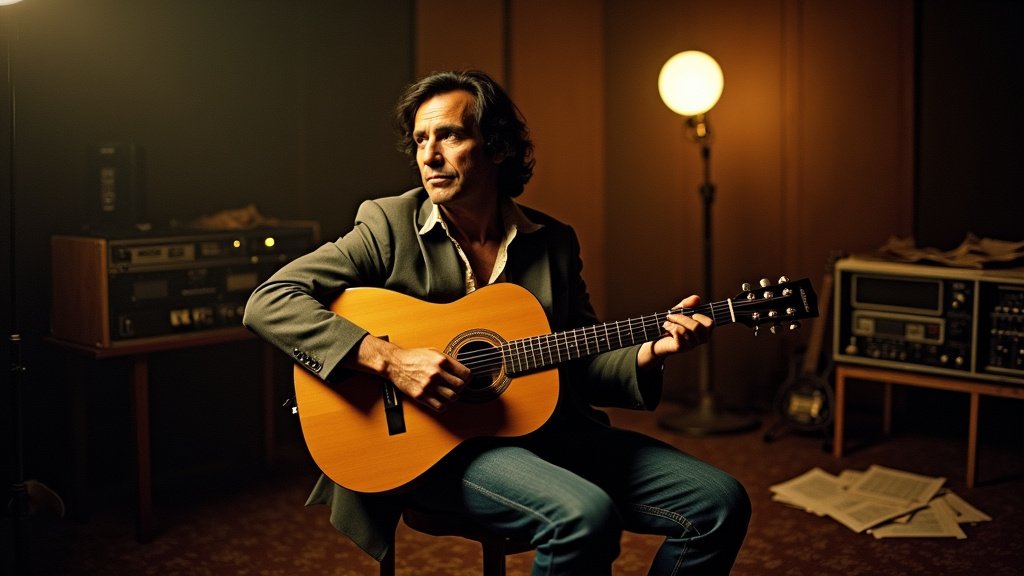
Belo Horizonte, Brazil – November 3, 2025 – The vibrant landscape of Brazilian music mourns the loss of Lô Borges, a visionary composer, singer, and guitarist whose innovative contributions redefined the genre. Borges passed away on Sunday night, November 2, 2025, at the age of 73 in Belo Horizonte, due to complications from multiple organ failure, following a period of hospitalization for medication-related intoxication. His death was confirmed by his family and officially announced by the hospital where he received care. The news quickly became a major topic of discussion, topping trending lists across Brazil, underscoring the profound impact of the Lô Borges legacy.
The Lô Borges Legacy Forged in Minas Gerais
Born Salomão Borges Filho on January 10, 1952, in Belo Horizonte, Minas Gerais, Lô Borges began his musical journey steeped in the rich cultural milieu of his home state. Inspired by the music of The Beatles and encouraged by his brother Márcio Borges, he found himself drawn to the creative hub forming around Milton Nascimento in the Santa Tereza neighborhood. It was on a street corner – the very essence of his later iconic movement – that a youthful Borges honed his skills on the guitar, conversing about music and life with fellow artists, laying the groundwork for the enduring Lô Borges legacy.
The Corner Club: A Brazilian Masterpiece and the Lô Borges Legacy
Lô Borges’s indelible mark on global music was cemented as a co-founder of the legendary “Clube da Esquina” (Corner Club) collective. This groundbreaking movement, which emerged in the late 1960s and early 1970s, was more than just a musical group; it was a cultural phenomenon that brought together some of Brazil’s most gifted artists. The cornerstone of this movement is the eponymous double album, “Clube da Esquina,” released in 1972, a collaborative masterpiece between Milton Nascimento and Lô Borges. This album is widely hailed as a pivotal moment in Brazilian popular music (MPB), celebrated for its audacious fusion of styles—blending MPB with jazz, rock, folk, classical, and psychedelic influences. Despite initial mixed reviews from critics who struggled to categorize its genre-defying sound, “Clube da Esquina” gained immense acclaim internationally and remains a testament to the era’s artistic freedom and lyrical depth, often drawing comparisons to the ambitious scope of The Beatles’ “Abbey Road.” The Lô Borges legacy is powerfully represented in this seminal work.
A Solo Journey and the Enduring Lô Borges Music
Following the success of “Clube da Esquina,” Lô Borges launched a significant solo career. His self-titled debut album in 1972 showcased his unique ability to craft intricate melodies and sophisticated arrangements, blending his distinctive voice with a delicate yet progressive sound. Over his decades-long career, Borges released numerous acclaimed solo albums, including “A Via Láctea” (1979) and “Não Me Espere na Estação” (2023), consistently exploring his signature hypermelodic style and daring harmonic explorations. His compositions, such as “Trem Azul,” “Um Girassol da Cor do Seu Cabelo,” and “Paisagem da Janela,” have become anthems, deeply woven into the fabric of Brazilian culture and contributing immensely to the Lô Borges legacy. The Lô Borges music resonates deeply with listeners.
Tributes to an MPB Icon and His Lô Borges Legacy
The news of Lô Borges’s passing sent ripples of grief throughout Brazil and beyond. Milton Nascimento, a lifelong friend and collaborator, shared a profoundly emotional tribute, stating, “Lô leaves an enormous void and longing, and Brazil loses one of its most brilliant, inventive, and unique artists.” Other prominent musicians, including Rogério Flausino of Jota Quest and Samuel Rosa, former vocalist of Skank, along with cultural secretaries and government officials, paid homage to his immense talent and significant impact on the nation’s cultural heritage. His music is described as a soundtrack for generations, embodying the poetic soul and creative liberty of Minas Gerais, a true testament to the Lô Borges legacy.
Conclusion: The Enduring Lô Borges Legacy
Lô Borges’s artistic journey spanned over five decades, leaving an indelible legacy that continues to inspire new generations of musicians. His innovative spirit, profound lyricism, and distinctive musical voice have earned him a permanent place among Brazil’s greatest artists and cemented his status as an MPB icon. The news of his death marks the end of an era, but his music will undoubtedly endure, forever echoing through the streets and hearts of Brazil, a testament to a true master of Brazilian music and the Lô Borges legacy.
More Stories
Snoop Dogg to Host 2026 MTV VMAs; Nirvana Set for Vanguard Honor
6LACK Confronts Burnout in Vulnerable New Freestyle
Musical Convergence: The Massive Sept 11 Release Drop