











In the ongoing struggle to address nutritional inequality, the terminology we employ dictates the policies we create. As academic and researcher Ashanté M. Reese argues, the common label of “food desert” is not merely inaccurate; it is a clinical euphemism that obscures the active, historical, and deeply racialized structures of power that dictate who eats well and who does not. By reframing the conversation around the concept of food apartheid, Reese and other leading food justice activists are forcing a national reckoning with how urban planning, redlining, and systemic anti-Blackness converge to create environments where healthy, affordable food is effectively legislated out of reach for marginalized communities.
Key Highlights
- Reframing the Crisis: The term “food apartheid” is proposed as an urgent alternative to “food deserts,” as it highlights the intentional, systemic, and racialized nature of food inequity rather than suggesting a natural or accidental shortage.
The Weight of History: Dr. Ashanté M. Reese’s work, particularly in Black Food Geographies*, links current food access disparities directly to 20th-century urban planning policies like redlining and racial covenants.
- Agency vs. Victimhood: Contrary to deficit-based narratives, communities facing food apartheid are often sites of immense resilience, utilizing mutual aid, urban farming, and internal networks to procure nourishment.
- Systemic Roots: Food justice advocates argue that solving the problem requires more than just opening grocery stores; it demands the dismantling of the capitalist and antiblack infrastructures that have historically prioritized wealth over public health.
The Architecture of Inequality: Defining Food Apartheid
For decades, the public health and urban planning sectors have relied on the metaphor of the “food desert.” The term evokes a barren landscape—a place where something once grew but has since dried up, leaving a void. While this metaphor successfully alerted policymakers to the lack of grocery stores in certain zip codes, it failed to capture the reason for that absence. As Ashanté M. Reese posits, the term inadvertently suggests that these neighborhoods are naturally occurring voids, stripped of healthy options by chance or by a lack of demand. This framing, she argues, is dangerous. It ignores the deliberate choices made by investors, city planners, and government officials throughout the 20th century to prioritize capital in white neighborhoods while systematically disinvesting from Black and Brown communities.
By contrast, “food apartheid”—a term championed by activists like Karen Washington—is rooted in the legacy of systemic oppression. An apartheid system is, by definition, one of separation and hierarchies. When applied to food, it forces us to acknowledge that the current state of food access in the United States is the result of architectural, legal, and economic segregation. It is not that these communities cannot support a grocery store; it is that the infrastructure of banking, transportation, and zoning has been designed to exclude them. Reese’s research illuminates that this exclusion is not passive; it is a proactive strategy of anti-Blackness that dictates where capital flows and where it is choked off.
The Historical Blueprint of Exclusion
The roots of modern food apartheid are inextricably linked to the history of redlining. In the 1930s, the Home Owners’ Loan Corporation (HOLC) created color-coded maps that categorized neighborhoods based on their perceived investment risk, with Black neighborhoods almost universally marked in red—the highest risk. This policy was not merely about home loans; it was a foundational document for how cities were organized. Businesses, including grocery chains, followed these maps. They chose to build where they could secure insurance, where they could attract high-net-worth customers, and where racial covenants ensured a stable white tax base.
Reese’s ethnography of Washington, D.C.’s Deanwood neighborhood serves as a masterclass in understanding this process. She documents how decades of divestment forced residents to rely on corner stores or travel vast distances to reach the nearest supermarket. Yet, in her analysis, this isn’t simply a story of lack. It is a story of how the state and the private sector conspired to create a tiered citizenship based on geography. When we talk about food apartheid today, we are talking about the long shadow of these policies—how the grocery stores of 1950 became the foundations for the food ecosystems of today, and how that legacy continues to manifest in the absence of fresh produce in neighborhoods that are systematically kept low-income.
Challenging the Myth of Deficit
One of the most profound aspects of Reese’s scholarship is her critique of how we view residents living in these conditions. Much of the academic and NGO literature on this subject approaches these communities from a deficit-based perspective—viewing Black residents primarily as victims of their environment, devoid of agency or culture. This approach often leads to “savior” models of intervention: outsider organizations swooping in with a mobile market or a vegetable stand, believing they are providing something that was entirely absent.
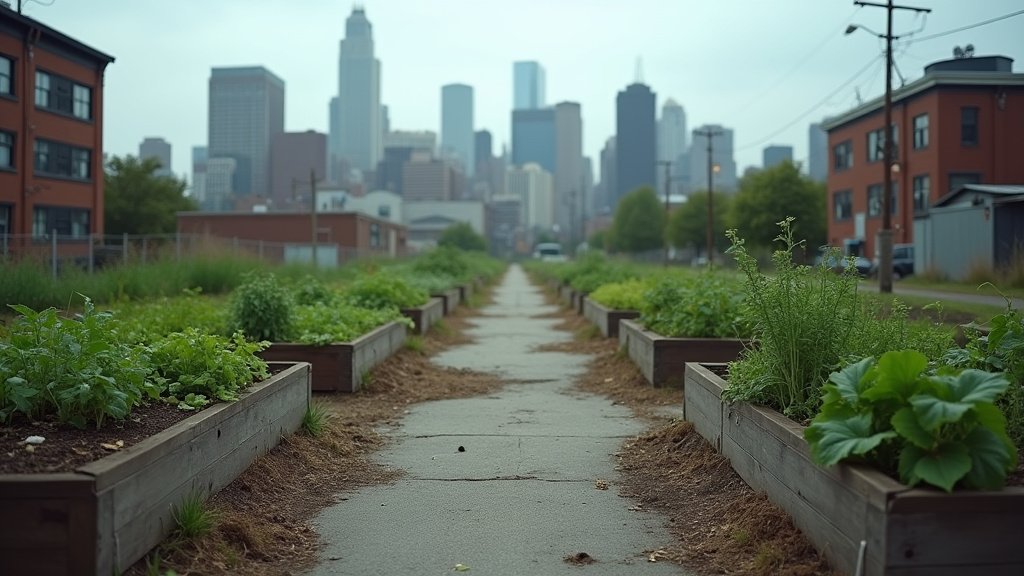
Reese pushes back against this narrative by highlighting the “geographies of self-reliance.” Her fieldwork reveals that Black communities have long been engaged in complex, vibrant networks of food procurement. From the historical legacies of Fannie Lou Hamer’s Freedom Farms Collective to contemporary community gardens and mutual aid networks, Black residents have historically theorized, practiced, and maintained their own food security despite the state’s neglect. These acts of resistance are not merely coping mechanisms; they are profound political acts of survival and assertion. By acknowledging this agency, we shift the conversation from one of “saving” poor communities to one of supporting the existing self-determination that is already present in these spaces.
Toward a Sovereignty-Centered Future
The solution to food apartheid, therefore, cannot simply be to encourage more supermarkets to enter these areas. While access is necessary, the ultimate goal must be food sovereignty—the right of peoples to define their own food and agriculture systems. This means empowering communities to own the land, control the distribution, and dictate the terms of their nourishment.
This future requires a radical rethinking of the food justice movement. It involves interrogating how our current capitalist food system relies on low-wage labor and globalized supply chains that often exploit the same populations experiencing food apartheid. It means supporting policies that prioritize land trusts, communal urban agriculture, and cooperatives that keep wealth within the community rather than extracting it to corporate headquarters in other cities. It is a transition from an industrial, extractive logic of food to an ecological, restorative one.
The Role of Narrative in Policy
Why does changing the language from “desert” to “apartheid” matter in practical policy terms? Because language dictates the scope of the solution. If the problem is a “desert,” the solution is a pipeline—a direct conduit to bring in external, pre-packaged goods. If the problem is “apartheid,” the solution is structural change—the dismantling of segregation, the reversal of discriminatory zoning, and the reparations-based reinvestment in community-controlled infrastructure.
Reese’s work compels us to recognize that the food on our plates is a reflection of our collective social and political priorities. As long as those priorities are built on the foundational exclusion of Black, Indigenous, and other marginalized people, no amount of charitable food distribution will solve the core crisis. The fight for food justice is, at its heart, a fight against the broader structures of racialized inequality that continue to shape the American landscape.
FAQ: People Also Ask
Q: What is the primary difference between a ‘food desert’ and ‘food apartheid’?
A: The term ‘food desert’ implies a natural, almost accidental lack of access to healthy food, suggesting that these areas simply lack demand or have been overlooked. ‘Food apartheid,’ a term popularized by food justice activists, posits that these areas are the result of deliberate, systemic, and historical policies—such as redlining, zoning, and divestment—that create inequitable access to food based on race and class.
Q: How does Ashanté M. Reese’s work challenge the conventional view of food insecurity?
A: Reese challenges the ‘deficit’ model, which views marginalized communities solely as victims of their circumstances. Instead, she highlights the ‘geographies of self-reliance’—the ways that communities, particularly Black communities, have long used mutual aid, collective farming, and resistance strategies to feed themselves in the face of systemic neglect and state-sponsored exclusion.
Q: Why is it important to address the history of urban planning when discussing food access?
A: Because modern food access is not a neutral outcome of the market. It is the legacy of 20th-century policies like redlining, which codified racial segregation in housing and commercial development. These maps dictate which neighborhoods were viewed as ‘investable’ and which were starved of resources, creating a geographic legacy of inequity that persists today in the form of unequal food distribution.
Q: What does food sovereignty look like as an alternative to the current food system?
A: Food sovereignty shifts power from large, extractive corporations to the local community. It involves community ownership of land, support for local agriculture, cooperatives, and the right for marginalized communities to define what they grow, how they grow it, and how they distribute it, ensuring that food is treated as a human right rather than a commodity.
More Stories
Lowriding’s Rise: SF Celebrates Cruising Culture
U.S. Repatriates 64 Cultural Relics and Fossils to China
Betting on Viral Fame: Novig’s Strategic Use of Sydney Sweeney