











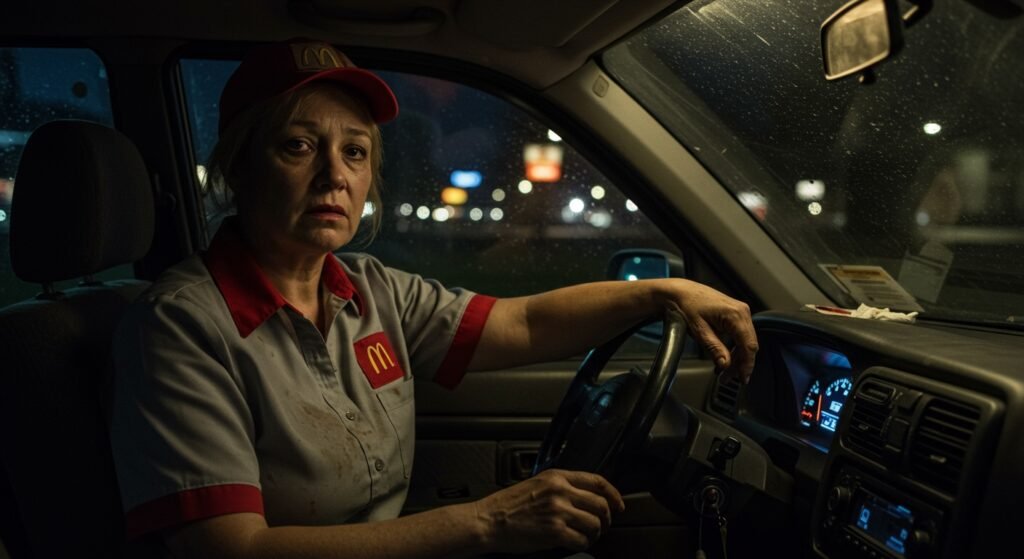
Fast food is deeply ingrained in the fabric of American culture, a ubiquitous presence offering convenience and familiarity. Yet, behind the counters and delivery windows of this vast industry lies a stark economic reality for many of its workers. The sector, while a cornerstone of the U.S. economy, often highlights the profound financial struggles faced by millions across the nation.
Approximately two-thirds of fast food and counter workers are women, a significant number of whom are striving to support their families on wages that can barely cover basic necessities. Their daily lives often paint a picture of relentless work and financial precarity, a stark contrast to the popular image of fast food ease.
A Personal Account of the Strain
Illustrating this challenge is the experience of TiAnna Yeldell, a 44-year-old single mother residing in Texas. Ms. Yeldell shoulders the responsibility of raising three children, aged 8, 14, and 18. To make ends meet, she works an arduous 80-hour week, piecing together income from two demanding jobs.
By day, she drives for Pizza Hut, earning $9.50 per hour before tips. Her other job involves cleaning trains for Houston’s Metro system, a position that pays approximately $17 per hour. This demanding schedule often leaves her with alarmingly little rest, sometimes as few as two to three hours of sleep per night. Ms. Yeldell’s situation, while specific to her, reflects the broader challenges faced by millions of fast food workers nationwide who juggle multiple jobs or work extensive hours to scrape by.
The Policy Response to Economic Pressures
The economic strain on low-wage workers, particularly amplified by recent inflationary pressures, has prompted a wave of legislative and ballot initiatives across several states aimed at increasing minimum wage floors. Voters and lawmakers in various parts of the country have recognized the need for wages to better align with the rising cost of living.
In November [year, assumed 2024 based on context], voters in Alaska approved a ballot initiative to progressively raise the state’s minimum wage from its current $11.73 to $15 per hour by 2027. Similarly, voters in Missouri approved a hike from their state’s $12.30 minimum wage, also targeting $15 per hour, slated for full implementation by 2026. California has taken a more direct approach for the fast food sector, specifically raising wages for fast food workers from $16 to $20 per hour, an increase that took effect in April 2024.
A report released in December 2024 by the National Employment Law Project underscores this national trend, indicating that by the end of 2025, a total of 23 states and 65 cities and counties across the United States are projected to increase their minimum wage floors, offering potential relief to many low-wage earners.
The Enduring $7.25 Divide
However, not all parts of the country are participating in this upward wage adjustment. Texas, where Ms. Yeldell resides, remains among the 20 states that adhere strictly to the federal minimum wage rate of $7.25 per hour. This rate has not changed since it was last increased in 2009, representing more than a decade and a half of stagnation in nominal terms, and a significant decline in real purchasing power due to inflation over that period.
Despite repeated legislative proposals put forward by Democratic lawmakers in the Texas state legislature to raise the minimum wage, these efforts have not gained sufficient traction to become law, leaving workers like Ms. Yeldell reliant on combining multiple low-paying jobs simply to provide for their families.
Conclusion
The prominence of fast food in American life stands in sharp relief against the economic insecurity of many who work within the industry. The stories of individuals like TiAnna Yeldell highlight the challenges faced by millions striving for financial stability in a sector often characterized by low wages and demanding hours. While some states and localities are moving to address this disparity through minimum wage increases, the continued reliance on a federal floor unchanged for 15 years in other parts of the country perpetuates the struggle for survival for a significant portion of America’s workforce.
More Stories
Lowriding’s Rise: SF Celebrates Cruising Culture
U.S. Repatriates 64 Cultural Relics and Fossils to China
Betting on Viral Fame: Novig’s Strategic Use of Sydney Sweeney