











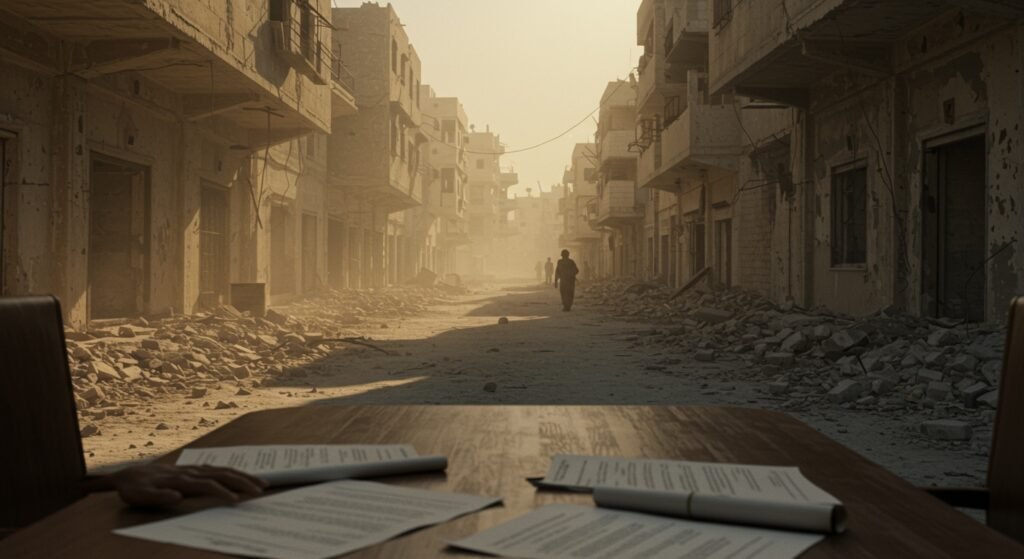
Israeli Prime Minister Benjamin Netanyahu has reportedly put a hold on approving a long-anticipated ceasefire agreement in the Gaza Strip, citing a “last minute crisis” and alleging that the Palestinian group Hamas had altered aspects of the proposed draft. The move came as residents in Gaza had begun celebrating the potential cessation of hostilities after what many there view as 15 months of genocide.
Negotiations for the deal, mediated by Qatar, Egypt, and the United States, had reportedly reached a breakthrough on January 15, 2025, sparking optimism. The ceasefire was initially anticipated to commence on Sunday, January 19. However, Netanyahu’s announcement introduced uncertainty into the process, which Hamas has publicly refuted, denying that it backtracked on the agreement.
Details of the Proposed Agreement
The draft agreement envisions a multi-phase approach, with the first phase proposed to last for 42 days. This initial stage includes a cessation of attacks on Gaza, a significant increase in the amount of humanitarian aid allowed into the besieged territory, and the return of residents displaced from northern Gaza to their homes.
A key component of the first phase is a limited exchange of prisoners. Under the terms reportedly discussed, 33 Israeli hostages held by Hamas in Gaza would be released in exchange for approximately 1,000 Palestinian prisoners currently held by Israel.
Ongoing Violence Amidst Negotiations
Despite the progress reported in ceasefire discussions, violence has tragically persisted on the ground. Since the deal was reportedly reached on January 15, 2025, Reuters reported that Israel’s military had killed at least 70 more Palestinians in Gaza. This includes casualties from an overnight strike on Gaza City.
The period leading up to the reported agreement also saw intense fighting. On January 14, 2025, Israel’s military escalated its attacks, resulting in 62 deaths over a 24-hour period in Gaza. These attacks included bombings of residential neighborhoods and a school that was being used as a shelter, an action that also cut off electricity to the Indonesian Hospital in north Gaza.
Specific incidents on January 14 included five deaths in a home in Rafah and at least 10 deaths in a home in Deir al-Balah in Central Gaza.
Violence also continued in the occupied West Bank. On January 14, an Israeli airstrike killed at least six Palestinians in the Jenin refugee camp. Among the dead were a 15-year-old and three brothers.
The Negotiation Process and Political Hurdles
The complex negotiations leading to the draft agreement took place in Doha, Qatar. Delegations from both Israel and Hamas were present in the same building for the talks, facilitated by mediators from Qatar, Egypt, and the U.S., though without direct contact between the two sides.
Significantly, envoys representing both current U.S. President Joe Biden and President-elect Donald Trump were also present in Doha, underscoring the level of international engagement in the process.
The potential agreement has faced considerable opposition within Israel’s government, particularly from far-right ministers Itamar Ben-Gvir and Bezalel Smotrich. Ben-Gvir, the National Security Minister, has reportedly threatened to resign from the government if a deal is reached that he opposes, highlighting the internal political challenges facing Prime Minister Netanyahu.
The delay in the ceasefire approval leaves the immediate future uncertain for Gaza’s population, who had hoped for an imminent end to the intense conflict and humanitarian crisis.
More Stories
Trump Issues Iran Ultimatum as Diplomacy Fails
Three Dead After Seattle Food Festival Shooting
Trump Warns of Iran Escalation Amid Regional Airstrikes