











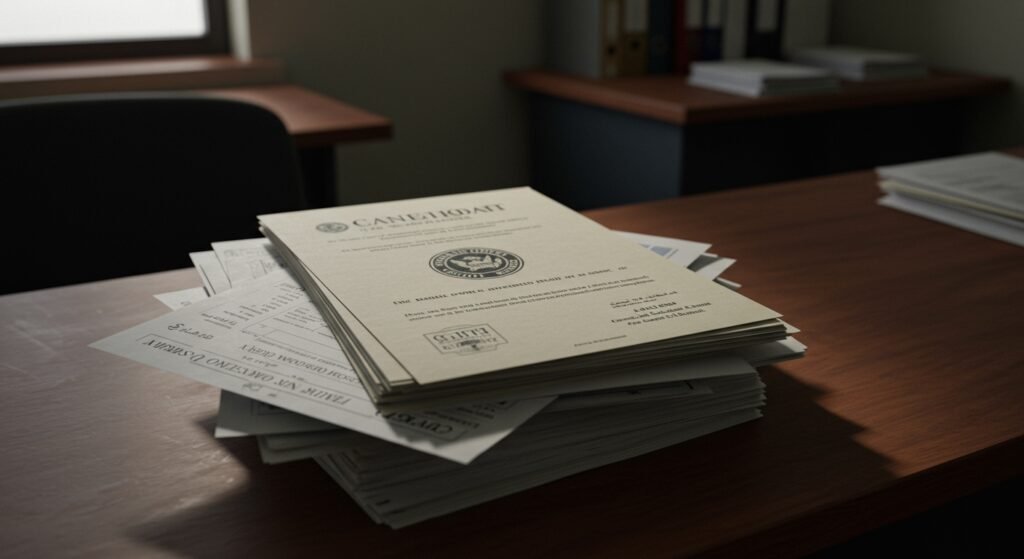
Washington, D.C. – President Donald Trump on Saturday, March 1, 2025, signed a significant executive order formally designating English as the official language of the United States. The directive marks a notable shift in federal policy and immediately revokes a former presidential order aimed at ensuring language assistance for non-English speakers interacting with government services.
The executive order specifically targets and revokes former President Bill Clinton’s 2000 executive order, titled “Improving Access Services for Persons with Limited English Proficiency.” Clinton’s order had mandated that federal agencies and recipients of federal funding provide reasonable language assistance to individuals who have limited English proficiency, aiming to ensure equitable access to government programs and services.
A Historic Shift in Federal Policy
Historically, the United States has stood apart from most nations by not having a federally designated official language. This contrasts with approximately 180 out of 195 countries globally that have established one or more official languages. Proponents of maintaining English’s unofficial status have often cited the nation’s diverse linguistic heritage and the principle of linguistic freedom.
President Trump’s executive order fundamentally alters this long-standing historical position. While designating English as the official language, the order includes specific language stating that it does not “require or direct” changes in services provided by any agency. Instead, the order appears to delegate decisions regarding language assistance back to the heads of individual federal agencies.
The Implications of Revoking the Clinton Order
The revocation of the 2000 Clinton order could have significant implications for how federal agencies and entities receiving federal funds interact with populations speaking languages other than English. Under the Clinton mandate, agencies were explicitly required to develop and implement plans to provide meaningful access to their programs and activities for persons with limited English proficiency. This often involved offering translated documents, bilingual staff, or interpretation services.
By revoking this mandate and stating the new order does not “require or direct” specific changes, President Trump’s action effectively removes the overarching federal requirement for language assistance. While agencies may choose to continue providing such services, the executive order eliminates the explicit federal directive compelling them to do so. The decision is now left to the discretion of agency heads, potentially leading to varied approaches across the federal government.
Rationale and Political Context
President Trump’s executive order articulates a specific rationale for establishing English as the official language. The order states, “A nationally designated language is at the core of a unified and cohesive society, and the United States is strengthened by a citizenry that can freely exchange ideas in one shared language.” This statement underscores a belief that linguistic uniformity contributes to national cohesion and effective communication among citizens.
This action aligns with positions President Trump has vocalized previously, often linking support for making English the official language to broader criticisms of existing immigration policies and calls for assimilation. His past rhetoric has frequently emphasized the importance of immigrants learning English as a means of integration into American society. The executive order formalizes a policy objective that has been a recurring theme in his political platform.
The move has been documented, with related commentary or background information appearing in various reports [3]. The executive order’s emphasis on unity through a shared language reflects a perspective that prioritizes English as a fundamental element of American national identity and public life.
Uncertainty for Language Access Services
The practical impact of leaving decisions regarding language assistance to individual agency heads introduces a degree of uncertainty. While some agencies may maintain or even enhance their language services based on their specific needs and the populations they serve, others could potentially reduce or eliminate services without a federal mandate requiring them. This shift could affect millions of residents who rely on these services to access essential government information and benefits, from healthcare and housing assistance to tax information and legal proceedings.
Advocates for linguistic diversity and immigrant communities are likely to scrutinize how federal agencies respond to the removal of the Clinton-era mandate, monitoring whether access to critical services is maintained or diminished. The full effects of the executive order will likely become clearer as agencies review their existing language access policies and determine their future approaches under the new directive.
President Trump’s executive order represents a significant policy change, both symbolically in designating English as the official language and practically in altering the federal government’s approach to providing language assistance services, marking a departure from two decades of mandated access guidelines established under the Clinton administration.
More Stories
Lowriding’s Rise: SF Celebrates Cruising Culture
U.S. Repatriates 64 Cultural Relics and Fossils to China
Betting on Viral Fame: Novig’s Strategic Use of Sydney Sweeney