











Byline withheld as per journalistic standards
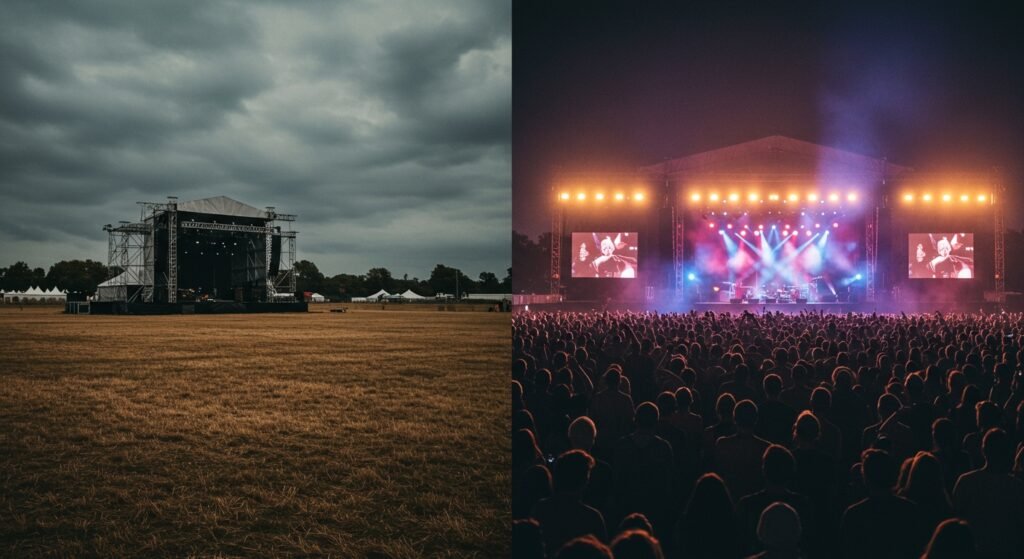
One of Australia’s largest and most anticipated music festivals, Splendour in the Grass, has announced the cancellation of its 2024 event, marking the second consecutive year the festival will not proceed. The decision, conveyed by organizers via a brief note on their website on Thursday, cited the need for “more time to recharge” as the primary reason.
The repeated cancellation of an event of Splendour’s stature has intensified existing discourse within the industry regarding the health and future of large-scale music festivals. While some commentators point to a broader “death of the festival” narrative, the recent developments, particularly Splendour’s struggle, suggest a more nuanced shift may be underway – specifically, a potential decline in the viability of “generalist music festivals”.
Economic Headwinds Batter Large Festivals
The challenges confronting major festivals are multifaceted and deeply rooted in prevailing economic conditions and evolving industry dynamics. Foremost among these are escalating operational expenditures. Higher production costs, encompassing everything from infrastructure and staging to logistics and staffing, place immense financial pressure on organizers.
Simultaneously, the fees commanded by headline artists, particularly those with significant international appeal, have seen a substantial increase. Securing top-tier talent, essential for attracting large and diverse crowds to a generalist festival, now represents a far greater portion of the overall budget than in previous years.
These internal cost pressures are compounded by external economic forces. The ongoing cost-of-living crisis is significantly impacting consumer behaviour. As discretionary spending tightens, potential attendees are becoming more selective about where they allocate their entertainment budgets, making a multi-day, potentially expensive festival ticket a significant financial commitment for many.
The Ascendance of the Specialist Event
In stark contrast to the struggles faced by broad, multi-genre festivals like Splendour in the Grass, the landscape for specialized festivals appears considerably more buoyant. Events catering to specific musical tastes or communities are reportedly thriving, demonstrating resilience against the challenging economic backdrop.
This divergence suggests that while the overall festival market may be facing headwinds, there is still robust demand for live music experiences, provided they offer a clear, focused value proposition to a defined audience segment.
Case Studies in Niche Success
Several examples underscore the success of this specialized approach. The national Laneway Festival, known for its curated indie and alternative lineups, has achieved record ticket sales for its 2024 and 2025 festivals. Its popularity is highlighted by sold-out dates already confirmed for Sydney and Melbourne, with only limited tickets remaining available for events in Brisbane, Adelaide, Perth, and Auckland.
Similarly, Bluesfest Byron Bay, a long-running institution focusing on blues and roots music, is experiencing strong sales. The positive market response has reportedly prompted promoter Peter Noble to reconsider earlier suggestions that 2025 might potentially be its last year, indicating renewed confidence in its niche model.
Electronic music festivals also demonstrate this trend. Wollongong’s Yours & Owls festival, which in recent years has gravitated towards an electronic music focus, reported strong uptake, selling 80% of its 30,000 tickets for its March event well in advance. Further validating the strength of the electronic music segment, the festival Beyond The Valley successfully sold all 35,000 tickets for its four-day camping event held in Victoria’s Barunah Plains over the new year period.
These examples collectively paint a picture of a market where festivals with a clear identity and targeted programming are finding it easier to connect with and mobilize their specific audience base, translating into stronger ticket sales and apparent sustainability.
A Shifting Consumer Landscape
The differing fortunes of generalist versus specialized festivals suggest a fundamental shift in consumer expectations and spending habits. While generalist festivals prioritize mass appeal, curating diverse lineups intended to attract the broadest possible audience, this strategy may inadvertently dilute the experience for specific fan bases.
In contrast, specialized festivals, by focusing on a particular genre or cultural niche, are better positioned to cultivate a strong sense of community and offer an experience deeply tailored to the preferences of their attendees. This focused approach appears to resonate more strongly with consumers in the current climate, who may be seeking more deliberate, value-driven, and community-oriented entertainment options rather than broad, catch-all events.
The cancellation of Splendour in the Grass for the second year running is more than just the setback for a single event; it serves as a significant data point in the evolving narrative of the music festival industry. While large-scale festivals are not inherently doomed, the current economic climate and consumer trends suggest that the model of the generalist festival, attempting to be all things to all people, may be facing its most significant challenge yet, potentially heralding a new era dominated by more focused, niche-specific events.
More Stories
BareRoots Festival: A Resonant Love Letter to Syracuse
iHeartRadio Music Festival 2026 Ignites Las Vegas
Hyde Park Jazz Fest at 20: A Sonic Milestone for Chicago