









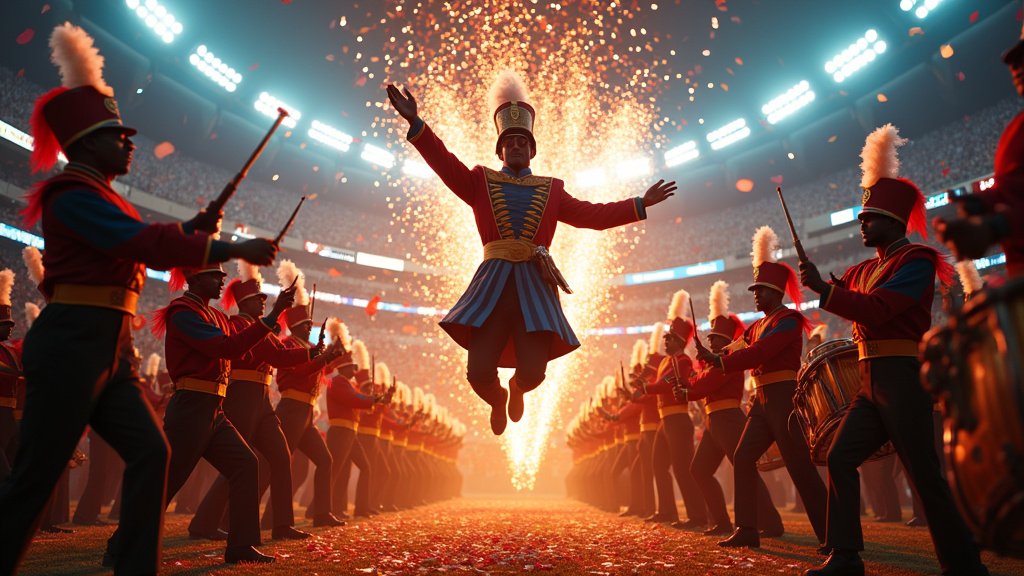
The 2025 Pepsi National Battle of the Bands, held at Houston’s NRG Stadium from August 22-24, has once again underscored the profound cultural significance of Historically Black College and University (HBCU) marching bands. The event, operating under the theme “Beyond the Notes | Music Is the Culture,” serves as a vibrant testament to the rich heritage that HBCU bands represent within Black art and music, fostering immense pride and unity. [19]
HBCU marching bands are more than just musical ensembles; they are cultural cornerstones with a storied history deeply intertwined with Black American identity. [9], [12] Their origins can be traced to informal groups in the early 20th century, which ingeniously blended traditional military band styles with popular music from circus bands and minstrel shows. [8], [13] The Tuskegee Institute is recognized for having the oldest continually active HBCU band, established in 1895. [12] A pivotal moment arrived in 1946 when Dr. William P. Foster, director of Florida A&M University’s “Marching 100,” pioneered the modern high-stepping, showmanship style that would influence countless bands thereafter. [3], [8], [9], [13] These bands quickly evolved into vital cultural institutions, challenging racist stereotypes and exuding Black joy and excellence. [3] They even played a significant role during the Civil Rights Movement, utilizing their performances to voice resistance and reflect the struggles of the Black community. [9]
What sets HBCU bands apart is their distinctive “show-style” pageantry. They seamlessly blend jazz, gospel, R&B, and hip-hop elements with intricate marching formations, dynamic choreography, and spirited crowd interaction. [9] This unique approach often culminates in the electrifying “Fifth Quarter” tradition, an informal musical duel between bands after football games, where technical prowess, creativity, and stamina are fiercely showcased. [9] Beyond entertainment, these bands function as powerful brand ambassadors for their universities, playing a crucial role in recruitment and fundraising efforts. [3] They also serve as essential training grounds for the next generation of music educators, shaping music education nationwide. [13] The influence of HBCU bands extends far into mainstream culture, inspiring major artists like Beyoncé, whose 2018 Coachella performance paid homage to the tradition, and notable appearances such as Grambling State’s World Famed Tiger Marching Band at Super Bowl I in 1967, and Jackson State University’s Sonic Boom of the South performing with Usher at Super Bowl LVIII in 2024. [5], [14], [31]
Founded by Derek Webber, the National Battle of the Bands (NBOTB) was created to enhance the exposure of HBCUs and their marching bands, while also developing students through music and education. [10], [16], [27] The event has grown into a major cultural experience that fosters pride, innovation, and unity, connecting communities and inspiring future generations. [10], [16] Beyond the spectacle, NBOTB has a tangible impact, generating over $2 million in scholarships for participating colleges and universities since its inception. [19], [26], [29] The event also significantly boosts the local economy, contributing a reported $12.3 million to Houston, with over $100,000 directed to minority-owned businesses. [25], [33]
The 2025 showcase featured eight distinguished bands: Alabama A&M University – Marching Maroon & White; Albany State University – Marching Rams Show Band; Florida A&M University – Marching “100”; Jackson State University – Sonic Boom of the South; Langston University – Marching Pride Band; North Carolina A&T State University – Blue & Gold Marching Machine; Prairie View A&M University – Marching Storm; and Houston’s own Texas Southern University – Ocean of Soul. [11], [19], [26], [29], [34], [35]
Among the celebrated performers was Jackson State University’s Sonic Boom of the South, led by Director Roderick Little. [5], [36] Known for its unique style, including the “J5 drum majors,” the “Prancing J-Settes,” and the “Tiger Run-On,” the Sonic Boom has garnered national acclaim, including a historic performance in the 2025 Rose Parade. [5], [23], [24] Director Little emphasized the crucial role of the NBOTB in providing financial support, with Jackson State receiving $50,000 in scholarships this year, an essential resource for students. [36]
Texas Southern University’s Ocean of Soul, a hometown favorite, also captivated audiences. The band, which originated in 1969 under Benjamin J. Butler II, is currently directed by Brian K. Simmons and features Head Drum Major Kamron Hadnot. [4], [7], [17], [20] Renowned for its soulful sound, heavy beat, and intricate dance routines, the Ocean of Soul has a history of high-profile performances, including a collaboration with Beyoncé in 2024. [4], [17] The legacy of the Ocean of Soul was further recognized with the induction of its founder, Benjamin J. Butler II, into the NBOTB Hall of Fame in 2024, an honor that will be extended to Dr. Julian E. White of Florida A&M’s Marching “100” in 2025. [19], [29]
The NBOTB weekend extends beyond the main performance, offering a robust schedule of community-focused events. These include the Emerging Experience Entrepreneurship Conference, powered by JPMorgan Chase, an HBCU College & Career Fair to connect students with educational and professional opportunities, and a Stroll Off Competition celebrating Black Greek Letter Organizations. [11], [19], [22], [26], [34], [35] The NBOTB Cares Community Outreach also organizes initiatives like feeding the homeless, reinforcing the event’s commitment to giving back. [11], [19], [22], [26], [35] These elements collectively highlight that the National Battle of the Bands is not merely a show, but a powerful movement that amplifies tradition, talent, cultural impact, and provides vital educational and career pathways for aspiring students. [26], [35] The meticulous preparation, often involving 12-to-16-hour practice days for freshmen, underscores the dedication behind these inspiring performances. [36]
As the 2025 Pepsi National Battle of the Bands concludes, it leaves an indelible mark, celebrating the vibrant legacy of HBCU marching bands as enduring symbols of Black excellence, discipline, and artistic innovation that continue to shape American culture and inspire generations.
More Stories
PEN America’s 2026 Festival: Literature’s Defiant Return
Dive Deep into American Culture: Quiz Explores Baseball Legends and Quirky Snacks
Original Penguin Sues Pudgy Penguins for Trademark Infringement Over Penguin Branding