










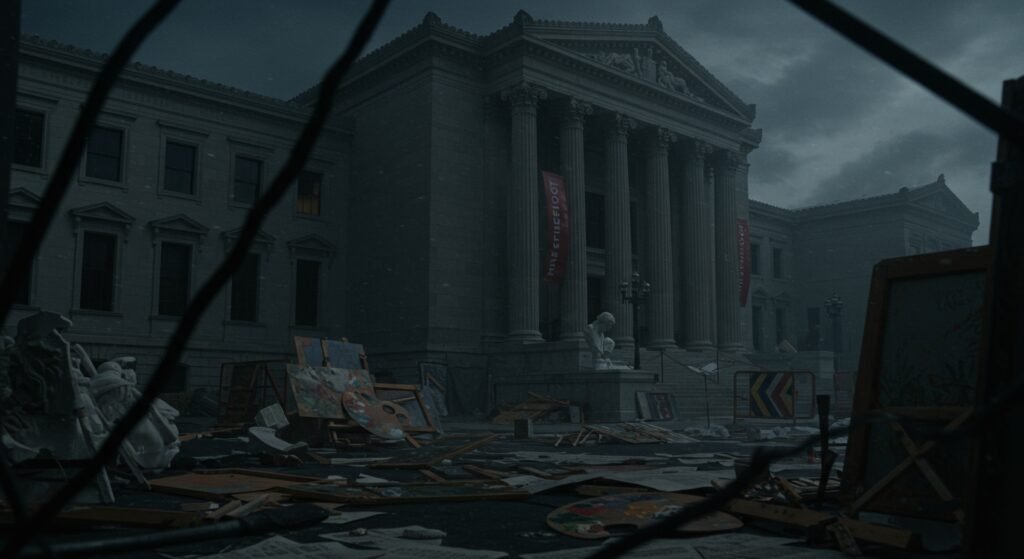
A new analysis from the Brookings Institution, published on February 28, 2025, raises alarms about what it describes as mounting threats to artistic freedom, cultural institutions, and freedom of expression across the United States. The report, subsequently highlighted by the cultural watchdog organization Mimeta on March 3, 2025, focuses specifically on developments observed during a hypothetical second administration of Donald Trump, detailing several concerning trends that authors argue signify governmental overreach and attempts to stifle artistic and cultural discourse.
The Brookings analysis delves into a series of actions and potential policies perceived as undermining the independence and vitality of the American cultural landscape. Among the key points of concern cited are Donald Trump’s self-appointment as chairman of the esteemed Kennedy Center’s Board of Trustees, a move viewed by critics as a politicization of a major national cultural institution. The report also highlights increasing censorship threats targeting various forms of artistic expression, including drag shows and content related to the LGBTQ+ community.
Specific Threats Identified
The dismantling of governmental bodies previously tasked with supporting and advising on cultural matters represents another significant concern outlined in the analysis. Specifically, the report points to the dissolution of the President’s Committee on Arts and Humanities (PCAH), an entity that historically served as a bridge between the federal government and the arts and cultural sectors. The authors argue that such actions weaken the institutional support framework for arts and culture at the national level.
Beyond direct impacts on cultural institutions and specific art forms, the Brookings analysis also extends its scope to broader issues of censorship and freedom of information. It references concerning attacks on independent media outlets, suggesting a climate increasingly hostile to diverse and critical voices. Furthermore, the report notes instances of book banning within schools operated by the Department of Defense, indicating a pattern of restricting access to information and ideas even within seemingly apolitical environments like educational institutions.
Examining Governmental Overreach
The overarching argument presented in the Brookings analysis is that these combined trends constitute governmental overreach. The authors contend that these actions are not isolated incidents but rather part of a broader effort to defund the arts and exert political control over cultural and expressive spheres. This, they argue, creates a pervasive “chilling effect” on artists, cultural organizations, and local communities, discouraging creative risk-taking and self-expression for fear of political backlash or withdrawal of support.
The analysis draws potent parallels between the current situation in the United States and historical as well as contemporary examples of authoritarian regimes globally. It underscores how the suppression of artistic expression and cultural freedom has often been a precursor to or a tactic used by governments seeking to consolidate power and diminish democratic values. By examining these international comparisons, the report reinforces its assertion that safeguarding art and culture is not merely an aesthetic concern but is fundamentally linked to the preservation of democracy and the protection of freedom of expression.
Path Forward and Recommendations
In light of these identified threats, the Brookings Institution’s analysis concludes by offering actionable recommendations aimed at bolstering the resilience of American cultural institutions and supporting artists. While the summary provided does not detail the specific recommendations, it indicates that guidance is offered for a range of stakeholders, including individuals, non-profit organizations, and policymakers at various levels of government. These recommendations are presumably designed to counteract the identified negative trends and foster a more robust and independent cultural ecosystem.
Ultimately, the report serves as a stark warning regarding the potential vulnerabilities of democratic societies when their cultural and artistic foundations are targeted. The findings, as reported by Mimeta on March 3, 2025, from the original Brookings analysis on February 28, 2025, highlight the critical role that a free and vibrant cultural sector plays in maintaining an open society and underscore the importance of vigilance in defending against pressures that seek to limit artistic freedom and cultural expression in the United States.
More Stories
PEN America’s 2026 Festival: Literature’s Defiant Return
Dive Deep into American Culture: Quiz Explores Baseball Legends and Quirky Snacks
Original Penguin Sues Pudgy Penguins for Trademark Infringement Over Penguin Branding