











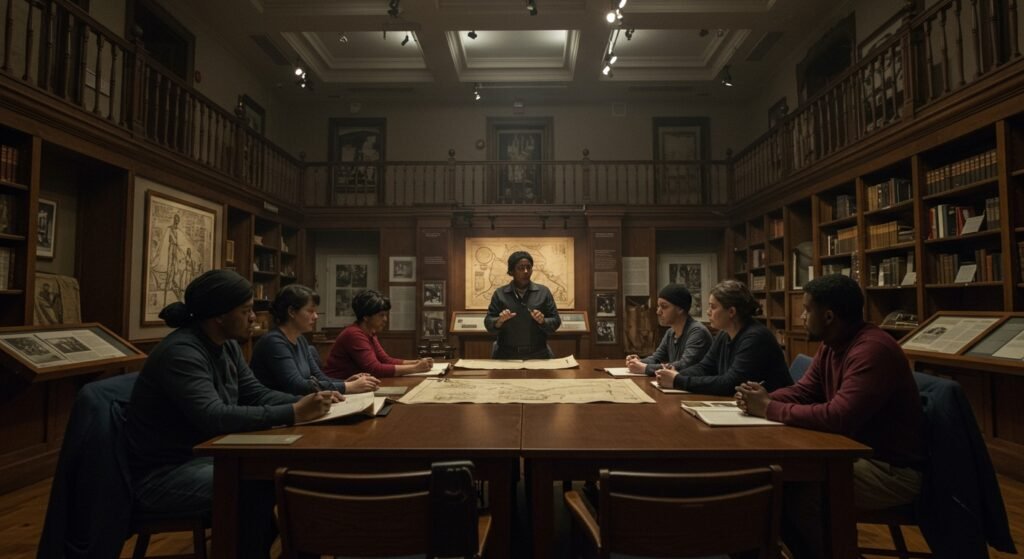
DALLAS, TX – For more than three decades, the African American Museum of Dallas has served as a vital cultural and educational cornerstone in North Texas, offering profound insights into the rich tapestry of Black history and culture. Among its most enduring programs is a dedicated series of history classes, a tradition that has persisted for over 35 years, providing deep dives into the historical experiences that have shaped the African diaspora.
This long-standing educational initiative underscores the museum’s foundational mission: to preserve and interpret the artistic, cultural, and historical experiences of African Americans, with a special focus on Texas and the Southwest. In an era where comprehensive historical education is increasingly crucial, the museum’s commitment to these classes stands out as a significant effort to inform and enlighten the public.
A Legacy of Education: Rooted in Freedom Schools
The genesis and continuation of the African American Museum of Dallas’s history classes echo the spirit of the freedom schools established during the tumultuous 1960s Civil Rights Movement. These historic schools emerged as alternative educational sites, providing students with a curriculum centered on Black history, civics, and leadership development, subjects often neglected or distorted in mainstream educational institutions. By offering a sustained, in-depth exploration of the Black historical narrative, the museum’s program connects directly to this powerful legacy of self-determined education and historical reclamation.
The program is not merely a series of lectures but an immersive learning experience designed to engage participants deeply with the material, fostering a greater understanding of historical context and contemporary relevance.
Guiding the Curriculum
Central to the current iteration of this decades-old program is Marvin Dulaney, the museum’s distinguished deputy director and chief operating officer. Dulaney himself takes on the role of educator, leading classes that delve into complex and critical periods of history. His involvement ensures that the curriculum is not only academically rigorous but also presented with the passion and historical perspective necessary to bring these vital narratives to life.
Dulaney’s directorship and teaching reflect the museum’s broader commitment to leveraging the expertise of its leadership and staff to directly benefit the community through educational outreach.
Exploring Diverse Historical Landscapes
The curriculum offered within the classes is notably comprehensive, spanning vast periods of time and diverse historical themes. Participants embark on a journey that begins with an exploration of prehistorical Africa, examining the continent’s ancient civilizations, societies, and contributions that predate and inform later history. This foundational understanding provides essential context for the subsequent study of the transatlantic slave trade and its aftermath.
A pivotal topic covered is the year 1619, widely recognized as the year the first enslaved Africans were brought to English North America. This module critically examines the origins and brutal realities of the chattel slave system that would profoundly shape the course of American history for centuries.
Moving into the modern era, the classes also explore the vibrant and transformative Black Arts Movement of the 1960s and ’70s. This period saw an explosion of creative energy across literature, theater, visual arts, and music, serving as a cultural parallel to the Civil Rights and Black Power movements. Studying this era highlights the resilience, creativity, and intellectual ferment within the Black community during a period of intense social and political change.
The Participants and Setting
The history classes primarily serve North Texans who are actively participating in the museum’s Freedom Schools program. This integration ensures that young people and community members involved in the Freedom Schools initiative receive a robust historical education as part of their overall program experience. The classes are fittingly held within the museum’s library, a space conducive to study, research, and quiet contemplation, surrounded by resources that complement the lessons.
Significance in Contemporary Education
In a national climate where discussions about the teaching of history, particularly concerning race and slavery, are often contentious, the African American Museum of Dallas’s sustained educational effort holds particular significance. By providing factual, in-depth historical instruction based on scholarly research and primary sources, the program offers a vital counterpoint to historical misinformation and gaps in standard curricula. It empowers participants with knowledge that fosters a deeper understanding of identity, history, and the ongoing struggle for equality and justice.
The dedication of the museum and educators like Marvin Dulaney ensures that this critical history remains accessible and is passed down through generations, reinforcing the importance of understanding the past to navigate the present and future.
This report is based on reporting by Elizabeth Myong for KERA Arts Access, a journalism collaboration dedicated to covering the arts and culture landscape in North Texas. The work of KERA Arts Access is made possible through funding from several local foundations and organizations, including the Better Together Fund, Communities Foundation of Texas, and The Meadows Foundation, among others, highlighting the community investment in local cultural reporting.
More Stories
Freedom Plane Tour Brings History to Atlanta
PEN America’s 2026 Festival: Literature’s Defiant Return
Dive Deep into American Culture: Quiz Explores Baseball Legends and Quirky Snacks