











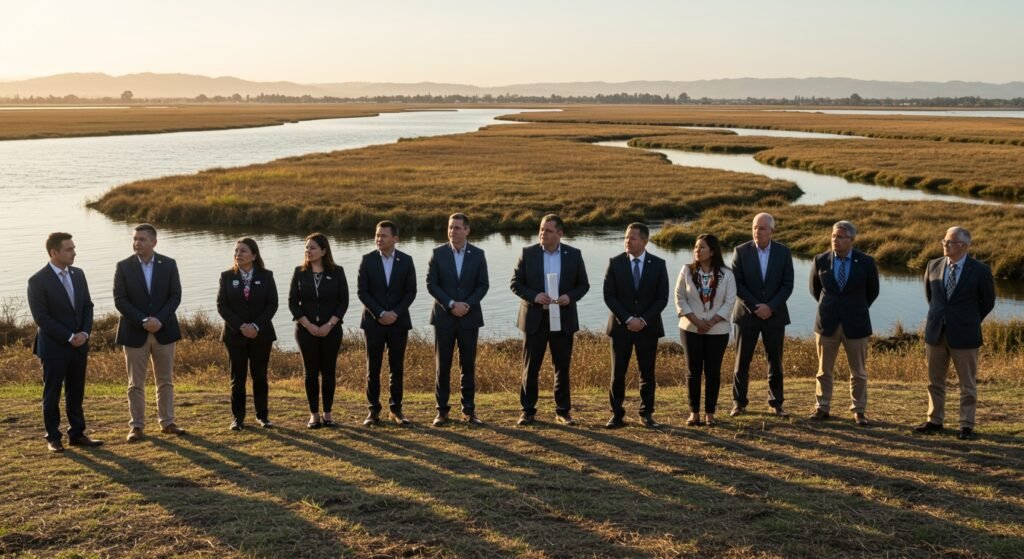
Sacramento, CA – In a significant move for environmental policy and tribal relations in California, the Delta Stewardship Council on April 24, 2025, unanimously adopted a comprehensive issue paper titled “Tribal and Environmental Justice in the Sacramento-San Joaquin Delta: History, Current Perspectives, and Recommendations for a Way Forward.”
Acknowledging the Past, Charting the Future
The adoption marks the culmination of a four-year dedicated effort by the Council to delve into the complex history and current state of tribal and environmental justice specifically within the legal boundaries of the Delta and Suisun Marsh, as meticulously defined by the Delta Reform Act. The paper serves as a critical self-assessment, acknowledging historical injustices that have led to inequitable environmental impacts on communities within this vital region.
Crucially, the document explicitly recognizes the unique status of federally-recognized tribes, underscoring their inherent standing as sovereign governments. This acknowledgment is foundational to the paper’s approach, framing the issues and proposed solutions through a lens that respects tribal sovereignty and self-determination.
A Framework for Justice
The issue paper presents a detailed analysis of tribal and environmental justice concerns within the Delta and Suisun Marsh, examining them through the established frameworks of representational, procedural, and distributive justice. This structured approach helps to dissect how historical and ongoing actions have affected communities, particularly indigenous populations, in terms of their ability to participate in decision-making (representational and procedural justice) and the unequal distribution of environmental benefits and burdens (distributive justice).
By utilizing these widely accepted justice lenses, the paper provides a robust analytical tool for understanding the multifaceted challenges faced by tribal communities and other environmental justice populations in the Delta region.
Recommendations for a Way Forward
Beyond analysis, the paper offers a series of concrete recommendations designed to guide the Delta Stewardship Council’s future actions. These recommendations are aimed at actively incorporating tribal and environmental justice perspectives into all facets of the Council’s work.
A key focus of the recommendations is on supporting tribal representation in Delta governance and decision-making processes. This includes exploring mechanisms to ensure that tribal voices are not only heard but are integral to the planning and management of the region.
Furthermore, the paper recommends expanding opportunities for tribes to practice their traditional subsistence activities and cultural practices within the Delta and Suisun Marsh. This recognizes the deep cultural and historical ties of tribal communities to the land and water resources of the region and the need to address barriers that prevent these practices.
The recommendations also advocate for explicitly recognizing tribal rights within the Council’s work and fostering improved coordination and partnerships with tribes. This involves building trust, engaging in meaningful consultation, and collaborating on initiatives that affect tribal lands, resources, and communities.
Connecting Justice to State Goals
The paper makes a compelling case that achieving the state’s legally mandated coequal goals for the Delta – specifically, achieving water supply reliability for California and protecting, restoring, and enhancing the Delta ecosystem – is inextricably linked to considerations of equity and justice. It argues that sustainable long-term management of the Delta’s resources cannot be accomplished without addressing the historical inequities and ensuring just outcomes for all communities, particularly those most impacted by environmental degradation and resource management decisions.
The unanimous adoption of this issue paper by the Delta Stewardship Council signals a formal commitment to confronting the legacy of injustice in the Delta and embedding tribal and environmental justice principles into its ongoing mandate. The document provides a roadmap for future actions, setting a precedent for how state agencies can work towards more equitable and just environmental governance in complex ecological and social landscapes like the Sacramento-San Joaquin Delta.
More Stories
Freedom Plane Tour Brings History to Atlanta
PEN America’s 2026 Festival: Literature’s Defiant Return
Dive Deep into American Culture: Quiz Explores Baseball Legends and Quirky Snacks