











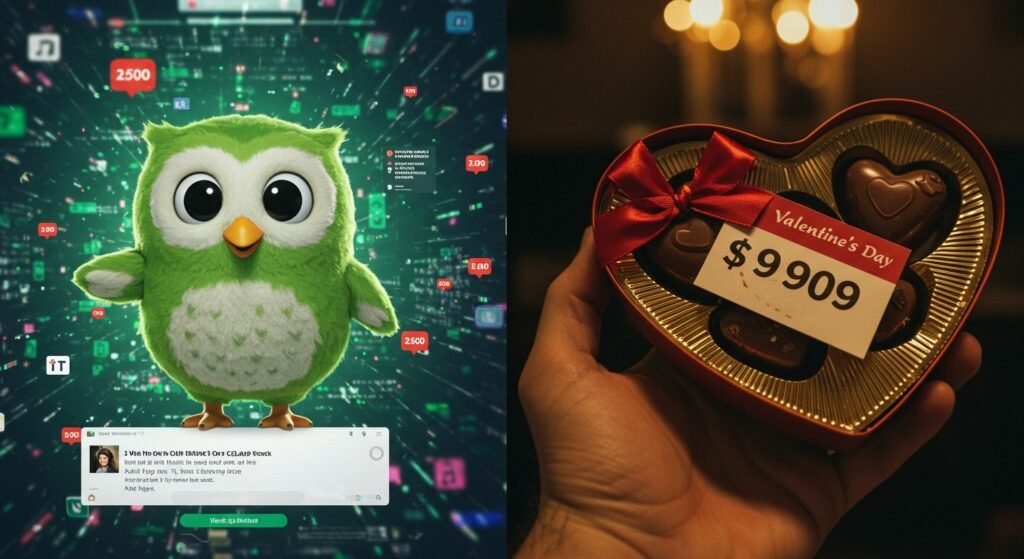
In an unconventional move that generated significant digital discourse, the language learning application Duolingo initiated a viral marketing effort by announcing the perceived “death” of its widely recognized green owl mascot. This surprising digital event captured widespread attention across social media platforms, eliciting notable reactions from both dedicated fans of the platform and various public figures, including celebrities, according to reporting.
Simultaneously, separate analysis highlights mounting economic pressures impacting traditional consumer goods. The rising cost of chocolate, a staple of holiday gifting and particularly prominent during the upcoming Valentine’s Day period, is reportedly having a noticeable impact on planning and expenditure surrounding the romantic holiday. These two distinct developments, one rooted in digital marketing theatrics and the other reflecting tangible economic shifts, underscore different facets of the contemporary landscape as reported by source [4].
The Calculated Digital Strategy
The announcement regarding the fate of Duolingo’s iconic green owl mascot was widely interpreted as a deliberate and calculated viral marketing strategy. The mascot, known for its persistent reminders for users to practice their language lessons, holds a prominent place in the app’s branding and has developed a distinct online personality, often portrayed humorously in memes and online discussions.
By suggesting the mascot’s “death,” Duolingo effectively created a moment of intrigue and surprise that cut through the typical social media noise. This tactic leveraged the existing emotional connection users have with the character, prompting speculation, concern, and discussion. The goal of such a stunt is typically to dramatically increase engagement, brand visibility, and potentially attract new users curious about the source of the viral conversation.
The strategy proved effective in its immediate aim, generating “significant social media attention.” Online platforms were quickly filled with posts discussing the announcement, sharing reactions, and speculating on the mascot’s future or the meaning behind the campaign. The involvement of “fans” and “celebrities” in responding further amplified the reach and credibility of the viral moment, pushing it beyond the core user base into broader public consciousness. This type of marketing relies heavily on organic sharing and discussion, driven by the inherent novelty and unexpectedness of the event.
While the specifics of how the “death” was announced (e.g., through social media posts, in-app notifications, or other channels) were part of the campaign’s design to create buzz, the core element was the provocative nature of the statement about a beloved, if sometimes annoying, brand figurehead. It represents a modern approach to brand engagement, where companies use unexpected or dramatic narratives to create talking points and emotional responses in the digital sphere.
Rising Costs Impacting Valentine’s Day
Juxtaposed with this digital spectacle is a more grounded economic reality affecting consumers directly. Reports indicate that the “rising cost of chocolate” is presenting a challenge, particularly as Valentine’s Day approaches. Chocolate and confectionery are traditional gifts exchanged on February 14th, and an increase in their price can impact consumer spending habits and the overall economics of the holiday.
Several factors can contribute to the rising cost of chocolate, including fluctuations in cocoa bean prices (influenced by weather, disease, and market speculation), increased sugar costs, labor expenses, transportation costs, and global inflationary pressures. While the specific drivers behind the reported increase in source [4] were not detailed, the effect described is clear: a “noticeable impact” on Valentine’s Day.
This “noticeable impact” could manifest in various ways. Consumers might opt for smaller boxes of chocolates, switch to less expensive brands, choose alternative gifts entirely, or simply allocate a larger portion of their Valentine’s Day budget to confectionery. For businesses, particularly chocolatiers and retailers, rising input costs can squeeze profit margins, potentially leading to higher consumer prices or reduced product sizes (shrinkflation).
The timing of these rising costs, coinciding with a major holiday centered around gift-giving, makes the impact particularly salient. It adds a layer of economic consideration for individuals planning to celebrate Valentine’s Day, highlighting how global market dynamics can directly affect personal celebrations and traditions.
Contrasting Realities from Source [4]
The juxtaposition of these two seemingly unrelated news items, as presented in source [4], is noteworthy. On one hand, a major technology company is leveraging digital platforms and brand personality for a high-impact viral marketing stunt – a strategic, non-essential event designed purely for attention and engagement.
On the other hand, there is a report on a fundamental economic issue – the increasing cost of a basic consumer good with traditional cultural significance. This issue represents a real-world challenge for consumers and businesses alike, impacting budgets and potentially altering consumer behavior during a significant annual event.
While there is no implied causal link between Duolingo’s marketing campaign and the price of chocolate, their co-occurrence in reporting highlights the diverse range of news and trends shaping the public discourse. One story is about the evolving tactics of digital marketing in the attention economy, while the other is about the tangible economic pressures felt by consumers in their daily lives and during special occasions.
In conclusion, Duolingo’s viral marketing stunt involving its green owl mascot successfully generated significant social media attention and discussion, drawing reactions from fans and celebrities. Concurrent reporting, however, points to a separate, more tangible challenge: the rising cost of chocolate, which is having a noticeable impact on consumer planning and expenditure for Valentine’s Day. These events, though distinct, reflect different aspects of the complex digital and economic environments observed currently.
More Stories
PEN America’s 2026 Festival: Literature’s Defiant Return
Dive Deep into American Culture: Quiz Explores Baseball Legends and Quirky Snacks
Original Penguin Sues Pudgy Penguins for Trademark Infringement Over Penguin Branding