











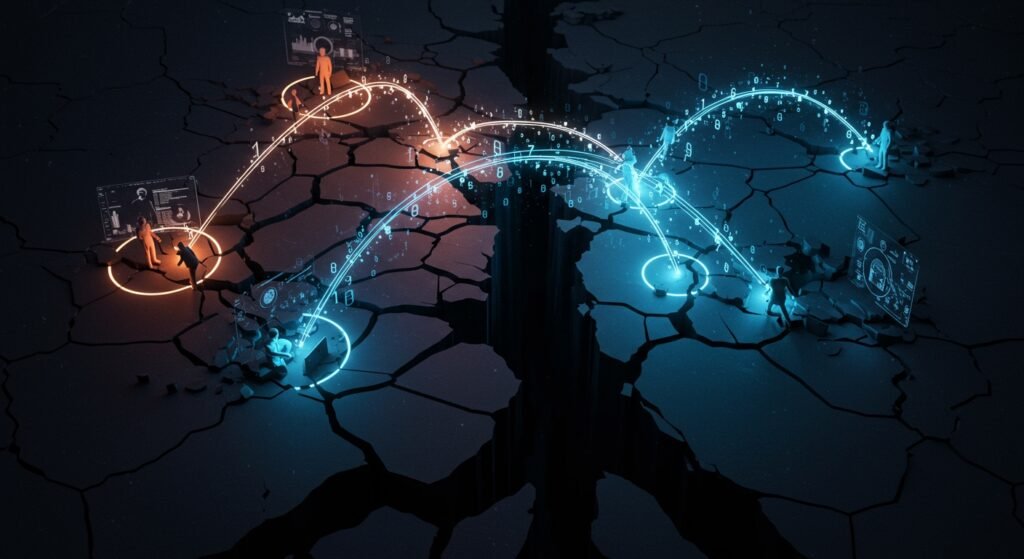
Nearly five years have passed since the onset of the COVID-19 pandemic fundamentally altered life across the United States. A recent look back by the Pew Research Center offers a comprehensive assessment of these enduring impacts, revealing significant transformations in how Americans work, interact with technology, practice religion, and perceive their nation’s unity.
According to the Pew report, the pandemic ushered in unprecedented flexibility for many, particularly in the realms of remote work and religious worship, both significantly facilitated by advancements and increased reliance on technology. However, this shift also sharply highlighted existing societal disparities, especially concerning equitable access to technology and remote work opportunities.
Societal Division and Lingering Tensions
One of the most striking findings from the report is the pandemic’s divisive effect on the nation. A significant majority, 72% of U.S. adults, believe the pandemic did more to divide the country than to unite it. This division, the study suggests, stemmed from fundamental disagreements over issues such as expectations for government action, differing tolerances for health risks, and varied priorities placed on different groups and economic sectors during the crisis. Many of these deep-seated divides, the report notes, continue to resonate and persist within the current political landscape.
Beyond the national fragmentation, the pandemic also exacted a considerable personal toll. Three-quarters of Americans reported that the crisis took some form of negative toll on their personal lives, underscoring the widespread emotional, social, and economic burdens experienced individually across the country.
The Accelerated Digital Transformation
The reliance on digital connectivity became critically apparent as the pandemic forced life online for work, school, and social interaction. As early as April 2021, 90% of Americans deemed internet use important to their life, with a substantial 58% considering it essential. The shift to digital platforms appears to have cemented itself in many aspects of daily life.
Approximately half of U.S. adults feel that the pandemic permanently altered their technology use. This sentiment is more common among younger demographics, who were perhaps more adaptable or already inclined towards digital-first approaches. Yet, even as technology provided new avenues for flexibility, the pandemic simultaneously underscored existing digital divides, particularly those related to income, revealing unequal access to the tools and connectivity essential in a newly digital world.
Navigating Health Information and Eroding Trust
The public’s understanding of health guidelines remains an area of concern identified by the Pew study. Approximately four-in-ten Americans express uncertainty regarding current COVID-19 guidelines. This uncertainty is relatively consistent across the political spectrum, reported by 36% of Democrats and 41% of Republicans.
The context for this public understanding, or lack thereof, is set against a backdrop of declining trust in national news organizations – a trend that the report notes has been significantly influenced by Republicans. Trust in media reporting during the pandemic became a point of notable divergence.
Overall, 54% of Americans feel the news media at least slightly exaggerated the risks associated with COVID-19. This view is overwhelmingly held by Republicans, with 80% agreeing (comprised of 65% who felt risks were greatly exaggerated and 15% slightly). Among Democrats, 30% shared the view that risks were exaggerated. In contrast, 20% of Democrats felt the media did not take the risks seriously enough, while half of Democrats (50%) believed the risks were portrayed accurately.
Conclusion: A Complex Legacy
As the United States reflects nearly five years on, the Pew Research Center’s findings paint a complex picture of a nation profoundly impacted. The pandemic accelerated technological shifts that brought flexibility but also highlighted inequalities, while simultaneously deepening societal and political divides that continue to shape the country’s trajectory. The varied perceptions of risk and the role of information underscore the enduring challenges in fostering shared understanding in a divided digital age.
More Stories
PEN America’s 2026 Festival: Literature’s Defiant Return
Dive Deep into American Culture: Quiz Explores Baseball Legends and Quirky Snacks
Original Penguin Sues Pudgy Penguins for Trademark Infringement Over Penguin Branding