











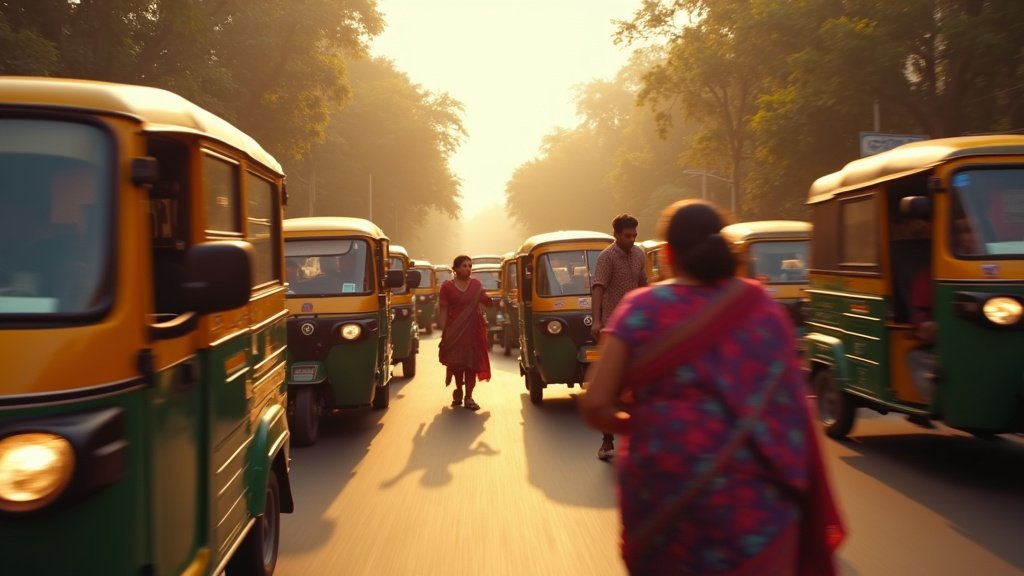
An American family’s extended visit to India led them to discover significant **India culture shocks**, sparking widespread interest. They spent two and a half months exploring the country, meticulously documenting nine key observations that eventually went viral on social media. These contrasts offered a unique perspective, highlighting many differences between their home country and the vibrant tapestry of India. The news sparked widespread discussion online about these profound **India culture shocks**.
The Haakenson Family’s Viral India Trip
Anna Haakenson and her family embarked on this extensive Indian adventure, intending to capture an authentic glimpse into **India daily life**. As a mother of two, she documented their two-month journey, fully expecting cultural differences. However, the reality of **India daily life** proved surprisingly distinct from her expectations. Her Instagram post detailing these findings gained immense popularity, amassing millions of views. This viral content provides invaluable insights into cross-cultural understanding and the common **India culture shocks** travelers might encounter.
Key Cultural Observations and India Culture Shocks
The family noted distinct cultural nuances, which offered a stark contrast to their accustomed experiences. These observations covered various aspects of life in India, many of which fall under the umbrella of common **India culture shocks**.
Traffic and Communication: A Classic India Culture Shock
One major difference, a quintessential **India culture shock**, was road etiquette. In America, honking often signals anger or impatience. In India, it serves a different, more functional purpose, essentially meaning, “I am here, please be aware.” Driving itself felt like “controlled chaos,” a system that is uniquely understood by locals. American driving follows strict individual rules, whereas India’s roads present a vibrant, shared space where constant communication is key. This is a primary example of **India culture shocks** related to transportation.
Food and Spice: Experiencing India Culture Shocks
Spice levels in food were another key point of the family’s **India culture shocks**. American “spicy” often translates to mild heat for a seasoned palate. Indian “spicy,” however, can be a true adventure for foreigners. The food itself was consistently noted as delicious, but the intensity of spices was a new and memorable experience, a common point of surprise for many experiencing **India culture shocks**.
Social Interactions: Navigating Cultural Differences India
Interactions with strangers presented significant **cultural differences India** offered. Americans might typically avoid direct eye contact or act as if you don’t exist in public spaces. In India, people are often more direct, frequently inquiring about your origin and destination. This open approach, a distinct aspect of **Indian social interactions**, felt welcoming to the family and fostered a sense of community, standing in contrast to American individualism. Understanding these nuances is crucial for anyone seeking to avoid **India culture shocks**.
Daily Life Differences and India Culture Shocks
Several everyday aspects also highlighted the family’s journey through **India culture shocks**. Trash disposal showed a clear contrast: the US typically uses designated bins, whereas in parts of India, trash is sometimes left where convenient, which surprised the family. Seasonal variations were another observation; the US has four distinct seasons, while India experiences hot, monsoon, and extreme heat periods. Religious practices also differed significantly; American churches are often quiet sanctuaries, while Indian temples and festivals can fill entire cities, a common theme among **India culture shocks**.
Living Costs and Family Structure: Contrasting Realities
Affordability was a notable factor contributing to the family’s perspective on **India culture shocks**. Everything in the US felt expensive compared to their experiences. The family structure presented a significant difference, a key element of **cultural differences India** showcases. Americans often live in single-family homes, while in India, multi-generational households are common. This communal living felt comforting to them.
Online Reaction and Impact of India Culture Shocks
Haakenson’s post resonated widely, particularly among those who identified with her observations of **India culture shocks**. Many Indians agreed with her points, adding their own insights and personal experiences. Some found the observations humorous, while others shared their own travel stories. The discussion highlighted India’s rich diversity and the inherent challenges and rewards of cross-cultural perception. This news underscores the value of sharing such experiences, effectively bridging understanding between cultures. The family’s insights offer a valuable glimpse into the essence of India’s unique culture, adding to the global conversation about **India culture shocks**. This American family India experience demonstrates the power of travel for learning and appreciating diverse **travel experiences India** provides.
More Stories
Freedom Plane Tour Brings History to Atlanta
PEN America’s 2026 Festival: Literature’s Defiant Return
Dive Deep into American Culture: Quiz Explores Baseball Legends and Quirky Snacks