











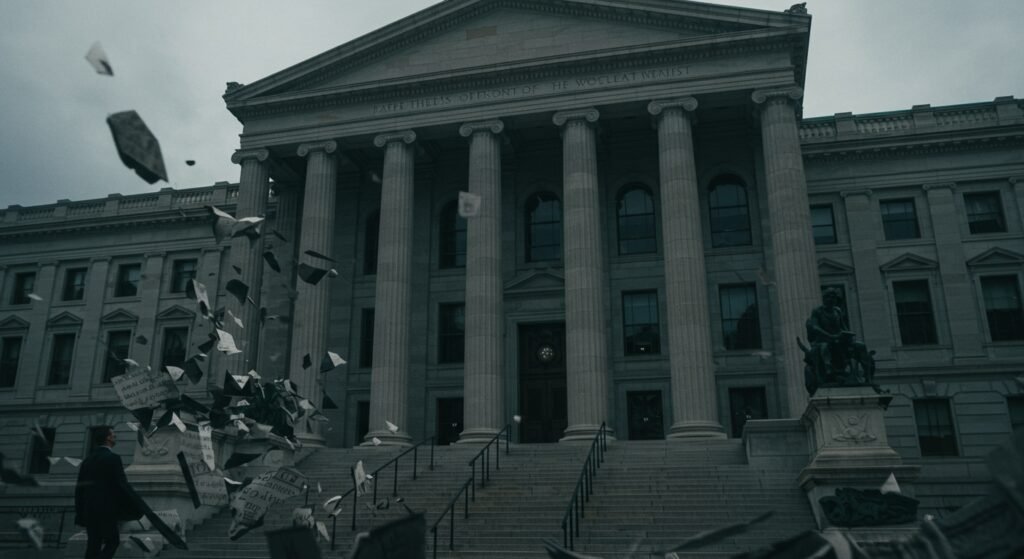
Washington, D.C. – In a series of significant executive actions beginning March 27, 2025, the administration of President Donald J. Trump has initiated a broad effort aimed at fundamentally reshaping the direction and interpretation of American culture and history within key national institutions.
Executive Order Targets Historical Narratives
The most prominent of these actions was the signing of an executive order on March 27, 2025, titled “Restoring Truth and Sanity to American History.” This directive specifically targets two foundational pillars of the nation’s cultural and historical preservation: the Smithsonian Institution and the Department of the Interior. The Department of the Interior holds significant sway over the interpretation and presentation of national monuments, memorials, and statues across the United States.
The executive order mandates that both the Smithsonian Institution and the Department of the Interior must undertake efforts to rectify what the administration describes as “divisive narratives that distort our shared history.” While the order’s specific criteria for identifying such narratives were not immediately detailed, the language signals a clear intent to influence the historical interpretations presented by these prominent federal entities.
Wider Impact on Cultural Agencies
The March 27 order follows, and is accompanied by, other executive actions that have had immediate and substantial impacts on a range of cultural organizations funded by the federal government. Among the most disruptive have been actions affecting the Institute of Museum and Library Services (IMLS) and the National Endowment for the Humanities (NEH).
According to reports, the majority of staff at both the IMLS and the NEH have been placed on leave or terminated. These agencies play crucial roles in supporting museums, libraries, humanities research, and public programming nationwide. The significant reduction or removal of staff raises serious questions about the capacity of these institutions to continue their work and fulfill their statutory missions, potentially impacting countless projects and organizations reliant on their support and expertise.
Changes at the Kennedy Center
Further underscoring the administration’s focus on cultural institutions, President Trump also took direct action regarding the John F. Kennedy Center for the Performing Arts in Washington, D.C. In an unusual move for a sitting president, Mr. Trump installed himself as the chair of the Kennedy Center’s board of trustees. This action grants the president direct oversight and influence over the governance and strategic direction of the nation’s premier performing arts center.
Accompanying this change in leadership, the president also announced plans for further changes at the Kennedy Center, though the precise nature and scope of these planned alterations have not yet been publicly detailed. The move to personally chair the board and announce impending changes signals a potential shift in the artistic and operational focus of the institution.
Criticism of Museum Exhibitions
The administration’s engagement with cultural narratives also extends to specific museum content. President Trump has publicly voiced criticism regarding exhibitions at the National Museum of African American History and Culture (NMAAHC), part of the Smithsonian Institution. While the nature of the criticism and the specific exhibitions in question were not elaborated upon in initial reports [5], the president’s comments highlight a desire to exert influence over the content and interpretation of historical events presented within national museums.
Reaction and Implications
The combined effect of these executive actions – the directive on historical narratives, the staffing changes at key cultural agencies, the direct intervention at the Kennedy Center, and the criticism of museum content – represents a significant governmental intervention into the cultural sector.
The focus on rectifying “divisive narratives” within the Smithsonian and the Department of the Interior suggests an intent to promote a specific interpretation of American history through federally controlled sites and collections. Critics may argue that such directives risk politicizing historical scholarship and presentation, potentially suppressing diverse perspectives or uncomfortable truths in favor of a state-sanctioned narrative.
Actions against the IMLS and NEH could cripple the infrastructure supporting cultural and intellectual life across the country, impacting everything from local library programs to national research initiatives.
The personal assumption of the Kennedy Center chairmanship by the president breaks with precedent and concentrates significant power over the arts within the executive branch, raising questions about artistic independence and patronage.
These sweeping changes have not gone unnoticed by the academic community. Scholars at the University of California, Berkeley, for instance, have reportedly begun to react to and assess the potential implications of these executive actions, though the specifics of their analyses were not immediately available.
Taken together, the actions initiated on and around March 27, 2025, mark a decisive period in the administration’s approach to federal cultural policy, prioritizing governmental oversight and the promotion of a particular historical and cultural viewpoint across national institutions.
More Stories
The Women of Flower Drum Song Returns to Democracy Center
Freedom Plane Tour Brings History to Atlanta
PEN America’s 2026 Festival: Literature’s Defiant Return