











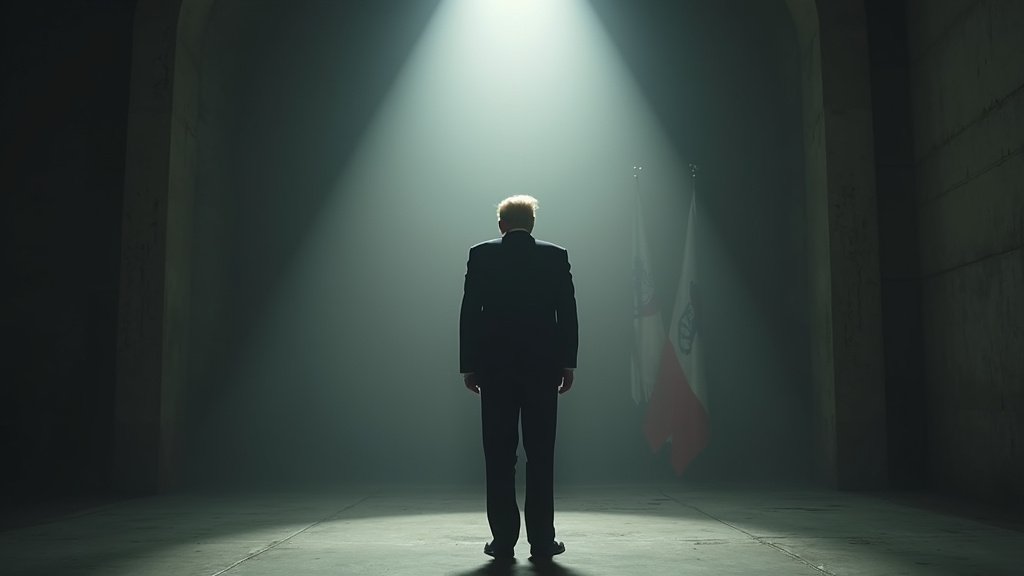
A striking comparison is emerging from China: observers are drawing unsettling parallels between the political and cultural landscape of Donald Trump’s America and China’s tumultuous Cultural Revolution. This analogy, while acknowledging vast differences, highlights a perceived shift in American political norms characterized by the mobilization of grassroots supporters against established elites, attacks on institutions, and demands for unwavering loyalty, all of which are key elements of Trump Cultural Revolution Parallels.
Zhang Qianfan, a professor of constitutional law at Peking University, has articulated this perspective, stating that the United States is undergoing a “cultural revolution.” He suggests that the leader is actively mobilizing the base to sideline perceived elites, a tactic reminiscent of Mao Zedong’s campaigns half a century ago. This sentiment is echoed by many in China who find the current american political climate eerily familiar, citing the ostracization of perceived enemies, the insistence on absolute loyalty, and the targeting of journalists and independent institutions. These Trump Cultural Revolution Parallels are not lost on those who experienced the original.
Echoes of Populist Mobilization and Elite Purges: Trump Cultural Revolution Parallels
The core of the comparison lies in the method of political engagement. During China’s Cultural Revolution, Mao Zedong encouraged young Red Guards and loyalists to challenge and purge established party officials, intellectuals, and traditional elements of society. Similarly, observers see Donald Trump as galvanizing his base to dismantle the “deep state” and “drain the swamp,” often by attacking individuals and institutions deemed part of a liberal or bureaucratic establishment. This approach prioritizes loyalty over expertise, a trait noted by comparisons between Trump’s appointments and Mao’s promotion of loyalists over skilled officials. Renowned Chinese journalist Hu Shuli, who experienced the Cultural Revolution as a teenager, has also drawn attention to these parallels in the american context, further solidifying the observed Trump Cultural Revolution Parallels.
Assaults on Institutions and the News Media: Examining Trump Cultural Revolution Parallels
A significant point of resonance is the sustained criticism and outright hostility directed at established institutions. In China, the Cultural Revolution saw widespread attacks on the judiciary, educational systems, and cultural heritage. In the United States, under Trump, the news media has been frequently labeled “the enemy of the American people,” and institutions like the judiciary and government agencies have faced intense scrutiny and challenges to their legitimacy. This strategy of delegitimizing independent watchdogs and adversarial voices is seen by some analysts as a tactic learned from authoritarian playbooks. Even academic institutions, traditionally bastions of free inquiry, are perceived by some as facing pressure that mirrors conditions in more authoritarian states, leading to self-censorship among scholars. These are potent Trump Cultural Revolution Parallels.
A Shifting American Culture and Global Image: Understanding Trump Cultural Revolution Parallels
The comparisons extend to broader shifts in political culture. The demand for absolute loyalty and the ostracization of dissenters create an atmosphere that feels familiar to those who have lived under more authoritarian systems. Furthermore, policy shifts, such as increased government investment in strategic industries and the acquisition of stakes in private companies, have drawn parallels to China’s blurred lines between state and private enterprise. For many Chinese liberals who once looked to the US for inspiration, America’s image as a beacon of constitutional democracy appears to have dimmed, suggesting a potential shift in global perceptions of american exceptionalism. These Trump Cultural Revolution Parallels are reshaping global perception of US actions.
Nuances and Crucial Distinctions in Trump Cultural Revolution Parallels
It is vital to underscore that these are analogies, not exact equivalences. The scale and nature of violence during China’s Cultural Revolution, which resulted in millions of deaths and widespread societal trauma, are not replicated in the american context. The US legal and institutional frameworks, while tested, have provided checks and balances that would be unthinkable in China’s one-party system. The comparison often focuses on the methods of populist mobilization, the rhetorical strategies used to consolidate power, and the erosion of norms, rather than a direct mirroring of historical events or atrocities. The targeting of journalists and the pressure on universities in the US, while concerning, operate within a fundamentally different political and legal architecture than that of Maoist China. These crucial distinctions must be noted when discussing Trump Cultural Revolution Parallels.
Nevertheless, the recurring observations from those watching from Beijing and Shanghai offer a unique and provocative lens through which to examine contemporary american politics. The perceived similarities in tactics, rhetoric, and the impact on institutional trust raise important questions about the resilience of democratic culture and the potential consequences of political polarization, both domestically and on the global stage. The news surrounding these comparisons highlights a complex interplay of political dynamics that continues to shape the global narrative. These Trump Cultural Revolution Parallels, observed by Chinese observers, offer a potent critique of the populist mobilization and attacks on institutions seen in the Trump era.
More Stories
The Women of Flower Drum Song Returns to Democracy Center
Freedom Plane Tour Brings History to Atlanta
PEN America’s 2026 Festival: Literature’s Defiant Return