











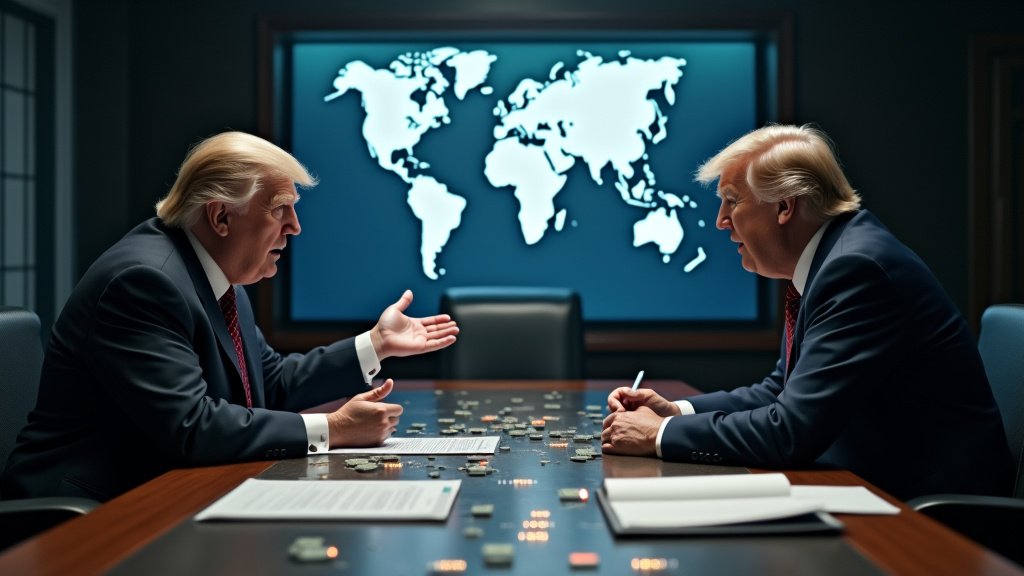
Trump Escalates Trade War: 25% Tariffs on Indian Imports Over Russian Oil, 100% on Semiconductors
Washington D.C. – In a significant move that is set to reshape global trade dynamics and intensify geopolitical pressures, U.S. President Donald Trump has announced a new round of sweeping tariffs. Effective in 21 days, an additional 25 percent tariff will be imposed on all imports originating from India. This decisive action stems from India’s continued procurement of Russian oil, a key component of a broader American strategy aimed at compelling Moscow to de-escalate the conflict in Ukraine.
The administration views both India and China as crucial markets for Russian energy, and these new duties are designed to exert maximum pressure on Russia to move towards a ceasefire. The move signals a hardening stance on international energy trade and its connection to geopolitical stability.
Diplomatic Overtures Amidst Trade Tensions
Concurrently with these trade policy shifts, diplomatic channels are reportedly active concerning a potential face-to-face meeting between President Trump and Russian President Vladimir Putin. Sources suggest such a summit could take place as early as the week following August 8. This date carries particular significance, as it marks a deadline set by President Trump for Moscow to initiate concrete steps toward a ceasefire in Ukraine. The juxtaposition of escalating tariffs and potential high-level talks highlights the complex and multifaceted nature of current international relations.
Semiconductor Sector Targeted with Unprecedented Duties
In a parallel development that has sent shockwaves through the technology sector, President Trump also unveiled plans to impose a 100 percent tariff on all semiconductor chip imports. However, this sweeping measure includes a significant carve-out: companies that commit to building their production facilities within the United States will be exempt from this formidable duty. This policy is clearly aimed at incentivizing the repatriation of semiconductor manufacturing, a sector identified as critical for national security and economic competitiveness.
Global Markets React to New Trade Policies
The implications of these aggressive trade policies are already being felt in global financial markets. In early Asian trading sessions, shares in key semiconductor and biopharmaceutical companies experienced notable declines. Investors are closely monitoring the unfolding situation, attempting to assess the long-term impact on supply chains, corporate earnings, and international economic cooperation. The american market, in particular, will be watching closely as these policies begin to take effect, potentially altering established trade flows and manufacturing strategies.
The introduction of these tariffs represents a significant escalation in the Trump administration’s approach to foreign policy and trade. By linking import duties directly to a nation’s energy dealings with Russia and attempting to reshape the global semiconductor landscape, the White House is signaling a willingness to employ aggressive economic tools to achieve its foreign policy objectives. The coming weeks will be crucial in observing how India and Russia respond to these measures, and whether the envisioned meeting between Presidents Trump and Putin materializes to address the ongoing crisis in Ukraine. The broader news from the global markets indicates a period of heightened uncertainty as businesses and governments navigate these new economic realities. The impact on global culture and trade relations is expected to be profound, potentially leading to a recalibration of international partnerships and economic interdependence. The coming days and weeks will undoubtedly reveal the full extent of these developing policies and their far-reaching consequences.
More Stories
PEN America’s 2026 Festival: Literature’s Defiant Return
Dive Deep into American Culture: Quiz Explores Baseball Legends and Quirky Snacks
Original Penguin Sues Pudgy Penguins for Trademark Infringement Over Penguin Branding