











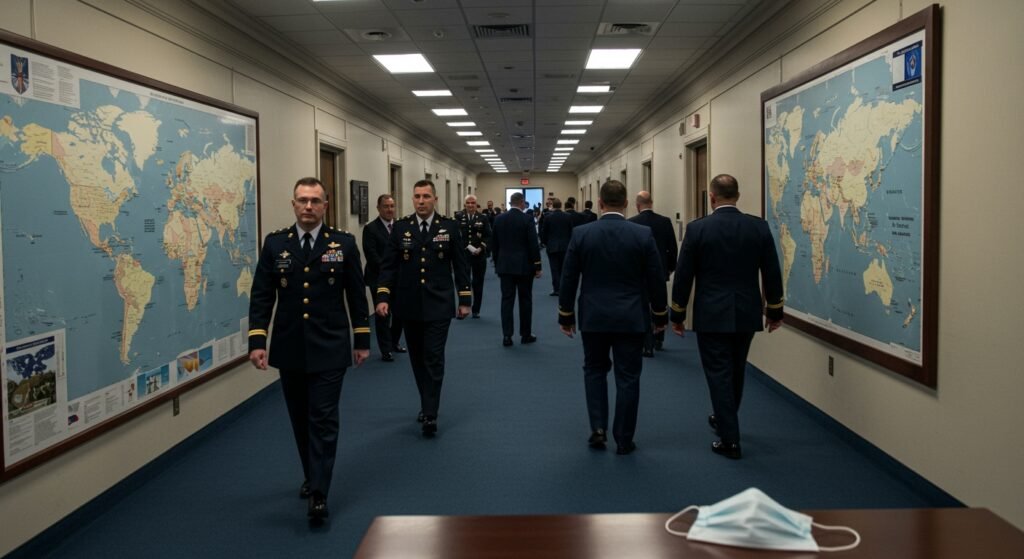
Washington, D.C. – President Donald Trump on January 28, 2025, signed four executive orders initiating a broad reshaping of the United States military, targeting personnel policies, strategic defense capabilities, and recruitment standards.
The directives mark a significant pivot in defense priorities and human resources management, addressing areas that have been subjects of intense debate in recent years.
The Ban on DEI Initiatives
One of the most impactful orders was a definitive ban on Diversity, Equity, and Inclusion (DEI) initiatives within the military. These programs, often aimed at fostering a more inclusive environment and addressing historical disparities, will be dismantled under the new directive.
The order represents a direct challenge to policies promoted by previous administrations and military leadership that sought to enhance diversity across the ranks. Proponents of DEI argue these programs are crucial for attracting and retaining a broad range of talent, reflecting the nation’s demographics, and improving unit cohesion through understanding and respect for varied backgrounds.
Opponents, who have gained traction in recent political discourse, often critique DEI efforts as promoting division, prioritizing identity over merit, or being extraneous to the core military mission of national defense. President Trump’s order aligns with this latter perspective, signaling a clear intent to remove such programs from all branches and operations within the Department of Defense.
Reviewing Transgender Service Policy
Another executive order specifically targeted the Pentagon’s policy on transgender military members. While not an outright ban in its initial form, the order is widely seen as a potential first step towards a ban on transgender individuals serving in the military.
The order initiates a review or mandates changes that could effectively restrict or prohibit transgender individuals from enlisting or serving openly. The ability of transgender individuals to serve has fluctuated with different administrations, being permitted under President Obama, largely banned under President Trump’s previous term, and reinstated under President Biden. This new order signals a likely return to more restrictive policies.
Advocates for allowing transgender service members argue that capable individuals should not be excluded based on gender identity and that inclusive policies enhance the military’s strength. Opponents often cite concerns about medical costs, deployability, and unit cohesion, although these claims are contested by studies and the experiences of other nations.
Boosting Missile Defense Capabilities
In a strategic defense move, President Trump also issued an order to develop and build a missile defense system significantly enhanced by technology and architecture modeled on Israel’s Iron Dome. The Iron Dome is renowned for its effectiveness in intercepting short-range rockets and artillery shells.
The directive aims to bolster the United States’ ability to defend against incoming missile threats, likely focusing on short- to medium-range ballistic and cruise missiles. This initiative underscores a priority on layered defense systems capable of protecting critical assets and populations. Modeling the system on the Iron Dome suggests an interest in leveraging proven intercept technology and rapid deployment capabilities, potentially adapting it for the specific threats facing the U.S. and its allies.
Details regarding the scale, timeline, and specific technologies to be employed were not immediately available, but the order clearly signals a major investment in advanced missile defense patterned after one of the world’s most successful operational systems.
Reinstating Unvaccinated Service Members
A fourth executive order addressed personnel previously discharged or sidelined due to vaccination status. The order directs the reinstatement of approximately 8,000 military members who refused the COVID-19 vaccine.
During the pandemic, the Department of Defense mandated COVID-19 vaccination for service members, leading to the separation of thousands who declined the vaccine for various reasons, including religious objections and personal beliefs. This executive order reverses that policy for those individuals, allowing them to return to service.
The reinstatement could help address recruitment and retention challenges faced by some branches of the military. However, it also reopens debates about public health mandates within the armed forces and potential impacts on readiness, depending on the roles and deployability of the reinstated personnel.
Broader Implications
Collectively, these four executive orders represent a significant policy shift within the Pentagon under President Trump’s renewed leadership. They touch upon fundamental aspects of military culture, personnel policy, strategic priorities, and public health directives.
The directives are expected to face both support and opposition from lawmakers, military officials, and the public, setting the stage for potential legislative battles and internal adjustments within the armed forces as the Pentagon begins the process of implementing these far-reaching changes ordered on January 28, 2025.
More Stories
PEN America’s 2026 Festival: Literature’s Defiant Return
Dive Deep into American Culture: Quiz Explores Baseball Legends and Quirky Snacks
Original Penguin Sues Pudgy Penguins for Trademark Infringement Over Penguin Branding