







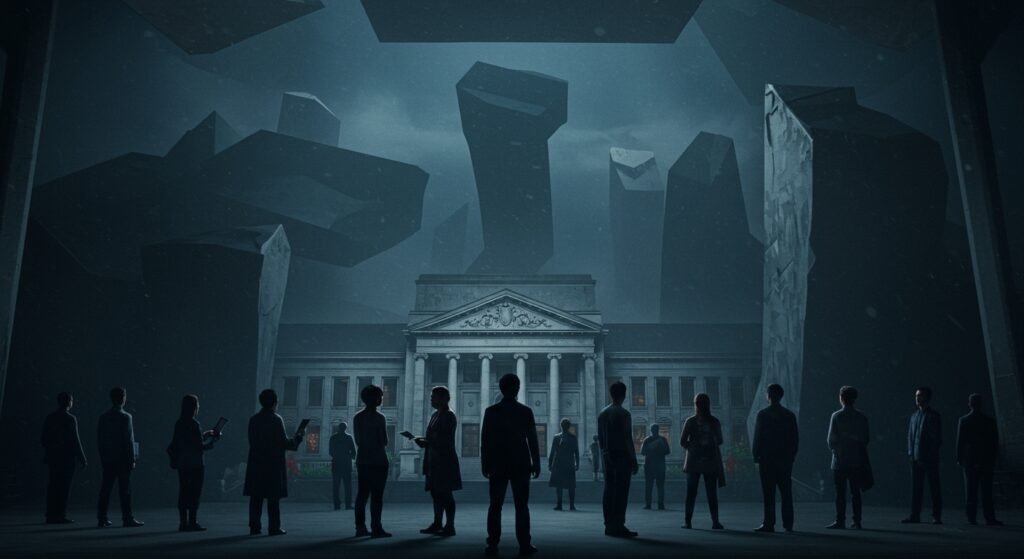
Washington, D.C. — A palpable tension is building across the United States as cultural institutions, universities, and independent artists find themselves embroiled in what many describe as a new “culture war.” The conflict stems from efforts by the current administration to significantly reduce federal funding for the arts and humanities while also seeking to influence programming and academic discourse.
This pushback from the executive branch has catalyzed a wave of organization and resistance among cultural workers nationwide, who view the actions as a direct threat to creative freedom, academic independence, and public access to cultural resources.
Academic Freedom Under Threat
The academic sector has been swift to defend its autonomy in the face of potential financial penalties. Leaders at some of the nation’s most prestigious universities have publicly articulated their commitment to intellectual independence. Princeton University president Chris Eisgruber and Harvard University president Alan Garber, among others, have spoken out against the threatened funding cuts, asserting the vital importance of academic freedom free from political interference.
Their stance highlights concerns that linking federal support to programmatic compliance could compromise universities’ ability to pursue research and education objectives independently, potentially chilling free inquiry and expression within academic settings.
Widespread Impact on the Arts Sector
Beyond academia, the broader arts and culture sector is already experiencing significant repercussions. Erin Harkey, the chief executive of Americans for the Arts, a leading national arts advocacy organization, has reported a substantial and worrying loss of jobs and revenue across the arts and culture sector nationwide.
Harkey’s assessment underscores the economic vulnerability of the sector, which relies on a complex mix of public and private funding. The uncertainty surrounding the long-term impact of the administration’s proposed actions is creating instability, making planning difficult for organizations ranging from major museums to local community theaters.
Artists Face Direct Consequences
Independent artists, often operating with limited financial safety nets, are particularly vulnerable to shifts in funding and policy. Philippa Pham Hughes, a Washington, DC-based artist, provides a stark example of this direct impact.
Hughes reported losing her residency at the renowned Kennedy Center, a premier cultural institution in Washington, D.C. Furthermore, a scheduled performance was cancelled. Hughes attributes these setbacks to perceived conflicts with new administration policies, illustrating how shifts in the political landscape can directly impede artists’ ability to create and present their work.
Such instances raise concerns about censorship or self-censorship within institutions apprehensive about potential backlash or loss of support.
Vulnerability of Underserved Communities
The potential cuts also pose a significant threat to access to arts and culture in communities across the country, particularly in historically underfunded areas such as the US South. Many cultural initiatives and educational programs in these regions heavily rely on partnership grants from the National Endowment for the Arts (NEA).
These NEA partnership grants are crucial for supporting local arts agencies and organizations that provide programming, education, and access in areas where private funding may be scarce. With these grants now at risk, there is concern that communities that benefit most from publicly supported arts initiatives could see reduced access to cultural experiences, exacerbating existing disparities.
Organizing in Resistance
In response to these pressures, cultural workers, artists, educators, and advocates are increasingly organizing to resist the proposed cuts and defend the principle of public support for the arts and humanities. Efforts range from grassroots advocacy and public awareness campaigns to direct lobbying of policymakers.
The unfolding situation represents a critical juncture for the arts and academic sectors in the United States, testing the resilience of institutions and the resolve of those who believe in the intrinsic value of culture and intellectual inquiry, independent of political influence.
More Stories
PEN America’s 2026 Festival: Literature’s Defiant Return
Dive Deep into American Culture: Quiz Explores Baseball Legends and Quirky Snacks
Original Penguin Sues Pudgy Penguins for Trademark Infringement Over Penguin Branding