











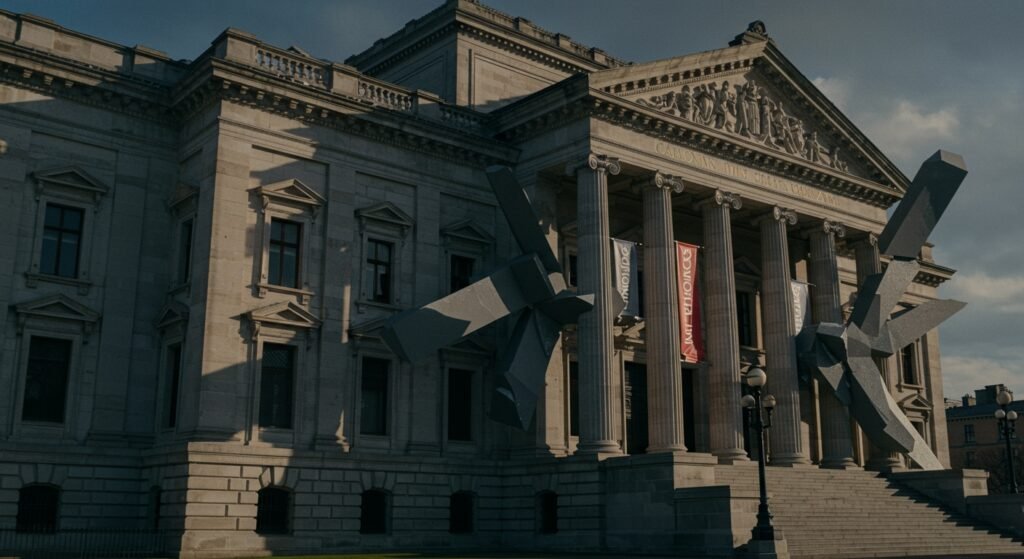
A significant “culture war” has emerged within the United States, characterized by escalating tensions between the federal government and a broad array of cultural institutions and artists. This conflict stems from initiatives launched during the Trump administration aimed at fundamentally reshaping the nation’s cultural infrastructure and aligning institutions more closely with specific White House policies. These actions have had a profound and widely felt impact across the arts community and the broader cultural sector.
Critics argue that the intensity of this conflict marks a notable shift. As one observer put it, “It’s much more extreme” than previous periods of friction between government and culture. The administration’s approach has included proposed, and in some cases implemented, funding cuts to key federal agencies that support the arts and humanities, such as the National Endowment for the Arts (NEA) and the National Endowment for the Humanities (NEH). These proposed cuts have galvanized cultural workers and advocates, prompting organized resistance efforts across the country.
Understanding the Impact on Access and Research
The potential ramifications of reduced federal support extend beyond the immediate financial impact on institutions. Susie Surkamer, who represents South Arts, a regional arts organization, highlighted a critical consequence: such cuts would directly reduce access to arts and culture for communities that are under-resourced and often depend on the programming and services facilitated by these agencies. This diminished access risks widening cultural divides and limiting opportunities, particularly in rural or economically challenged areas.
Furthermore, concerns have been raised about the potential halting of vital longitudinal research projects. This apprehension is specifically linked to the impact on data provision from the Institute of Museum and Library Services (IMLS), another agency facing potential challenges. The disruption of data flow from IMLS could impede scholarly work and policy analysis across numerous fields that rely on its resources.
There is tangible apprehension within the sector that some of the nation’s most venerable cultural institutions, including the Smithsonian and IMLS itself, may face damage significant enough that they struggle to fully recover, even if funding is eventually restored or stabilized. The loss of staff, programs, and accumulated expertise built over decades poses a serious long-term threat to their capacity to serve the public and advance knowledge.
Resistance and the Role of Institutions
While individual artists often feel a degree of resilience, believing they cannot be silenced entirely, there are profound fears regarding the vulnerability of the institutions that house, preserve, and present cultural heritage. Unlike individual voices, large institutions with complex structures, funding models, and public mandates can be significantly damaged by targeted policy shifts and funding reductions.
In the face of this pressure, leaders within other traditionally independent sectors have voiced strong support for institutional autonomy. University presidents, including Chris Eisgruber of Princeton University and Alan Garber of Harvard University, have publicly defended the principles of academic independence. This stance is seen by some as potentially encouraging federally tied institutions, such as major museums and research libraries, to resist perceived political interference and maintain their own missions and standards.
To strategize and discuss the widespread effects of these developments, a town hall meeting is being planned in New York for the spring. This gathering aims to provide a platform for cultural leaders, artists, and advocates to collectively assess the situation and formulate strategic responses before Congress’s summer recess, a critical period for legislative action and budget decisions.
Broader Implications and Economic Fallout
The effects of this cultural conflict are not limited to just institutions and individual artists; they have broader economic implications. Erin Harkey, the chief executive of Americans for the Arts, is actively collecting data to quantify these wider consequences. Initial assessments and ongoing monitoring indicate a substantial loss of jobs and revenue across the entire arts and culture sector, highlighting its significant, yet often underestimated, contribution to the national economy.
Beyond funding and institutional integrity, the underlying tensions also touch upon fundamental questions about national identity and historical narrative. The article notes concerns surrounding the redefinition or, in some cases, the perceived discarding of how U.S. history is presented and interpreted through cultural institutions and educational frameworks. This aspect of the conflict underscores the deeply ideological nature of the current “culture war,” making the stakes feel particularly high for the future of American arts and cultural heritage.
More Stories
PEN America’s 2026 Festival: Literature’s Defiant Return
Dive Deep into American Culture: Quiz Explores Baseball Legends and Quirky Snacks
Original Penguin Sues Pudgy Penguins for Trademark Infringement Over Penguin Branding