











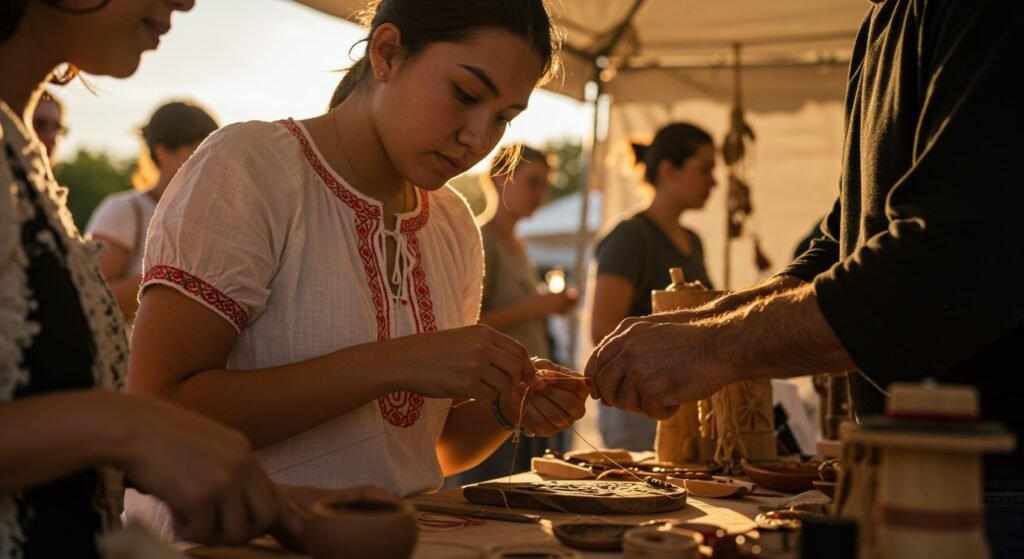
WASHINGTON, D.C. – The enduring spirit and vital contributions of younger generations to cultural heritage took center stage, according to a recent report from the esteemed Smithsonian Magazine. The publication, a leading voice in arts, sciences, and history, released an article on July 2, 2025, offering insights into the latest iteration of the annual cultural event known as the Folklife Festival.
Entitled “At This Year’s Folklife Festival, the Kids Are All Right,” the piece signals a significant focus by the festival organizers and observers alike on the engagement and impact of youth within the traditional arts and cultural expressions showcased at the event. This emphasis underscores a broader understanding of cultural continuity, recognizing that the vitality and evolution of traditions depend heavily on their adoption and interpretation by new generations.
Understanding the Annual Folklife Festival
The Folklife Festival, hosted annually, is a prominent fixture in the cultural calendar, renowned for bringing together diverse communities and traditions from around the globe and across the United States. It serves as a dynamic platform for practitioners of traditional arts, music, dance, crafts, and culinary traditions to share their living heritage with a wide audience. The event is designed not just for performance or display, but as an interactive space where cultural exchange and learning flourish.
As an annual cultural event, the festival plays a crucial role in raising awareness about the richness and diversity of human cultures, promoting cross-cultural understanding, and highlighting the importance of safeguarding intangible cultural heritage. Its consistent staging each year allows for longitudinal engagement with various cultural themes and communities, making it a significant institution in the landscape of cultural preservation and presentation.
The Significance of Youth Involvement
The title of the Smithsonian Magazine article, “At This Year’s Folklife Festival, the Kids Are All Right,” directly addresses a theme of increasing relevance in cultural circles: the role of young people in perpetuating and innovating traditional forms. Often, concerns are raised about the potential decline of certain traditions as older generations age. The festival’s reported focus, and the magazine’s highlighting of it, suggest a positive counter-narrative – that youth are actively engaged and finding meaningful connections within these cultural practices.
This engagement can manifest in numerous ways: young artists learning traditional crafts from elders, youth ensembles performing ancestral music with contemporary twists, young storytellers adapting oral histories for new audiences, or digital natives using modern tools to document and share traditional knowledge. The phrase “the kids are all right” implies not just participation, but a successful, perhaps even thriving, integration of young people into the festival’s core activities and, by extension, into the broader cultural landscape.
For an annual cultural event centered on living traditions, the successful inclusion of youth is paramount. It ensures that cultural knowledge and skills are passed down, that traditions remain relevant and adaptable in a changing world, and that the future of intangible heritage is secure. The festival, by actively cultivating this environment, becomes a laboratory for the future of cultural expression.
Smithsonian Magazine’s Authoritative Lens
The coverage of the Folklife Festival by Smithsonian Magazine lends significant weight and visibility to the event and its themes. Smithsonian Magazine is widely respected for its in-depth reporting and its connection to the Smithsonian Institution, the world’s largest museum, education, and research complex. Its articles reach a broad national and international readership interested in culture, history, science, and the arts.
The decision by such a prominent publication to dedicate an article, specifically titled “At This Year’s Folklife Festival, the Kids Are All Right,” indicates that the engagement of youth was a noteworthy and perhaps particularly successful aspect of this year’s festival. The article, published on July 2, 2025, serves as an important record and analysis of this dynamic, offering insights that extend beyond those who attended the event in person.
This authoritative coverage helps to elevate the profile of the Folklife Festival as a vital cultural institution. It validates the efforts of the organizers, participants, and particularly the young people involved, by bringing their stories and contributions to a wider audience. The article likely explores how the festival facilitates this youth engagement and the impact it has on both the participants and the traditions themselves, providing valuable models for other cultural events.
Implications for Cultural Continuity
The focus on youth within the context of an annual cultural event like the Folklife Festival, as highlighted by a publication like Smithsonian Magazine, carries important implications for the broader field of cultural preservation. It reinforces the idea that cultural heritage is not static, but a living, evolving entity that requires active participation and innovation from all generations.
The success in engaging young people, as suggested by the article’s title, demonstrates effective strategies for making traditional culture relevant and appealing to contemporary youth. This is crucial for ensuring that these valuable traditions are not confined to history books but continue to be practiced, enjoyed, and developed by future generations.
In conclusion, the Smithsonian Magazine article published on July 2, 2025, titled “At This Year’s Folklife Festival, the Kids Are All Right,” serves as a significant affirmation of the annual Folklife Festival’s success in fostering youth engagement. It highlights the critical role young people play in maintaining the vibrancy and ensuring the future of the diverse cultural traditions celebrated at this important annual event, reinforcing its status as a dynamic hub for living heritage.
More Stories
PEN America’s 2026 Festival: Literature’s Defiant Return
Dive Deep into American Culture: Quiz Explores Baseball Legends and Quirky Snacks
Original Penguin Sues Pudgy Penguins for Trademark Infringement Over Penguin Branding