











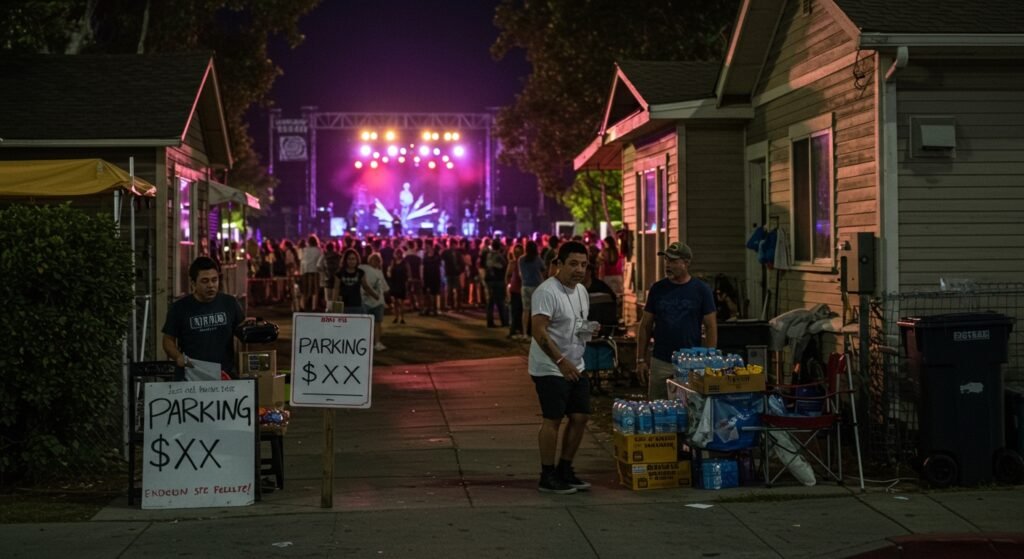
NAPA, Calif. — The annual BottleRock Napa Valley music festival concluded this past weekend, May 23-25, transforming the Napa Valley Expo grounds into a vibrant hub of music, wine, and culinary arts. The three-day event, a staple of the California festival circuit, drew an estimated 120,000 attendees from across the country, injecting a significant, albeit temporary, boost into the local economy.
Headlined by globally recognized acts including Justin Timberlake and Green Day, the festival offered a diverse lineup designed to appeal to a broad audience. While the primary focus for attendees was the music and the famed Napa Valley hospitality, for many local residents, the influx of visitors represented a unique opportunity.
Economic Currents Beneath the Music
The sheer scale of BottleRock necessitates extensive infrastructure and services, extending far beyond the festival gates. From accommodation and transportation to dining and retail, the event creates a surge in demand that local businesses and individuals are eager to meet.
This phenomenon manifested distinctly as a profitable ‘side hustle’ for many Napa residents. The demand for short-term rentals surged, with homeowners renting out spare rooms, guest houses, or entire properties at premium rates. Local drivers offered transportation services, navigating the increased traffic around the Napa Valley Expo. Residents with entrepreneurial spirit set up temporary stands selling crafts, food items, or offering services like parking on their properties.
This informal economy, running parallel to traditional business activity, underscores the community-level impact of a major event like BottleRock. While comprehensive official economic data is compiled over time, the anecdotal evidence points to a period where residents actively participated in the economic spoils generated by the festival’s footprint.
A National Congregation in Wine Country
The estimated attendance of 120,000 individuals underscores BottleRock’s status as a major national draw. Attendees traveled from diverse corners of the United States, drawn by the combination of high-profile musical acts and the allure of Napa Valley’s renowned reputation. This broad geographic reach amplifies the festival’s economic ripple effect, as visitors spend on travel, lodging, and local experiences before and after the main event.
The Napa Valley Expo, serving as the central venue, became a temporary city populated by music enthusiasts. Managing the logistics for such a large crowd over three consecutive days required significant planning and coordination between festival organizers, local authorities, and public safety agencies. The successful execution allows the event to return year after year, becoming a predictable, if intense, feature of the local calendar.
Beyond BottleRock
The conclusion of BottleRock Napa Valley this past weekend does not mark the end of large-scale events at the Napa Valley Expo. According to local announcements, another music festival is already scheduled to take place at the same location the very following weekend. This back-to-back scheduling highlights the venue’s increasing role as a regional event hub and suggests a sustained period of high activity for local service providers and the residents capitalizing on temporary economic opportunities.
The BottleRock festival, with its blend of headline talent, massive attendance, and tangible local economic benefits, stands as a clear example of how large cultural events can profoundly impact their host communities. For three days in late May, Napa Valley was not just about wine and vineyards, but also about amplifying economic activity, one concert-goer and one local ‘side hustle’ at a time.
More Stories
Keanu Reeves’ Dogstar Announces ‘All In Now’ Album and Extensive 2026 World Tour
Pattaya Music Festival 2026 Ignites Beaches with Month-Long Free Concert Series
WAK Festival 2026 Invites Creatives to ‘Shoots’ Theme Call for Proposals