










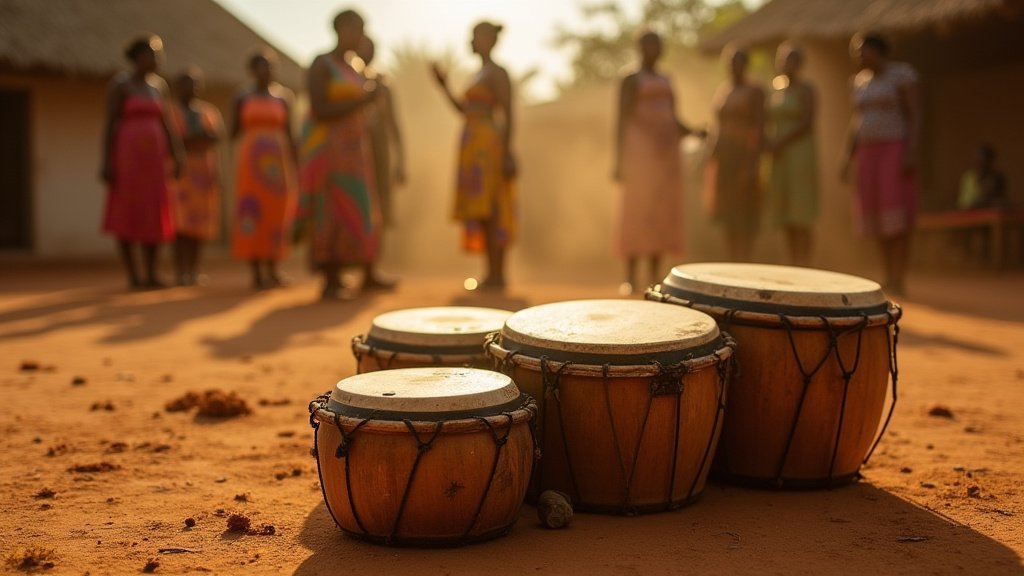
A grassroots, women-led music festival is challenging the cycle of violence in the Democratic Republic of Congo, using art as a catalyst for peace in the war-torn eastern region. In an area long plagued by systemic instability and armed conflict, local female organizers are leveraging the power of live performance to foster community dialogue and defy the narrative of hopelessness that has defined the region for decades.
- Organizers emphasize that the festival provides a neutral, safe space for disparate ethnic groups to interact.
- The event focuses on amplifying female voices, who are disproportionately affected by the ongoing instability.
- Local authorities and civil society groups have expressed support for the festival’s role in grassroots peace-building efforts.
- Despite security challenges, attendance has grown steadily, signaling a strong local appetite for peaceful alternatives.
The Deep Dive
Art as a Tool for Resilience
In the eastern provinces of the Democratic Republic of Congo, the sound of music is increasingly competing with the sounds of conflict. The emergence of a dedicated, women-led music festival has become a beacon of cultural resistance. By reclaiming public spaces, these organizers are demonstrating that community solidarity can serve as a potent counter-narrative to the prevailing atmosphere of fear. The festival is not merely a collection of concerts; it is an intentionally structured platform designed to bridge the chasm between fractured communities. By inviting artists from various backgrounds, the organizers are creating an environment where dialogue can flourish, proving that music acts as a universal language capable of humanizing those often framed as adversaries.
The Critical Role of Female Leadership
Women in the eastern DRC are often at the epicenter of the conflict, bearing the heaviest burden of displacement and violence. This festival, spearheaded by local women, represents a paradigm shift in the regional approach to peace-building. By positioning women at the helm of the organizational structure, the initiative challenges traditional power dynamics. The organizers argue that peace is unsustainable if it does not center the experiences of those who suffer most under instability. Their leadership serves as a model for civic engagement, showing how grassroots initiatives can bypass traditional bureaucratic hurdles to foster direct, human-to-human connections at the street level. This approach has garnered praise from international human rights observers who note that such local ownership is essential for long-term reconciliation.
Navigating the Security Landscape
The operational hurdles for such an event are immense. Security remains a paramount concern in the region, requiring organizers to coordinate extensively with local stakeholders to ensure the safety of participants and attendees. The persistence of armed groups necessitates a cautious approach to venue selection and scheduling, often forcing organizers to adapt in real-time. Despite these challenges, the festival’s survival is a testament to the local community’s desire for stability. Every successful installment of the event chips away at the paralyzing influence of the conflict, creating a ‘peace dividend’ that is measured not in currency, but in social capital and restored faith in the possibility of civilian safety. The resilience shown by both the performers and the audience acts as a silent protest against the status quo, demanding a future defined by creativity rather than combat.
FAQ: People Also Ask
Q: What is the primary goal of the women-led music festival in the DRC?
A: The primary goal is to promote peace and community reconciliation in conflict-ridden eastern regions by using music to foster dialogue and create a neutral space for disparate groups to connect.
Q: Why is it significant that the festival is led by women?
A: It is significant because women in the eastern DRC are disproportionately impacted by the region’s long-standing conflict. Centering their leadership ensures that peace-building initiatives address the specific needs and perspectives of those most affected by the violence.
Q: How do the organizers manage security in such a volatile region?
A: Organizers work closely with local civil society groups and stakeholders to navigate security risks. They prioritize safety by carefully managing venue logistics and maintaining a community-focused approach that emphasizes the festival’s role as a neutral, non-political space for all residents.
More Stories
Ultra Music Festival Returns: Miami Faces Noise and Traffic
Big Ears 2026: Knoxville Transformed Into Global Art Hub
Keanu Reeves’ Dogstar Announces ‘All In Now’ Album and Extensive 2026 World Tour