










US Music Festivals Face Crisis Amid Rising Costs, Shifting Fan Preferences
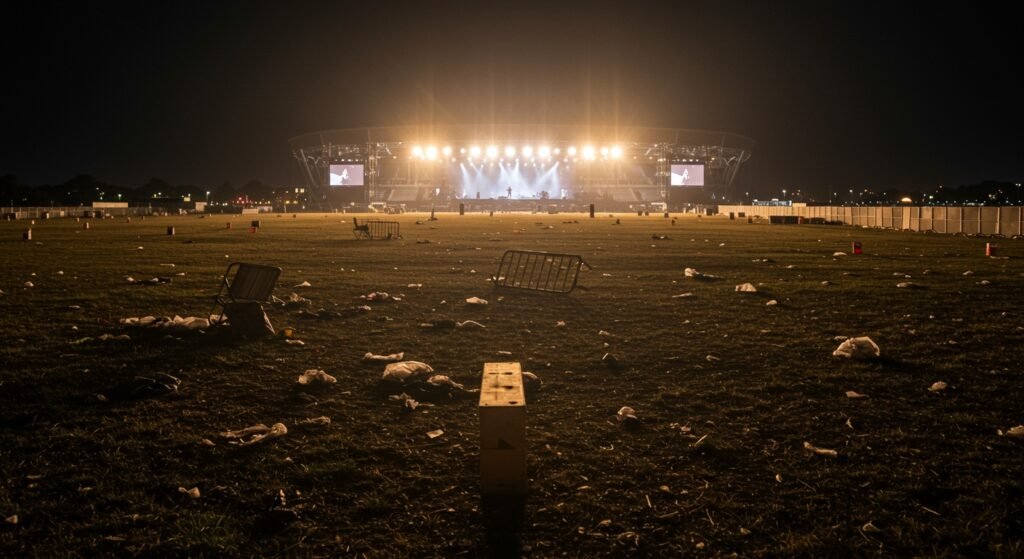
Music festivals across the United States are facing a steep decline, a trend underscored by the cancellation of more than 40 events so far in 2025. This downturn impacts both long-established fixtures on the cultural calendar and newer entrants to the market, signalling a significant shift in the live music landscape.
Among the casualties are established festivals like Chicago’s Pitchfork and newer ones such as Midwest Dreams in St. Louis. Both events are notably among those canceled for the upcoming year, removing key multi-day music experiences from their respective cities.
The challenges are not limited to smaller or mid-sized events. Even major, globally recognized festivals like Coachella are reportedly experiencing slower ticket sales compared to the past. In previous years, tickets for the California desert extravaganza were known to sell out within hours of going on sale, a stark contrast to the current market dynamics.
Understanding the Contributing Factors
Experts attribute this challenging trend to a confluence of factors, prominently including evolving fan behaviour. There is a growing consensus that fans are increasingly choosing to attend concerts by major artists like Taylor Swift or Beyoncé over multi-day festivals. The allure of seeing a single, highly popular artist in a dedicated performance appears to be outweighing the traditional festival draw of diverse lineups across multiple days.
Critics also weigh in on the perceived stagnation of the festival format itself. Tiffany Naiman, director of Music Industry Programs at UCLA, suggests that festivals have become too predictable. According to Naiman, this predictability has led them to “lost the magic” that once made them essential cultural events. This viewpoint implies that audiences may be seeking novelty and unique experiences that the current festival model struggles to provide consistently.
Economic and Logistical Headwinds
Beyond changing tastes, significant economic and logistical challenges are contributing factors to the decline. Rising costs across the board, exacerbated by inflation, increase the financial burden on organizers. Securing venues, artists, production, and staffing has become considerably more expensive.
Furthermore, extreme weather events pose an increasing risk, leading to last-minute cancellations or operational disruptions that can be financially devastating. Difficulty securing insurance coverage, particularly for smaller festivals, compounds these risks, making it harder for organizers to mitigate potential losses from unforeseen circumstances.
These economic and external pressures particularly impact smaller festivals, which often operate on thinner margins and have less capacity to absorb unexpected costs or revenue shortfalls compared to their larger counterparts.
Innovation and Adaptation
Despite the prevailing difficulties, some festivals are attempting new approaches to navigate the changing landscape and are seeing growth. Nashville’s Deep Tropics festival, for example, is incorporating elements like wellness and sustainability into its programming. By offering experiences that go beyond just music, Deep Tropics is attracting attendees looking for a more holistic and perhaps purpose-driven event, demonstrating that adaptation is possible.
The shift isn’t confined to organizers; some artists are also reconsidering their performance venues. Artists like The All-American Rejects are choosing to perform at smaller venues and even house parties. This decision is driven by a desire for more direct fan connection, suggesting that the traditional large festival stage might not always provide the intimate interaction artists and fans sometimes seek.
The Need for a ‘Reset’
Industry experts widely believe the festival format needs a “reset” for the industry to evolve successfully. This perspective acknowledges that while live music is not dying – fan attendance at individual concerts remains strong – fans are actively seeking experiences that offer more value for their time and money.
The current market demands innovation in programming, pricing, and overall experience to rekindle interest and ensure the sustainability of the festival model.
The insights into this challenging period for US music festivals are detailed in a recent report, which references analysis originally published by CNN.
More Stories
Celtic Connections 2026 Shatters Records: Global Music Festival Delivers Hope and Unity
Maltese Music Festival Mużika Mużika Announces 2026 Dates; Tickets Now Available
Keith Urban to Ignite Gilbert’s Boots in the Park 2026: A Record-Breaking Country Music Event