










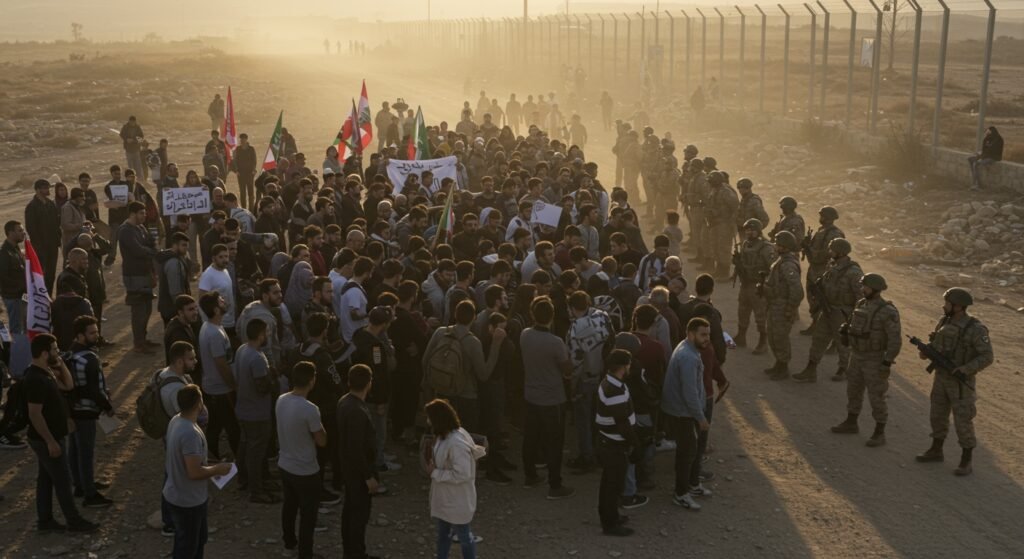
Southern Lebanon witnessed a tragic escalation of tensions on January 26, 2025, when Israeli forces opened fire on protesters demanding the withdrawal of troops. The incident resulted in significant casualties, with at least 22 people confirmed dead, including six women, and a further 124 individuals injured. The fatal confrontation underscores the fragility of the ceasefire agreement that followed the Israel-Hezbollah war and highlights the deep-seated frustrations over the delayed implementation of its terms.
The protests had gathered momentum as the deadline for Israel’s mandated withdrawal from the region approached. However, Israel stated it would not complete its withdrawal by the Sunday, January 26 deadline, citing that Hezbollah and the Lebanese army had not, in their view, upheld their end of the agreement to secure the area. This impasse set the stage for the confrontation that unfolded, plunging the region deeper into uncertainty.
The Events of January 26th
On the afternoon of January 26, 2025, large numbers of Lebanese citizens gathered in southern Lebanon, near the de facto border, to voice their demands. The protesters, galvanized by the missed deadline for the withdrawal of Israeli forces, sought to press for the full implementation of the ceasefire agreement. Accounts from the ground indicate that as the demonstration proceeded, Israeli forces stationed in the area opened fire on the crowd.
The precise sequence of events leading to the firing remains subject to conflicting narratives, but the outcome was devastating. Emergency services and local reports confirmed the mounting casualty count throughout the day. The toll, as verified by multiple sources [2, 1, 4, 14], reached a minimum of 22 fatalities, a figure that tragically included six women. Additionally, 124 people sustained injuries, many requiring urgent medical attention. The violence drew immediate condemnation from various quarters, highlighting the potential for a rapid deterioration of the security situation in an already volatile area.
Background to the Crisis
The presence of Israeli troops in southern Lebanon is a direct consequence of the hostilities that defined the Israel-Hezbollah war. The subsequent ceasefire agreement, brokered after intense diplomatic efforts, included provisions for a phased withdrawal of Israeli forces from Lebanese territory. This withdrawal was seen as a critical step towards restoring stability and sovereignty to Lebanon.
The agreement stipulated a specific timeline for this process, culminating in a key deadline set for Sunday, January 26. For many Lebanese, particularly those displaced or affected by the conflict, the timely departure of foreign troops represented a vital element of peace and normalization. The anticipation surrounding this date built pressure on all parties involved to adhere to the terms previously agreed upon.
Israel’s Justification and Regional Implications
Israel’s decision not to meet the January 26 deadline for withdrawal was accompanied by a public explanation. According to Israeli statements, the delay was a direct response to perceived failures by the Lebanese side. Specifically, Israel contended that Hezbollah and the Lebanese army had not fulfilled their commitments under the ceasefire agreement to effectively secure the area and prevent hostile activities.
This assertion points to a fundamental disagreement over the interpretation and implementation of the ceasefire’s security protocols. Israel’s stance suggests that conditions on the ground, as monitored by their forces, did not yet permit a full withdrawal without compromising their security interests. This justification, however, was met with anger and frustration by the protesters and many in Lebanon, who view the continued presence of Israeli troops beyond the agreed date as a violation of the ceasefire agreement.
The deadly events of January 26, 2025, and the preceding failure to meet the withdrawal deadline, carry significant regional implications. They place immense strain on the fragile ceasefire and risk reigniting broader tensions between Israel and Hezbollah, which could have devastating consequences for Lebanon and the wider Middle East. The incident also raises questions about the efficacy of international monitoring mechanisms and the capacity of the Lebanese army to assert full control over all its territory.
Looking Ahead
The aftermath of the fatal shooting leaves the region in a state of heightened alert. Investigations into the specific actions of the Israeli forces on January 26, 2025, are anticipated, alongside calls for accountability. The political fallout in Lebanon is likely to be significant, as the government faces pressure to respond to the deaths of its citizens and address the stalled withdrawal process.
The ceasefire agreement now appears more precarious than ever. The failure to meet the withdrawal deadline, compounded by the tragic loss of life among civilian protesters, presents a formidable challenge to diplomatic efforts aimed at maintaining peace. The focus now shifts to how regional and international actors will respond to this crisis and whether a path can be found to de-escalate tensions and ensure the eventual, peaceful implementation of the terms agreed upon after the Israel-Hezbollah war, thereby preventing further bloodshed in southern Lebanon.
More Stories
Iran Military Scoffs as US Pushes Ceasefire Plan Amid Escalating Tensions
AI Smuggling Ring Busted: 3 Charged in $2.5B Tech Heist
Middle East Tensions Explode: Iran Launches Missile Barrage After US-Israel Strikes