











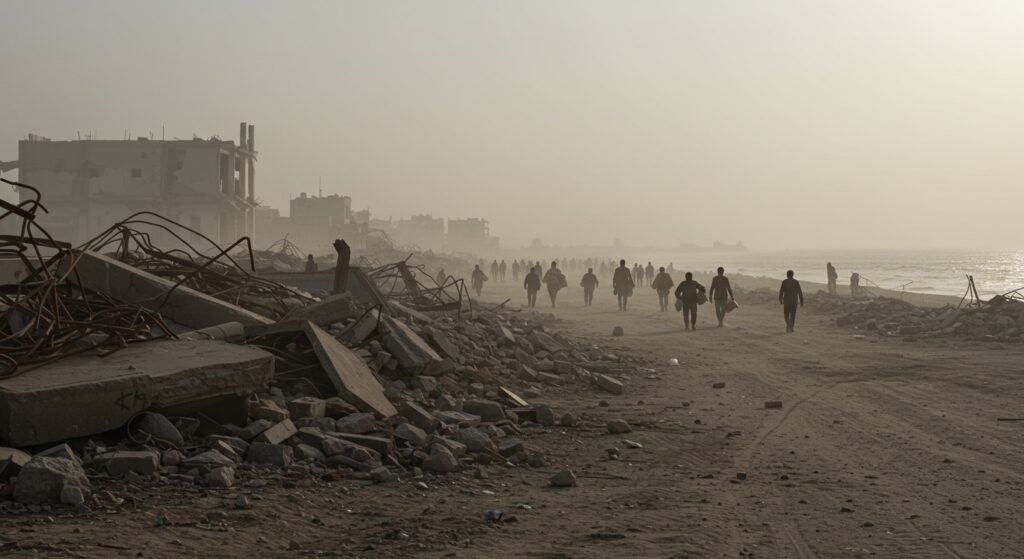
GAZA CITY — The death toll in the Gaza Strip has tragically surpassed 700 Palestinians in just three days, following Israel’s re-entry into the territory and the unilateral end of a ceasefire on Tuesday, March 18, 2025. Israeli forces have reclaimed control over the strategic Netzarim Corridor and have maintained intense bombardment by land, air, and sea for a third straight day.
According to Gaza’s Health Ministry, the renewed Israeli military operations have resulted in the deaths of 710 Palestinians since March 18. This includes at least 95 fatalities recorded since daybreak on March 20 alone. Among the reported dead is a newborn baby, highlighting the devastating impact on the civilian population.
Escalating Casualties and Humanitarian Crisis
Beyond the mounting death toll, the Health Ministry also reported that 900 Palestinians have been injured during this period. The vast majority of casualties are reported to be children and women. The humanitarian situation remains dire, with some deaths attributed directly to severe shortages of essential medical equipment. These critical shortages are a consequence of what authorities describe as Israel’s total blockade of the Gaza Strip, impeding the entry of vital supplies.
Displacement Orders Issued
The military actions have triggered new waves of displacement within the already besieged territory. On Wednesday, March 19, Israeli planes dropped leaflets over northern Gaza and parts of the south, ordering residents to evacuate their homes. The areas targeted included Beit Lahia and Beit Hanoun in the north, and specific parts of Khan Younis in the south. These orders have affected thousands of Palestinians, many of whom had already been displaced multiple times by previous fighting, compounding the humanitarian crisis.
United Nations Compound Struck
The escalation has also impacted international organizations operating in Gaza. The United Nations strongly condemned an Israeli airstrike that occurred on March 19. The strike hit a UN building located in Deir al-Balah in the central Gaza Strip, resulting in casualties among UN personnel. One UN worker was killed in the attack, and five others were wounded.
In response to the incident, UN Secretary-General António Guterres called for a full investigation into the strike on the UN facility, emphasizing the need to protect aid workers and UN premises during conflicts.
Context of Ceasefire Withdrawal
The current surge in violence began after Israel unilaterally shattered the Gaza ceasefire on Tuesday, March 18, 2025. The decision to withdraw from the truce paved the way for the renewed military incursion into Gaza, including the re-establishment of control over the Netzarim Corridor, a strategically significant area.
The rapid increase in Palestinian casualties and injuries over the past three days underscores the severity of the current phase of the conflict. The reinvasion and sustained bombardment, coupled with the pre-existing humanitarian crisis exacerbated by the blockade, present significant challenges for civilians attempting to find safety and access necessary resources.
The international community continues to monitor the situation closely as the violence escalates, raising concerns about the humanitarian consequences and the prospects for de-escalation following the collapse of the previous ceasefire agreement.
More Stories
Iran Military Scoffs as US Pushes Ceasefire Plan Amid Escalating Tensions
AI Smuggling Ring Busted: 3 Charged in $2.5B Tech Heist
Middle East Tensions Explode: Iran Launches Missile Barrage After US-Israel Strikes