











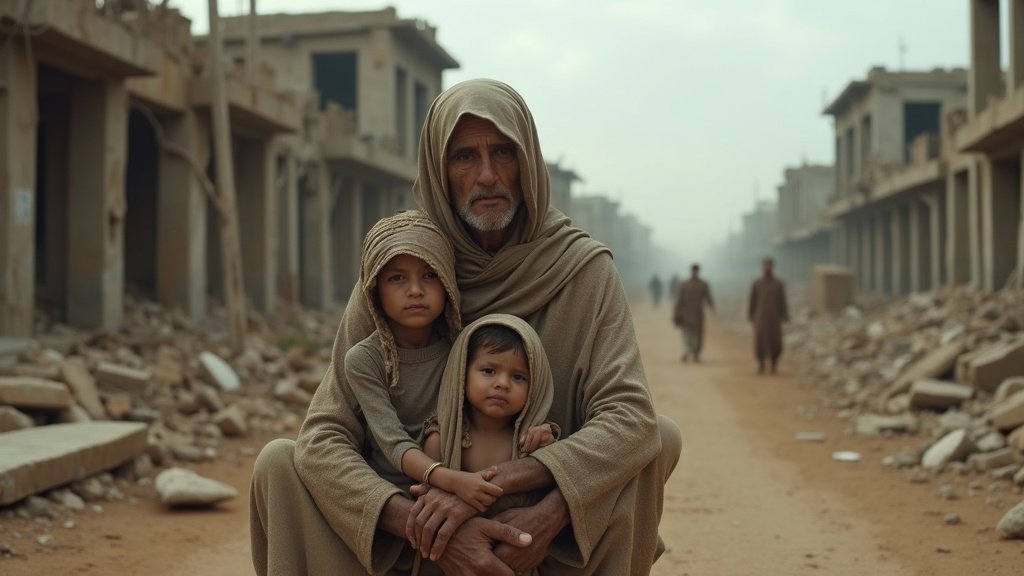
Gaza Plunges into ‘Man-Made’ Famine as Global Authorities Issue Urgent Warnings
GAZA STRIP – The Integrated Food Security Phase Classification (IPC), a leading global authority on food crises backed by the United Nations, officially declared a famine in Gaza Governorate, encompassing Gaza City, on August 22, 2025. This grim declaration marks a severe escalation of the humanitarian catastrophe gripping the besieged territory and signifies the first time a famine has been confirmed in the Middle East. [3, 5, 11, 19, 21]
The IPC’s assessment confirmed that the three critical thresholds for famine have been demonstrably met: extreme food deprivation, acute malnutrition, and a surge in starvation-related deaths. [3, 7, 18, 29] Over half a million people in Gaza are currently facing catastrophic hunger, classified as IPC Phase 5, the most severe category. [6, 7, 24, 28] Projections indicate this number will swell to 641,000 people, nearly one-third of Gaza’s population, by the end of September. [6, 12, 22, 24, 29] The dire conditions are expected to spread rapidly, with the governorates of Deir al-Balah and Khan Younis anticipated to cross famine thresholds in the coming weeks. [3, 7, 13, 22, 28] While conditions in North Gaza are believed to be equally, if not more, severe, a formal famine declaration there remains unconfirmed due to limited data availability, underscoring the urgent need for comprehensive humanitarian access and assessment. [3, 5, 12, 18, 24, 29]
UN officials and numerous humanitarian organizations have unequivocally labelled the Gaza famine as an “entirely man-made disaster” and “a moral indictment – and a failure of humanity itself.” [3, 6, 7, 16, 19, 21] This catastrophic situation is attributed to a confluence of factors, including relentless conflict, mass displacement, the near-total collapse of essential services, and severe, prolonged restrictions on humanitarian aid. [17, 21, 24] According to UN relief chief Tom Fletcher, food supplies are “stacking up at borders because of systematic obstruction by Israel,” creating a famine “within a few 100 meters of food in a fertile land.” [19]
Humanitarian aid organizations face unprecedented challenges in delivering vital supplies. Over 100 international NGOs reported increasing obstructions by Israeli authorities, with millions of dollars worth of food, medicine, water, and shelter items stranded in warehouses across Jordan and Egypt. [8] Obstacles to aid delivery include closed entry points, critical fuel shortages, multiple checkpoints within Gaza, pervasive insecurity, and active conflict in designated “humanitarian zones.” [4, 10] The desperation has led to widespread looting of aid trucks, further disrupting distribution networks. [24] Despite a slight increase in aid supplies since July, the volume remains drastically insufficient, inconsistent, and largely inaccessible to those in need. [24, 25]
The perilous quest for food has turned areas like Zikim into deadly zones. Situated on Gaza’s northwest border with Israel, the Zikim crossing is a critical entry point for World Food Programme aid. [15] However, residents attempting to access aid there face immense dangers, including Israeli gunfire, with at least five aid-seekers reportedly killed recently. [15, 30, 31, 33] Accounts describe chaotic scenes of thousands vying for limited supplies, with people being crushed by trucks and a Palestinian cameraman killed while covering events. [15, 30, 31, 33] Residents from Gaza City are observed making perilous journeys to and from the Zikim area, often returning empty-handed due to the overwhelming crowds, security risks, and scarcity. [32, 33]
The impact on Gaza’s most vulnerable populations is particularly devastating. Malnutrition rates among children are escalating catastrophically, with over 12,000 children identified as acutely malnourished in July alone – a six-fold increase since the beginning of the year. [7, 19, 29] Tragically, at least 269 malnutrition-related deaths, including 112 children, have been documented since October 2023. [8, 21] Infants, young children, pregnant and breastfeeding women, and the elderly are disproportionately affected, enduring days without food and lacking essential nutrients, which severely compromises their health and ability to recover from injuries and illness. [8, 29]
The international community has reacted with strong condemnation. UN Secretary-General António Guterres called the famine a “man-made disaster” that “must spur the world to more urgent action.” [7, 19] David Miliband of the International Rescue Committee described the IPC’s confirmation as a “damning indictment of the failure to protect civilians and uphold humanitarian law.” [18] However, Israel has vehemently rejected the IPC report, labelling it an “outright lie” and “modern blood libel.” [12, 13, 14, 16, 17, 30] Israeli officials maintain a policy of preventing starvation and accuse the IPC of basing its report on “Hamas’ lies” and manipulating its criteria. [12, 13, 14, 17]
Against this backdrop of confirmed famine and persistent obstruction, there are urgent and widespread calls for immediate action. Global leaders and humanitarian agencies demand an immediate and lasting ceasefire, coupled with full, unfettered, and safe humanitarian access through all land crossings into Gaza. [4, 7, 10, 12, 16, 18, 19, 21, 22, 24, 27, 29] Adherence to international humanitarian law and accountability for those using starvation as a weapon of war are crucial to prevent further unimaginable suffering and loss of life. [21, 22]
More Stories
Iran Military Scoffs as US Pushes Ceasefire Plan Amid Escalating Tensions
AI Smuggling Ring Busted: 3 Charged in $2.5B Tech Heist
Middle East Tensions Explode: Iran Launches Missile Barrage After US-Israel Strikes