











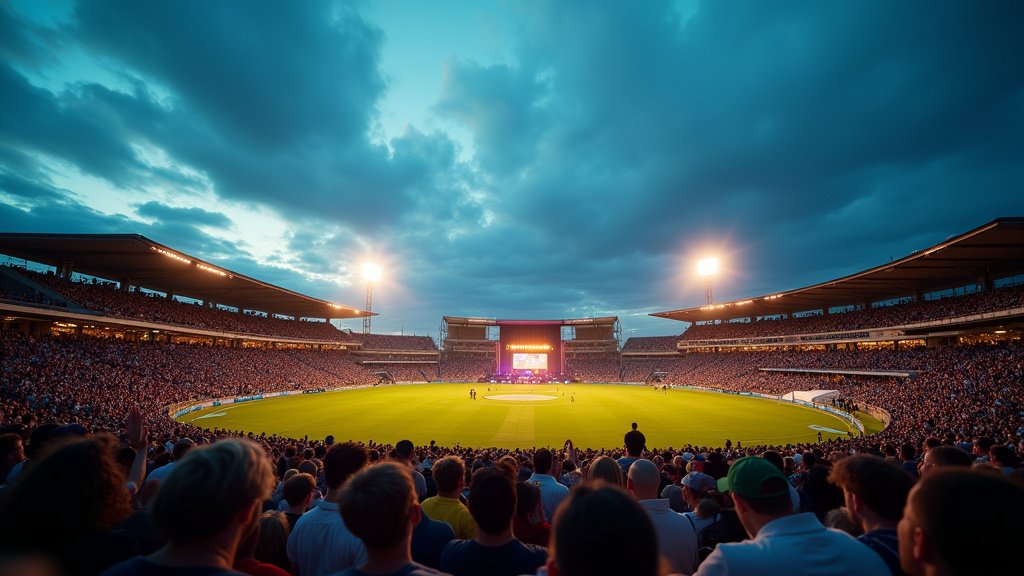
The New Zealand government has initiated a significant investigation into the planning rules governing events at Eden Park, with the aim of boosting the nation’s economic potential and tourism sector. Ministers believe that current restrictions under the Auckland Unitary Plan are limiting the stadium’s capacity to host concerts, major sporting events, and large-scale functions, thereby hindering economic growth and international competitiveness. This critical News marks a potential turning point for one of New Zealand’s premier venues.
Current Event Limitations Under Scrutiny
Eden Park, the country’s largest stadium with a capacity of approximately 50,000, currently operates under a set of regulations that significantly cap its event potential. As per the Auckland Unitary Plan, the stadium is permitted to host a maximum of six artists performing a total of twelve shows annually. These concerts are subject to stringent conditions, including specific weekday limitations, a maximum duration of five hours, and a requirement to conclude by 11 pm on weekdays. Furthermore, no more than four concerts can be held within any four-week period.
Sporting events also face considerable limitations, with a cap of 25 night-time fixtures per year. These events are restricted to weekday evenings between 7:30 pm and 9:30 pm, with no Sunday night games permitted, except for cricket which has a slightly extended allowance. Conferences are also capped, limiting attendance to 2,000 people.
Driving Economic Growth and Tourism
RMA Reform Minister Chris Bishop and Tourism Minister Louise Upston are leading the review, stating that these outdated rules are preventing Eden Park from reaching its full economic potential. Minister Upston highlighted the significant financial contributions that major events at Eden Park make to Auckland’s economy. “Last summer Auckland’s economy received a boost of nearly $32 million from several big concerts. These events created jobs and had local hospitality businesses humming,” she stated. Overall, events at Eden Park have contributed over $1 billion in GDP benefits to the Auckland region since its 2011 redevelopment.
The government aims to position New Zealand as a more competitive destination for global events, drawing parallels with Australia’s efforts to attract international acts. “We want to see more events like these, and the Government’s $70 million events and tourism investment package announced yesterday will allow New Zealand to compete with Australia to host big events and will give international visitors even more reasons to come and explore New Zealand, while also encouraging Kiwis to get out and about,” said Minister Upston.
Prime Minister Christopher Luxon has previously voiced his support for loosening these restrictions, describing them as “red tape holding back the economy” and suggesting Auckland Council should consider “abolishing” concert limits entirely.
The Investigation Process
The review will be conducted under new powers granted by the Resource Management (Consenting and Other System Changes) Amendment Bill. This legislation allows ministers to modify or remove provisions of the Resource Management Act (RMA) that negatively impact economic growth, development capacity, or employment. Minister Bishop will lead the investigation, which requires him to assess the impacts of the current provisions and report his findings to Cabinet for a final decision on any proposed changes to the Auckland Unitary Plan. Further details regarding the investigation timeline and process are expected to be announced in the coming weeks.
Balancing Potential Benefits with Community Concerns
While the push to increase events at Eden Park is largely driven by economic arguments, past concerns from local residents regarding noise and disruption have been noted. However, recent community engagement and surveys conducted by the Eden Park Trust suggest a growing sentiment of support for more events. A survey of over 1500 residents indicated that more than 90% would support an increase in the number of shows. In late 2024, Auckland Council did approve an increase, allowing Eden Park to host up to 12 concerts by six artists annually, a significant step up from the previous limit of six.
Past decisions, such as Eden Park ceasing to host school balls due to disruptive behaviour, highlight the ongoing need for careful management of event impacts.
Unlocking Eden Park’s Future
The government’s decision to review Eden Park’s event rules signifies a commitment to leveraging the stadium’s potential as a major economic driver. By potentially easing regulatory barriers, the government hopes to attract more world-class events, boost tourism, create jobs, and ensure New Zealand remains competitive on the global entertainment stage. The outcome of this investigation will be closely watched by the entertainment industry, local businesses, and the wider community. This comprehensive News will continue to be updated as the investigation progresses.
More Stories
Iran Military Scoffs as US Pushes Ceasefire Plan Amid Escalating Tensions
AI Smuggling Ring Busted: 3 Charged in $2.5B Tech Heist
Middle East Tensions Explode: Iran Launches Missile Barrage After US-Israel Strikes